Living in Limassol
Living in Limassol: neighbourhoods, cost of living and expatriation
Cyprus's economic capital, Limassol has become a hub for entrepreneurs, tech companies and investors drawn by the non-dom regime. A luxury marina, beaches and a cosmopolitan community make it the most international city on the island.
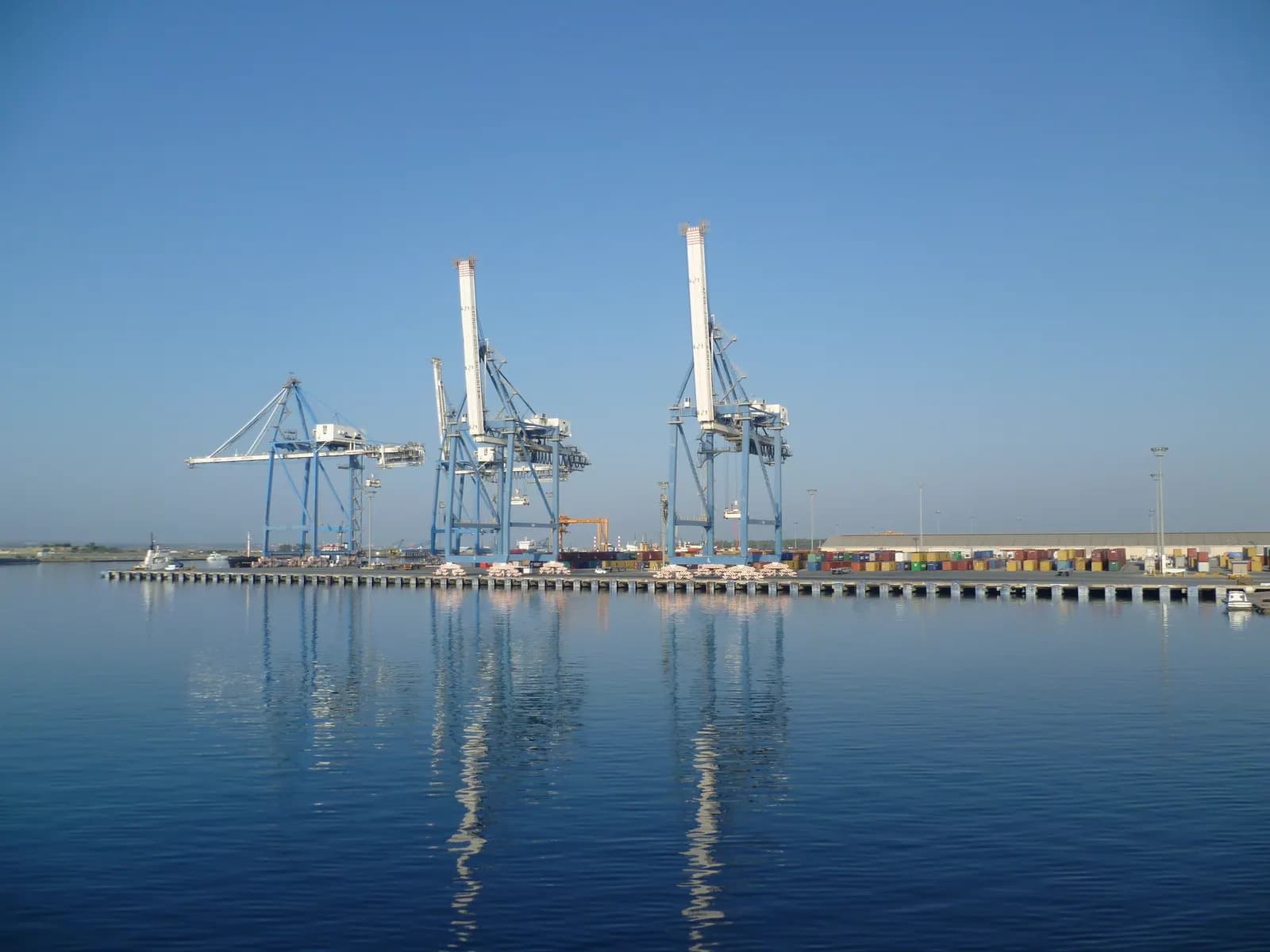
- Country
- Cyprus
Key figures
- Rent, 2-room flat (centre)€1,100
- Budget (single person)about€2,300
- Flight from Parisabout4 hoursVerified on Nov 2, 2026
Where to live: the neighbourhoods
Limassol stretches for some fifteen kilometres along the south coast of Cyprus. The city has no single centre: it reads from west to east, from the old port to the seaside resorts, and each section has its own population.
The historic centre and the old port district have been profoundly transformed by the marina and the residential towers built along the seafront. It is the most expensive and most internationalised area of the island.
The intermediate residential neighbourhoods — Agios Athanasios, Mesa Geitonia, Zakaki — offer conventional housing at markedly lower prices, with schools and everyday shops. They are the choice for long-term settlement.
The east of the city, towards Germasogeia, Potamos Germasogeias and the Tourist Area, concentrates seaside residences and a seasonal population. The quality of life there is genuine, and summer activity is intense.
Finally, the foothill villages — Parekklisia, Pyrgos, or higher up towards the Troodos — offer houses at much lower prices. They require a car and are further from the international schools, which are concentrated in the city.
A simple principle guides the choice: the further you move from the seafront, the faster prices fall, and the gap between an address on the marina and one two kilometres inland is considerable for a drive of just a few minutes.
Housing: the rental market
We do not publish a median rent for Limassol: we have not found an official Cypriot series publishing rents by city or neighbourhood, and we do not reproduce private agencies' estimates.
Within a decade, Limassol has become the tightest rental market in Cyprus. The arrival of technology, financial services and trading companies, followed by that of many Russian and Ukrainian nationals after 2022, pushed prices up sharply.
The gap with Nicosia or Larnaca is considerable and surprises newcomers who think in island-wide terms. Limassol is more comparable to a Western European city than to the rest of Cyprus.
As for buying, a European Union national can purchase freely. The Cypriot permanent residence permit by investment, for its part, requires an investment of at least about €300,0004 and is aimed at third-country nationals.
A technical check is essential on the island: the final title deed may not have been issued for properties delivered long ago, owing to long-standing administrative delays. The status of the title should be checked before any commitment.
Cost of living
Excluding housing, Limassol remains cheaper than a large Western European city for services and eating out, but the gap has narrowed, and food, largely imported, is expensive.
We do not publish a typical monthly budget: we have not found an official Cypriot series measuring a basket of spending comparable to that of an expatriate.
Electricity is the heaviest item: Cyprus generates its electricity from imported fuels and its tariffs are among the highest in the Union. Air conditioning runs for long periods in summer.
Water is a structural constraint on the island, which is subject to recurring droughts and depends on desalination. It is a permanent local issue that weighs more on daily life than on the budget.
Personal taxation, on the other hand, is favourable: the Cypriot income tax scale starts at 0%5 and peaks at 35%6, and gains on the disposal of securities are exempt, at a rate of 0%7.
Community and expatriate life
Limassol is the most international city in Cyprus. The Russian-speaking, British, Israeli and Lebanese communities there are long-established and large; the French community is more recent and smaller.
English is spoken everywhere, a legacy of the British period, which makes administrative and professional settling-in particularly easy for newcomers.
Cyprus's so-called non-dom regime accounts for some of the arrivals: it exempts passive income from the defence contribution for 17 years8, while a healthcare system contribution of 2.65%9 remains payable.
Cyprus also offers an unusual tax residency rule: a presence of from 60 days10 may suffice, subject to strict conditions relating to business activity, housing and the absence of tax residency elsewhere.
Practicalities: transport, health, good to know
Cyprus has no rail network, and buses are infrequent. A car is essential, with one particularity: driving is on the left, a British legacy.
The island's two airports, at Larnaca and Paphos, can be reached in under an hour from Limassol. Flights to France exist but are more frequent in season.
The Cypriot national health system, introduced recently, covers registered residents. Private provision remains substantial, particularly in Limassol.
- A European Union national can settle freely, with registration required beyond three months.
- The status of the title deed must be checked before any purchase, as delays in issuing deeds are long-standing and documented.
- The from 60 days10 rule is strictly applied: it is never presumed.
- Cypriot corporate income tax rose to 15%11 with the tax reform, from 12.5%12 previously.
Frequently asked questions
Why do companies choose Limassol?
What budget is needed to live in Limassol?
Sources and verification dates
- 1.
Rent, 2-room flat (centre) : €1,100
- 2.
Budget (single person) : €2,300
- 3.
Flight from Paris : 4 hours
Verified on Nov 2, 2026
- 4.
Cyprus: investment qualifying for the permanent residence permit : €300,000
« In line with the provisions of Regulation 6(2) of the Aliens and Immigration Regulations, the Minister of Interior […] has decided to issue an Immigration Permit to third country applicants in cases of investments that meet the requirements of this policy. […] The applicant must invest at least €300,000 in one of the following investment categories: Purchase of a house or apartment from a development company, which must be a first sale worth at least €300,000 (plus VAT). […] The applicant should, in addition to the investment […], be able to prove that he has at his disposal a personal secure annual income of at least €50,000. This annual income increases by €15,000 for his/her spouse and by €10,000 for each of his/her or his/her spouse’s dependent minor child. — Migration Department (Deputy Ministry of Migration), « Immigration Permits for Investors » (29 décembre 2025). »
gov.cyVerified on Nov 2, 2026Verified source
- 5.
Cyprus: rate of the first income tax bracket : 0%
« DECLARATION FOR CLAIMING TAX DEDUCTIONS FOR THE TAX YEAR 2026 - Income Tax (By virtue of the Income Tax Law No.118(I) of 2002, as amended) — PART C. TAX COMPUTATION — Chargeable Income / Tax Rates : From 0 to 22.000 @ 0% ; From 22.001 to 32.000 @ 20 % ; From 32.001 to 42.000 @ 25 % ; From 42.001 to 72.000 @ 30 % ; From 72.001 @ 35 % — Tax Department, formulaire IR59 2026. »
gov.cyVerified on Nov 2, 2026Verified source
- 6.
Cyprus: top marginal income tax rate : 35%
« PART C. TAX COMPUTATION — Chargeable Income / Tax Rates : From 0 to 22.000 @ 0% ; […] From 42.001 to 72.000 @ 30 % ; From 72.001 @ 35 % — Tax Department, formulaire IR59 2026 (Income Tax Law No.118(I) of 2002, as amended). »
gov.cyVerified on Nov 2, 2026Verified source
- 7.
Cyprus: taxation of profits from the disposal of securities : 0%
« Tax wholly exempted income of: Profit from the sale of securities ; Dividends paid which are tax deductible from the paying co. ; Profits of a Permanent Establishment under certain criteria ; Gains relating to foreign exchange differences (forex) […] — Ministry of Finance, « Tax Incentives » (15 janvier 2026). »
gov.cyVerified on Nov 2, 2026Verified source
- 8.
Cyprus: period of tax residency after which a person is deemed domiciled : 17 years
« Furthermore, irrespective of the individual’s domicile of origin, any individual who has been a Cyprus tax resident for income tax purposes for at least 17 out of the last 20 years immediately before the tax year is deemed to acquire a domicile in Cyprus. […] Tax Consequences — Any individual who either: does not have a domicile in Cyprus (non-domiciled), or is not a Cyprus tax resident (non-resident) is not subject to Special Defence Contribution (SDC) on: rental income*; interest income; dividend income. — Tax Department, « Tax Residency/Domicility » (Special Defence Contribution Law N. 117(I)/2002). »
gov.cyVerified on Nov 2, 2026Verified source
- 9.
Cyprus: rate of the healthcare system contribution on passive income, at full effect : 2.65%
« Income earners (e.g. rent, interest, dividends) 1,70% 2,65% On their income »
gesy.org.cyVerified on Nov 2, 2026Verified source
- 10.
Cyprus: minimum annual presence under the so-called sixty-day rule : 60 days
« 60-day rule — An individual may be considered a tax resident of Cyprus even if they have not completed 183 days in Cyprus, provided that they meet all of the following conditions: They remain in Cyprus for at least 60 days during the tax year. They do not reside for more than 183 days during the year in another country. They carry on any business in Cyprus and/or are employed in Cyprus, whether as an employee and/or office holder. They maintain a permanent residence in Cyprus which they own or rent. — Tax Department, « Tax Residency/Domicility » (Income Tax Law N. 118(I)/2002, art. 2). »
gov.cyVerified on Nov 2, 2026Verified source
- 11.
Cyprus: corporate income tax rate resulting from the tax reform : 15%
« Φόρος πραγματικών μερισμάτων από 17% σε 5% · Κατάργηση λογιζόμενης διανομής μερισμάτων · Εταιρικός φόρος από 12,5% σε 15% · Κατάργηση τελών χαρτοσήμων · Stock Options: ειδικός συντελεστής 8% έως €1εκ./10ετία · Κρυπτοστοιχεία: αυτοτελής φορολόγηση 8% στο καθαρό κέρδος — Portail officiel de la Réforme fiscale 2026 (gov.cy/taxreform), « Avantages fiscaux pour les entreprises » (lois publiées au Journal officiel le 31 décembre 2025, en vigueur au 1er janvier 2026). »
gov.cyVerified on Nov 2, 2026Verified source
- 12.
Cyprus: former corporate income tax rate, before the tax reform : 12.5%
« Φόρος πραγματικών μερισμάτων από 17% σε 5% · Κατάργηση λογιζόμενης διανομής μερισμάτων · Εταιρικός φόρος από 12,5% σε 15% · Κατάργηση τελών χαρτοσήμων · Stock Options: ειδικός συντελεστής 8% έως €1εκ./10ετία · Κρυπτοστοιχεία: αυτοτελής φορολόγηση 8% στο καθαρό κέρδος — Portail officiel de la Réforme fiscale 2026 (gov.cy/taxreform), « Avantages fiscaux pour les entreprises » (lois publiées au Journal officiel le 31 décembre 2025, en vigueur au 1er janvier 2026). »
gov.cyHistorical value, applicable until January 1, 2026
- 13.
chypre.non-dom.pct.0 : 0%
- 14.
chypre.non-dom.pct.12-5 : 12.5%
- 15.
chypre.impot-societes.eur.1700 : €1,700
- 16.
Cyprus: annual presence below which the general residency rule does not apply : 183 days
« According to Article 2 (“Definitions”) of the Income Tax Law of 2002 (Ν. 118(I)/2002), a natural person (individual) is considered a tax resident of Cyprus if they meet the criteria set out either under the 183-day rule or the 60-day rule. 183-day rule — An individual is considered to reside in Cyprus if they stay in Cyprus for one or more periods exceeding 183 days in total during a tax year. — Tax Department (Ministry of Finance), « Tax Residency/Domicility ». »
gov.cyVerified on Nov 2, 2026Verified source