International mobility news

Cayman Islands

Moving to the Cayman Islands in 2026: zero tax and residency by investment

A British Overseas Territory and major financial hub, the Cayman Islands levy no tax on income, capital gains or inheritance. Residence is obtained through property investment. An upmarket destination with a high cost of living.

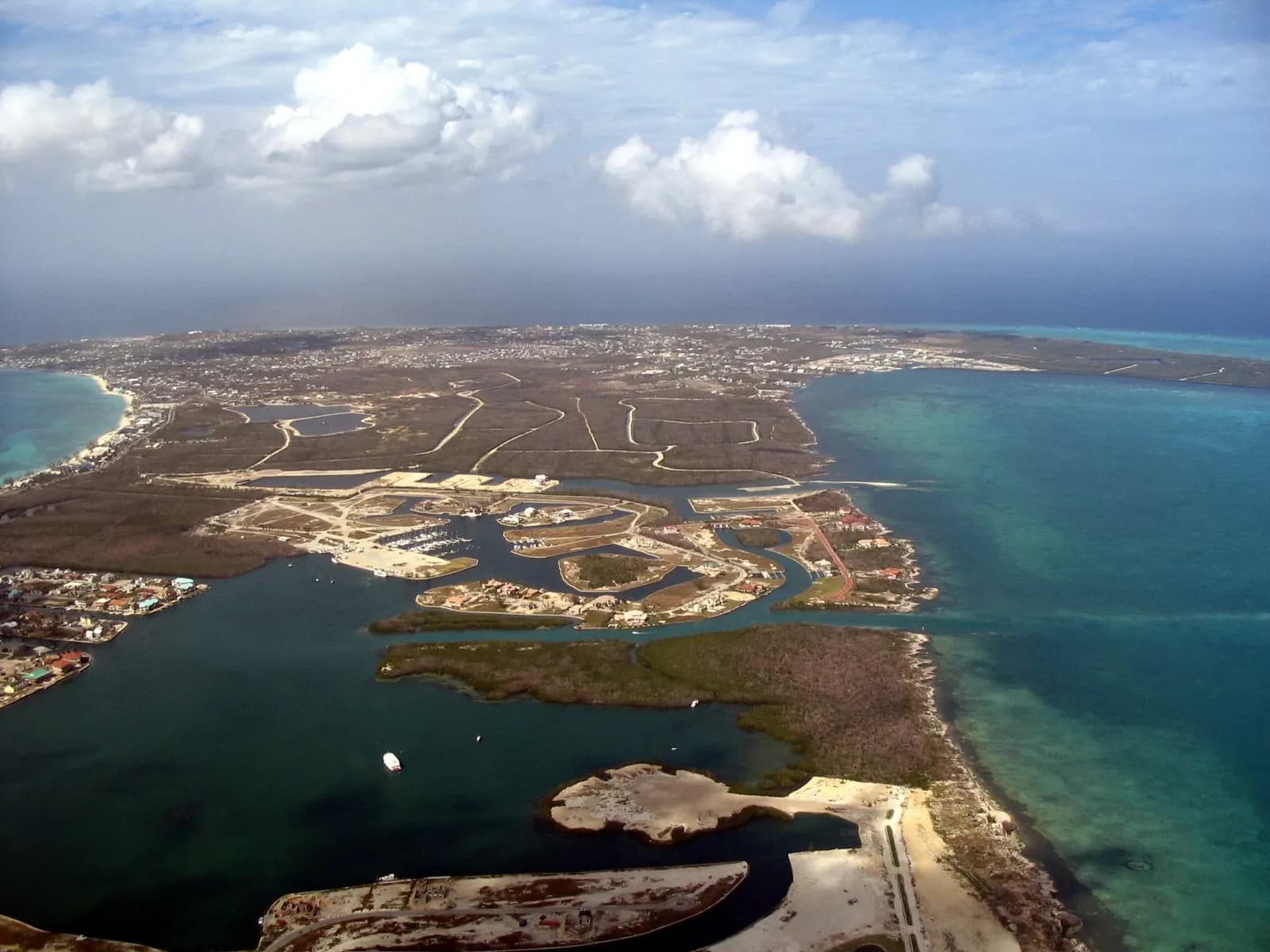
View of the Cayman Islands
Photo: Salvatore Freni Jr — Wikimedia Commons (CC BY)
Capital
George Town
Currency
KYD
Region
Caribbean

Key figures

  • Flight from Parisabout12 hours

Personal taxation

The Cayman Islands are one of the few territories where the absence of direct taxation is established by an official source rather than a brochure. Since the abolition of an annual poll tax in 1985, there has been no direct tax: the applicable rate is 0%2.

No income tax, no corporate tax, no capital gains tax and no inheritance tax. Public revenue comes from customs duties, property stamp duties, financial services licences and work permit fees.

This structure has a direct consequence for the cost of living: what is not levied on income is levied on imports, and the territory imports almost everything it consumes. No tax therefore does not mean cheap living — quite the opposite.

For a French national, the rule remains the same as in every zero-tax territory: the absence of local tax does not end French tax domicile. As long as the household or the centre of economic interests remains in France, Article 4 B of the French General Tax Code (code général des impôts) applies, and the territory offers no tax treaty to break the tie.

The Cayman Islands do, however, take part in international automatic exchange of information mechanisms. An account or structure held there by a French resident is reported: the confidentiality of the past no longer exists, and reasoning on that basis is an outdated mistake.

Residence routes and visas

The territory has no citizenship programme: it issues residence certificates, which are of a different legal nature. The main one is the certificate of residence for persons of independent means, provided for in section 41 of the immigration law.

It is granted for a period of 25 years3, making it one of the longest permits in the world — far beyond the five- or ten-year visas offered elsewhere.

The applicant must show an investment of one million Cayman Islands dollars, i.e. KYD 1,000,0004 — about about $1,200,0005 —, at least half of which must be in developed real estate.

An annual income condition is added, with a reference amount of around about $146,0006. The scheme is therefore aimed at substantial wealth and recurring income, not at start-up entrepreneurs.

The holder of such a certificate is not allowed to work locally: it is a non-working resident status. The permit may, however, be suspended if its holder is absent from the territory beyond a set period, assessed at the director's discretion, with a tolerance provided beyond 30 days7.

Other routes exist for working people — employer-linked work permits, certificates for people working in financial services — each with its own conditions.

The exact conditions for keeping the certificate, in particular the permitted length of absence and the renewal procedure, are not fully clear from our extracts: they must be checked with the immigration department.

Property

Foreigners can buy freely without any prior authorisation — unusual in a region where a landholding licence is the norm.

There is no annual property tax either. In return, a stamp duty is charged on acquisition, and it is one of the territory's main sources of revenue. It is an entry cost, not a holding cost: the equation of a long-term investment is profoundly altered as a result.

The market is concentrated on Grand Cayman, and in particular around Seven Mile Beach, where prices reach levels comparable to those of major US cities. Little Cayman and Cayman Brac are very narrow, illiquid markets.

Property is also the vehicle for the investment required for the residence certificate, for at least half of it. The property acquired is therefore not just an investment: the permit depends on it, and selling it would have consequences for the permit.

We do not publish the Cayman stamp duty rate: it does not appear in the extracts available to us and must be checked with the land registry before any commitment.

One methodological point is essential for this market: prices are quoted in Cayman Islands dollars, which have been pegged to the US dollar for decades. A European buyer therefore effectively bears a euro-dollar exchange risk on the whole transaction, rather than a risk on a volatile local currency. It is a different exposure, easier to read, but very real over a long horizon.

Construction is also subject to strict hurricane standards, which raise the cost per square metre but determine insurability. An older, non-compliant property can prove difficult to insure, and therefore difficult to finance and resell: compliance comes before location when assessing a purchase.

Cost of living

The Cayman Islands are among the most expensive territories in the world for a resident. From a household's point of view, the absence of direct tax is fully offset by the price of imported goods and housing.

We do not publish a typical monthly budget: we have not found an official Cayman series measuring a basket of spending comparable to that of an expatriate.

Four items dominate. Housing, with Grand Cayman rents in line with those of a major North American city. Food, imported and subject to customs duties. Electricity, generated from imported fuel. And healthcare, which is private, for which insurance is compulsory for residents and whose cost rises sharply with age.

The honest calculation is therefore to compare after-tax income in the Caymans, minus these four items, with after-tax income in France, where two of them are largely socialised. The gap remains very favourable for high incomes; it quickly reverses below that.

The hurricane season and the insurance it requires are a fifth item, often discovered after moving.

Procedures and timelines

  1. Choose the route: a certificate for persons of independent means if you will not work locally, a work permit otherwise;
  2. structure the investment while respecting the minimum share that must be in developed real estate;
  3. provide evidence of recurring annual income, a condition separate from the investment;
  4. take out the compulsory health insurance, a prerequisite for the stay;
  5. handle the departure from France according to its own criteria, as there is no treaty to break the tie.

The order matters: the property investment determines the certificate, but a property bought before the file is examined does not guarantee that it will be issued. The sequence must be settled with a local adviser before any payment.

We do not publish processing times: we have no quantified, dated official source for Cayman certificates.

Points to watch

  • The absence of direct taxation is established by an official source — this is rare in the region and worth emphasising.
  • The 25 years3 certificate does not allow you to work locally: it is a non-working resident status.
  • At least half of the KYD 1,000,0004 investment must be in developed real estate.
  • Below a certain income level, the cost of living absorbs a large share of the tax advantage.
  • The territory takes part in automatic exchange of information: confidentiality is no longer an argument.

Finally, the Cayman Islands illustrate better than any other territory the difference between zero tax and zero cost. The levy exists; it is simply shifted from income to consumption and property. For substantial wealth generating financial income, the trade-off remains very favourable; for a family on an average earned income, it is not, and comparing tax rates says nothing about it.

Pros and cons

Pros

  • Zero direct tax, a leading financial centre

  • High level of safety, very upmarket standard of living

  • Residence certificate valid for 25 years8, minimum presence of 30 days7/year

Cons

  • Cost of living among the highest in the world (everything is imported)

  • Very high entry ticket (investment of about $1,200,0005)

  • English-speaking only, hurricanes

  • Offshore reputation: heightened banking and reporting scrutiny

Frequently asked questions

Is there any tax in the Cayman Islands?

No tax on income, capital gains or inheritance.

How do you obtain residence?

Mainly through a substantial property investment, with residence certificates designed for wealthy individuals.

Is the cost of living high?

Yes, among the highest in the Caribbean.

Residence and citizenship by investment programmes

Data shared with the comparison tool: same amounts, same sources. Compare with other programmes

Residency certificate (25 years) for persons of independent means

Residence · Open · Official page

Minimum entry
  • from KYD 1,000,000 — investment, main applicantInvestment in Grand Cayman (≈ USD 1.2 million), at least half of it in developed real estate; alternative: regular annual income (Ogier law firm).ogier.com · Verified on Oct 13, 2026
Government fees (main applicant)
  • KYD 500 — government fees, main applicantApplication filing fee (Ogier law firm).ogier.com · Verified on Oct 13, 2026
  • KYD 20,000 — government fees, main applicantFee for issuing the certificate (Ogier law firm).ogier.com · Verified on Oct 13, 2026
Family
  • KYD 1,000 — cost per family member, per dependant, per yearAnnual fee for each dependant included (Ogier law firm).ogier.com · Verified on Oct 13, 2026
Processing time
Not provided
Required stay
Not provided
Permit duration
  • 25 years — permit duration, main applicantRenewable certificate (Ogier law firm).ogier.com · Verified on Oct 13, 2026

Certificate of permanent residence for persons of independent means

Residence · Open · Official page

Minimum entry
  • from KYD 2,000,000 — investment, main applicantInvestment in developed real estate in the Cayman Islands (about USD 2.4 million); source: Ogier law firm (May 2024).ogier.com · Verified on Oct 13, 2026
Government fees (main applicant)
  • KYD 500 — government fees, main applicantApplication filing fee (Ogier law firm, excerpt rephrased by the tool).ogier.com · Verified on Oct 13, 2026
  • KYD 100,000 — government fees, main applicantOne-off fee for issuing the certificate (Ogier law firm); this is not an investment.ogier.com · Verified on Oct 13, 2026
Family
Not provided
Processing time
Not provided
Required stay
Not provided
Permit duration
Not provided

Banks and accounts

Banks and accounts for this country

See this country on the tax map

Please note

General information, as of the date shown. A draft reform is not a rule in force: check the conditions with the authorities or a professional before deciding. Terms of use and disclaimers

Sources and verification dates

  1. 1.

    Flight from Paris : 12 hours

  2. 2.

    Cayman Islands: level of direct taxation : 0%

    « Following the abolition in 1985 of an annual head tax of CI$10 on all adult male residents up to 60 years, there are no direct taxes in the Cayman Islands. There is no income tax, company or corporation tax, inheritance tax, capital gains or gift tax. — Cayman Islands Government, « Our Finance & Economy ». »

    cigarchives.gov.kyVerified on Nov 2, 2026Verified source

  3. 3.

    Cayman Islands: duration of the residency certificate for persons of independent means : 25 years

    « 41. (2) An applicant under this section shall be granted a Residency Certificate for Persons of Independent Means, without the right to work, valid for twenty-five years and renewable thereafter at the discretion of the Director of WORC — Immigration (Transition) Act (2022 Revision), section 41(2). Section 41 non modifiée par les Immigration (Transition) (Amendment and Validation) Acts 2025 et 2026 (en vigueur le 1er mai 2026). »

    my.egov.ky

  4. 4.

    Cayman Islands: investment required for the residency certificate : KYD 1,000,000

    « […] and you have invested the sum of one million dollars, of which at least five hundred thousand dollars is in developed real estate in Grand Cayman — Caymanian Protection (Amendment) Regulations, 2026 (SL 16 of 2026), Schedule 5, Part B, 5(a). Montant légal : CI$ 1 000 000. »

    my.egov.ky

  5. 5.

    Cayman Islands: approximate equivalent of the investment required : $1,200,000

    « […] and you have invested the sum of one million dollars, of which at least five hundred thousand dollars is in developed real estate in Grand Cayman, and that you continue to maintain that level of investment — Caymanian Protection (Amendment) Regulations, 2026 (SL 16 of 2026), Schedule 5, Part B, 5(a). Montant légal : CI$ 1 000 000 (≈ 1 219 500 US$ par la parité fixe). »

    my.egov.ky

  6. 6.

    Cayman Islands: reference annual income required of the certificate holder : $146,000

    « Persons who hold a Residency Certificate for Persons of Independent Means issued under section 41 of the Act — 5. A declaration that (a) if you reside in Grand Cayman (i) you have a continuous source of annual income of no less than one hundred and twenty thousand dollars, without the need to engage in employment in the Cayman Islands — Caymanian Protection (Amendment) Regulations, 2026 (SL 16 of 2026), Schedule 5, Part B. Montant légal : CI$ 120 000 (1 KYD = 1,2195 USD, parité fixe) ≈ 146 341 US$. »

    my.egov.ky

  7. 7.

    Cayman Islands: period of absence beyond which a discretionary allowance applies : 30 days

    « 46. The holder of a Residency Certificate for Persons of Independent Means […] may, at the discretion of the Director of WORC, have the right to reside in the Islands revoked if — […] (b) the holder was not physically present in the Islands for a minimum of thirty days in aggregate in any calendar year — Immigration (Transition) Act (2022 Revision), section 46(b). »

    my.egov.ky

  8. 8.

    iles-caimans.residence-fiscale.ans.25 : 25 years

    « 41. (2) An applicant under this section shall be granted a Residency Certificate for Persons of Independent Means, without the right to work, valid for twenty-five years and renewable thereafter at the discretion of the Director of WORC — Immigration (Transition) Act (2022 Revision), section 41(2). Absence d'impôt direct : « There is no income tax, company or corporation tax, inheritance tax, capital gains or gift tax. » (Cayman Islands Government, Our Finance & Economy, cigarchives.gov.ky/economy). »

    my.egov.ky