Living in Nicosia
Living in Nicosia: neighbourhoods, cost of living and relocation
Cyprus's capital and administrative centre, Nicosia is more local and affordable than Limassol. A university city and seat of the institutions, it suits those who put practical daily life ahead of the seaside.
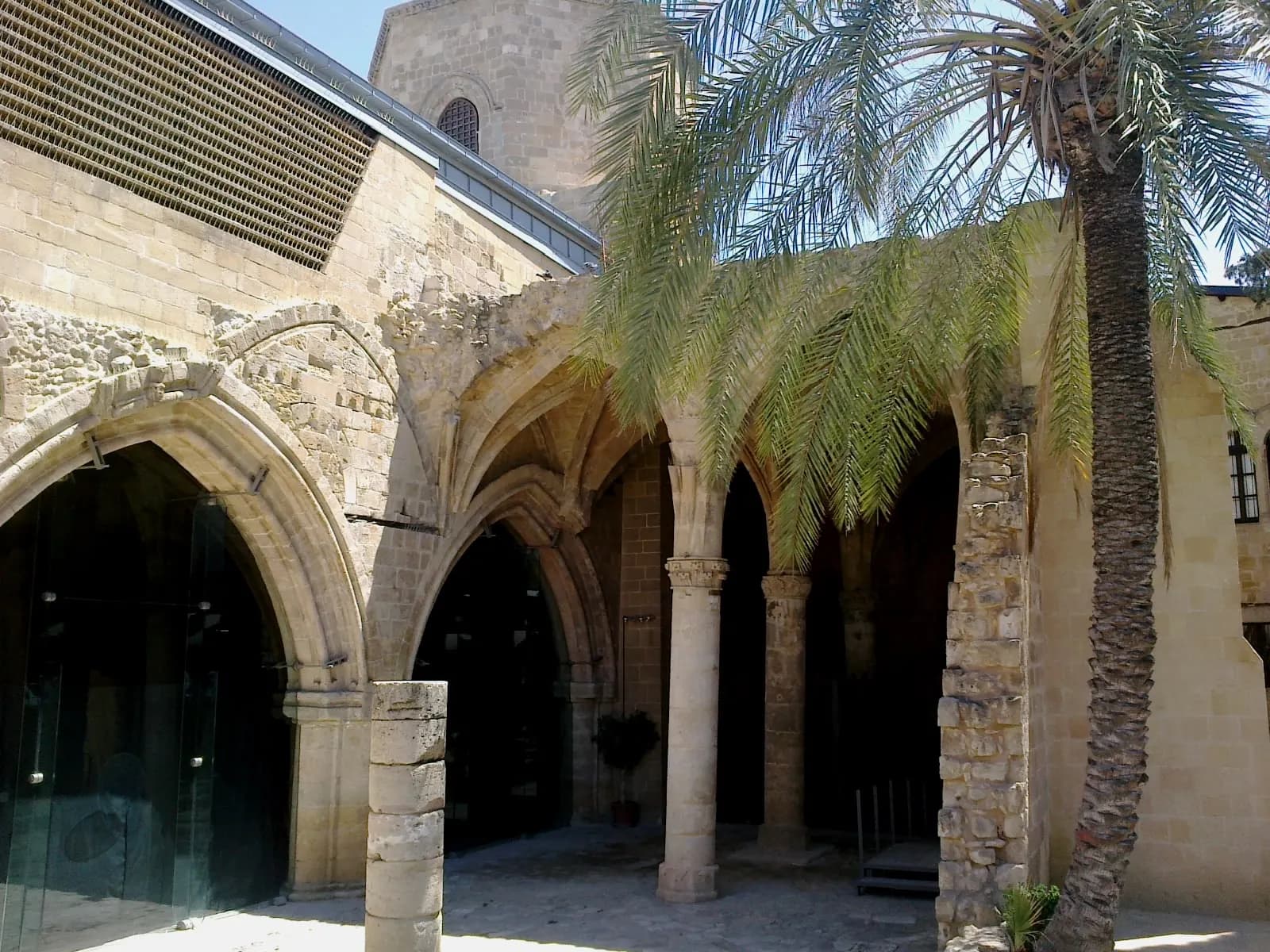
- Country
- Cyprus
Key figures
- Rent, 2-room flat (centre)about€800
- Single-person budgetabout€2,000
- Flight from Parisabout4 hoursVerified on Nov 2, 2026
Where to live: the neighbourhoods
Nicosia is the capital of Cyprus and the last divided capital in Europe. A demarcation line runs through the old town, and this feature shapes the city's geography as much as its daily life.
The old town, encircled by Venetian walls, can be explored on foot. Its southern part has been gradually restored around Ledra Street and the Faneromeni quarter; the buildings there are old and the homes small.
The southern districts — Strovolos, Egkomi, Aglantzia — form the modern residential heart. They combine recent apartment buildings, detached houses, schools and the University of Cyprus. This is where most families settle.
The business district, around Makarios Avenue and the Egkomi area, concentrates law firms, service companies and banks — the bulk of the city's economy.
Finally, the outlying villages and the Troodos foothills, towards Lakatamia or Kato Deftera, offer spacious houses at moderate prices, twenty to thirty minutes from the centre by car.
One criterion specific to the capital deserves to be raised from the outset: proximity to the demarcation line. It carries no day-to-day risk, but it restricts certain routes and limits the development of several blocks in the old town, whose buildings remain on hold.
Housing: the rental market
We do not publish a median rent for Nicosia: we have not found an official Cypriot series publishing rents by city or neighbourhood, and we do not use estimates from private agencies.
Nicosia is significantly cheaper than Limassol, and the gap between the two cities is the defining feature of the Cypriot market. The capital has not experienced the influx of wealthy foreign residents that transformed the coastal city.
The market there is therefore calmer, supply more plentiful and negotiation possible. For a family looking for space and schools, it offers the best value for money on the island.
As for buying, EU nationals can purchase freely. As everywhere in Cyprus, the status of the title deed must be checked: long-standing delays in issuing title deeds affect part of the housing stock already delivered.
An additional check is needed in Nicosia: some properties have a history linked to the population displacements of 1974, and the chain of ownership must be examined with a local lawyer.
Cost of living
Nicosia is cheaper than Limassol across all spending items, housing included. Services and eating out remain below Western European levels.
We do not publish a typical monthly budget: we have not found an official Cypriot series measuring a basket of spending comparable to that of an expatriate.
Climate is where the capital stands out most: located inland, on an enclosed plain, Nicosia has extremely hot summers with no sea breeze. Air conditioning runs for longer there than on the coast.
Electricity, generated from imported fuels, is among the most expensive in the European Union. It is the decisive energy item in a Cypriot budget.
Taxation, on the other hand, is the island's strong point: the scale starts at 0%4, peaks at 35%5, and gains on the disposal of securities are exempt, at a rate of 0%6.
Community & expat life
Nicosia is an administrative and university city rather than an expatriate city. The foreign population is smaller and less visible than in Limassol, and more closely linked to the institutions, universities and professional services.
English is spoken everywhere, which makes settling in straightforward. Social life, however, is more local, which suits those seeking genuine integration and frustrates those expecting an international milieu.
The Cypriot non-dom regime applies here as elsewhere on the island: exemption of passive income from the special defence contribution for 17 years7, with the healthcare system contribution of 2.65%8 still payable.
Cyprus's first-employment deduction is of interest to executives arriving on a high salary: 50%9 of remuneration is deductible above an annual threshold of more than €55,00010.
Practicalities: transport, health, good to know
There is neither train nor tram in Cyprus, and Nicosia's buses are infrequent. A car is essential, and driving is on the left.
Nicosia has no operating airport: the city's airport has been closed since 1974. Larnaca and Paphos airports are accessible by car, the former in about forty minutes.
The national health system covers registered residents. The capital's public and university hospital provision is the most comprehensive on the island.
- EU nationals can settle freely, with registration required beyond three months.
- Crossing the demarcation line is subject to specific rules, including for car insurance.
- Check the status of the title deed and the chain of ownership with a local lawyer before any purchase.
- The from 60 days11 tax residency rule involves strict, cumulative conditions.
Frequently asked questions
Nicosia or Limassol: where should you settle?
Limassol for business, the marina and an international setting; Nicosia for a more local, more affordable daily life, but without the seaside.
What budget do you need to live in Nicosia?
Does the non-dom regime apply in Nicosia?
Yes, it applies throughout the Republic of Cyprus.
Sources and verification dates
- 1.
Rent, 2-room flat (centre) : €800
- 2.
Single-person budget : €2,000
- 3.
Flight from Paris : 4 hours
Verified on Nov 2, 2026
- 4.
Cyprus: rate of the first income tax bracket : 0%
« DECLARATION FOR CLAIMING TAX DEDUCTIONS FOR THE TAX YEAR 2026 - Income Tax (By virtue of the Income Tax Law No.118(I) of 2002, as amended) — PART C. TAX COMPUTATION — Chargeable Income / Tax Rates : From 0 to 22.000 @ 0% ; From 22.001 to 32.000 @ 20 % ; From 32.001 to 42.000 @ 25 % ; From 42.001 to 72.000 @ 30 % ; From 72.001 @ 35 % — Tax Department, formulaire IR59 2026. »
gov.cyVerified on Nov 2, 2026Verified source
- 5.
Cyprus: top marginal income tax rate : 35%
« PART C. TAX COMPUTATION — Chargeable Income / Tax Rates : From 0 to 22.000 @ 0% ; […] From 42.001 to 72.000 @ 30 % ; From 72.001 @ 35 % — Tax Department, formulaire IR59 2026 (Income Tax Law No.118(I) of 2002, as amended). »
gov.cyVerified on Nov 2, 2026Verified source
- 6.
Cyprus: taxation of profits from the disposal of securities : 0%
« Tax wholly exempted income of: Profit from the sale of securities ; Dividends paid which are tax deductible from the paying co. ; Profits of a Permanent Establishment under certain criteria ; Gains relating to foreign exchange differences (forex) […] — Ministry of Finance, « Tax Incentives » (15 janvier 2026). »
gov.cyVerified on Nov 2, 2026Verified source
- 7.
Cyprus: period of tax residency after which a person is deemed domiciled : 17 years
« Furthermore, irrespective of the individual’s domicile of origin, any individual who has been a Cyprus tax resident for income tax purposes for at least 17 out of the last 20 years immediately before the tax year is deemed to acquire a domicile in Cyprus. […] Tax Consequences — Any individual who either: does not have a domicile in Cyprus (non-domiciled), or is not a Cyprus tax resident (non-resident) is not subject to Special Defence Contribution (SDC) on: rental income*; interest income; dividend income. — Tax Department, « Tax Residency/Domicility » (Special Defence Contribution Law N. 117(I)/2002). »
gov.cyVerified on Nov 2, 2026Verified source
- 8.
Cyprus: rate of the healthcare system contribution on passive income, at full effect : 2.65%
« Income earners (e.g. rent, interest, dividends) 1,70% 2,65% On their income »
gesy.org.cyVerified on Nov 2, 2026Verified source
- 9.
Cyprus: share of remuneration deductible for a first employment in the Republic : 50%
« If you are claiming a deduction for first employment in the Republic you are allowed to deduct either (a) 20% of your emoluments from any employment with a maximum of 8.550, or (b) 50% of your emoluments from any employment provided that your salary exceeds 100.000 in the tax year according to circular 2017/4 (EE04), or (c) 50% of your emoluments from any employment provided that your salary exceeds 55.000 in the tax year according to circular 2022/10 and 2024/04. — Tax Department, formulaire IR59 2026, notes (Income Tax Law, art. 8(23A)). »
gov.cyVerified on Nov 2, 2026Verified source
- 10.
Cyprus: annual remuneration above which the first-employment deduction applies : €55,000
« (c) 50% of your emoluments from any employment provided that your salary exceeds 55.000 in the tax year according to circular 2022/10 and 2024/04. — Tax Department, formulaire IR59 2026, notes. »
gov.cyVerified on Nov 2, 2026Verified source
- 11.
Cyprus: minimum annual presence under the so-called sixty-day rule : 60 days
« 60-day rule — An individual may be considered a tax resident of Cyprus even if they have not completed 183 days in Cyprus, provided that they meet all of the following conditions: They remain in Cyprus for at least 60 days during the tax year. They do not reside for more than 183 days during the year in another country. They carry on any business in Cyprus and/or are employed in Cyprus, whether as an employee and/or office holder. They maintain a permanent residence in Cyprus which they own or rent. — Tax Department, « Tax Residency/Domicility » (Income Tax Law N. 118(I)/2002, art. 2). »
gov.cyVerified on Nov 2, 2026Verified source
- 12.
chypre.immobilier.eur.1200 : €1,200