International mobility news

Mauritius

Moving to Mauritius in 2026: Low Taxes, Residence and Quality of Life

A French-speaking island in the Indian Ocean, Mauritius draws expatriates with low taxation (15% tax), residence that is accessible through property or business activity, and a tropical way of life. It is a leading destination for French entrepreneurs and retirees looking for sunshine and tax simplicity.

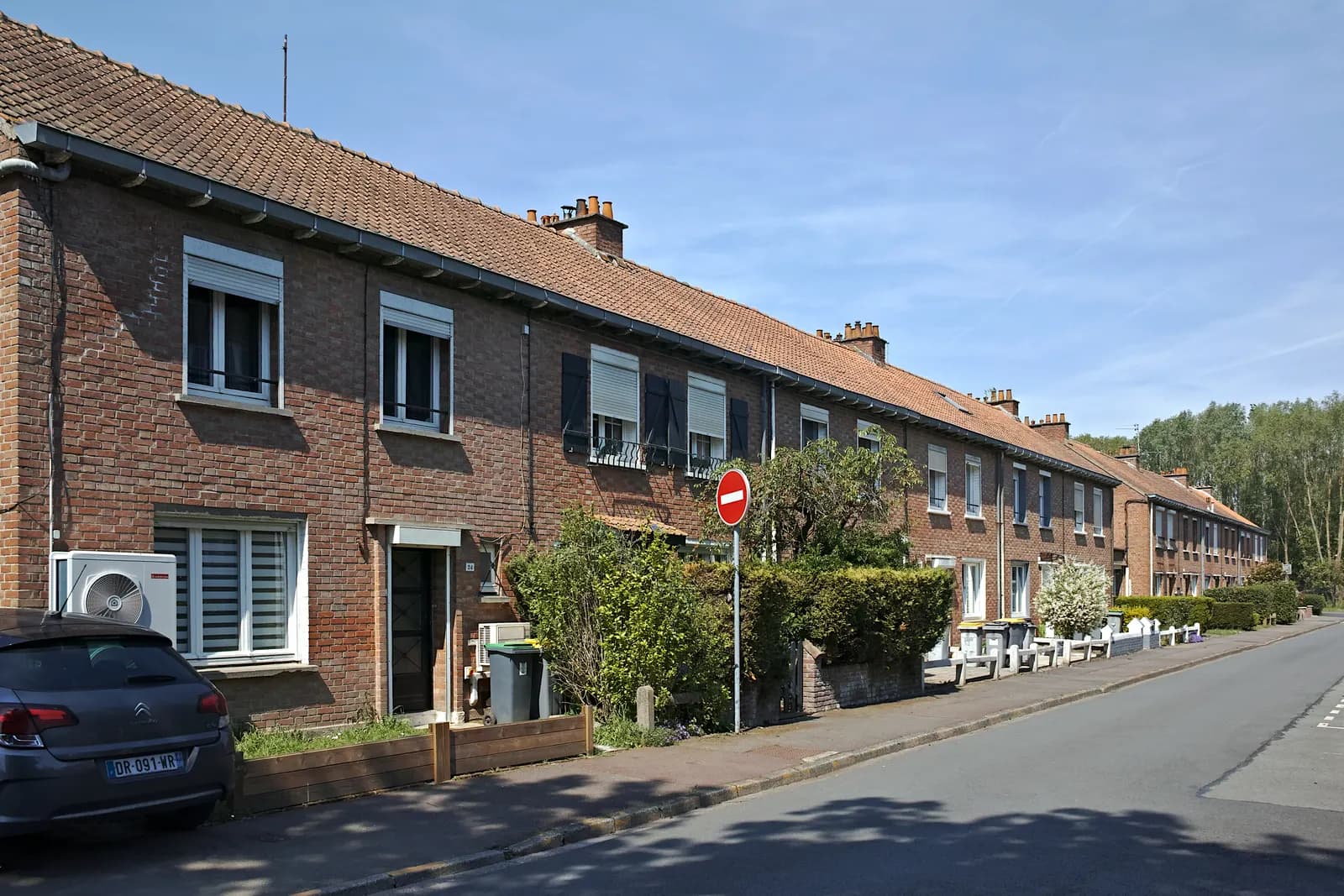
View of Mauritius
Photo: Velvet — Wikimedia Commons (CC BY-SA)
Capital
Port Louis
Currency
MUR
Region
Africa
Memberships
Commonwealth

Tax regimes at a glance

Each regime answers the same questions. A zero rate applies only to the income, person and period stated.

Your personal taxation

  • Personal income tax: progressive scaleGeneral regime

    Who for?
    Tax residents: individuals present in Mauritius beyond the annual threshold, or whose presence over the year and the two preceding years exceeds a second threshold, or who are domiciled in Mauritius.
    Which income?
    Taxable income: salaries, income from business activity, property income, interest; dividends from Mauritian companies are exempt.
    Which source?
    Mauritian-source income; foreign-source income of taxable residents when it is remitted to Mauritius (remittance basis).
    Conditions
    Scale by bands: an exempt base band, a reduced-rate band, an intermediate band, then a higher rate above the cumulative total of the first three bands.
    Duration
    Permanent regime.
    Since when?
    Scale introduced by the Finance Act 2026 (assented to on 12 August 2026), applicable from the income year starting on 1 July 2026; it creates a top band that replaces the Fair Share Contribution for individuals.
    • 183 days
    • 0% Mauritius: rate of the first bracket of the scale
    • MUR 500,000 Mauritius: width of each bracket of the income tax scale
    • 10% Mauritius: rate of the second band of the income tax scale
    • 20% Mauritius: rate applicable beyond the first two brackets
    • MUR 11,000,000 Mauritius: width of the bracket taxed at the intermediate rate (scale from the 2026 Finance Act)
    • 35% Mauritius: top marginal income tax rate (Finance Act 2026)
    • 0%

    Official source · mra.mu

  • Fair Share Contribution for individualsTemporaryExpired

    Who for?
    Individuals whose income, including dividends from resident companies, exceeded the statutory threshold.
    Which income?
    Taxable income plus certain dividends, on the portion above the threshold; dividends from Global Business entities and certain allowances are excluded.
    Which source?
    Same as for income tax.
    Conditions
    Additional contribution on top of income tax, withheld by the employer where applicable.
    Duration
    Originally planned for several income years, reduced to the 2025-2026 income year alone by the Finance Act 2026.
    Since when?
    Income year starting on 1 July 2025; no longer applies from 1 July 2026, the top band of the scale taking over.
    • 20% Mauritius: rate applicable beyond the first two brackets

    Figures being verified

    Official source · mra.mu

  • Premium Visa (remote work and long stay)Special regime

    Who for?
    Non-citizen foreigners who stay in Mauritius while working remotely for foreign clients or employers, or living on foreign income; treatment extended to Golden Visa holders by the Finance Act 2026.
    Which income?
    Employment or business income earned remotely from Mauritius for foreign parties.
    Which source?
    This income is deemed to be of Mauritian source only when it is remitted to Mauritius; income that is not remitted is not taxed.
    Conditions
    Holder of a Premium Visa; eligibility conditions not verified against an official source; the general tax residence rules apply beyond the presence threshold.
    Duration
    Duration of the visa, renewable.
    Since when?
    In force; secondary source, as the official page of the Economic Development Board could not be read.

    Official source · mu.andersen.com

  • Occupation and residence permits of the Economic Development BoardSpecial regime

    Who for?
    Investors, purchasers of a property under an approved real estate scheme, and non-citizen retirees.
    Which income?
    No tax advantage of its own: these are residence permits; taxation follows the general tax residence rules.
    Which source?
    Not applicable.
    Conditions
    Investor: minimum contribution depending on the option chosen; purchaser: minimum purchase price in an approved scheme (IRS, RES, PDS, Smart City), denominated in foreign currency; retiree: minimum age and regular financial transfers to Mauritius, the amount of which remains to be confirmed.
    Duration
    Duration of the permit, renewable; the permit linked to a property purchase lasts for as long as the property is held.
    Since when?
    Amended guidelines of the Economic Development Board of 30 July 2024.
    • $100,000 Mauritius, investor occupation permit: investment required under the first option
    • from $375,000 Mauritius: minimum acquisition price of a property under an approved scheme granting a residence permit
    • more than 50 years Mauritius: minimum age for non-citizen retiree status

    Official source · business.edbmauritius.org

Your company

  • Corporate income tax: standard rate and minimum taxation of large groupsGeneral regime

    Who for?
    Companies resident in Mauritius, including Global Business Companies; domestic minimum top-up tax for entities of multinational groups reaching the consolidated turnover threshold.
    Which income?
    Taxable income of the company.
    Which source?
    Rules on corporate residence and territoriality not verified in our sources.
    Conditions
    Standard rate; domestic top-up tax to bring the effective taxation of large groups up to the OECD minimum, from the tax year starting on 1 July 2025; substance requirements for Global Business Companies.
    Duration
    Permanent regime.
    Since when?
    In force; secondary source for the rate, as the MRA page could not be read.
    • 15% Mauritius: standard corporate income tax rate
    • from €750,000,000 Mauritius: consolidated revenue of groups subject to the domestic minimum top-up tax

    Official source · mu.andersen.com

  • Partial exemption of certain incomeSpecial regime

    Who for?
    Resident companies, including Global Business Companies, receiving eligible income.
    Which income?
    Foreign-source dividends, most interest (excluding banks and financial institutions), profits of foreign permanent establishments and other listed income.
    Which source?
    Mainly foreign-source income.
    Conditions
    Exemption of a portion of the income, subject to substance conditions; banks excluded for foreign dividends since 8 August 2025.
    Duration
    As long as the conditions are met, year by year.
    Since when?
    In force; secondary source.
    • 80% Mauritius: partial exemption of certain corporate income

    Official source · mu.andersen.com

  • Reduced rate for companies exporting goodsSpecial regime

    Who for?
    Companies exporting goods.
    Which income?
    Portion of taxable income attributable to the export of goods.
    Which source?
    Income derived from exports of goods.
    Conditions
    Reduced rate on the portion of income linked to exports only; the rest of the income is taxed at the standard rate.
    Duration
    Permanent regime.
    Since when?
    In force.
    • 3% Mauritius: corporate income tax rate for companies exporting goods

    Official source · mra.mu

  • Fair Share Contribution for companiesTemporary

    Who for?
    Companies other than Global Business Companies whose taxable income exceeds the threshold; separate regime for banks.
    Which income?
    Taxable income of the company.
    Which source?
    Same as for corporate income tax.
    Conditions
    Contribution at a rate that varies according to the company's regime (reduced rate for companies taxed at the exporter rate, higher rate for banks on transactions with residents); since the Finance Act 2026, taxable income has become the sole criterion for liability.
    Duration
    Income years starting on or after 1 July 2025 and ending no later than 30 June 2028.
    Since when?
    Finance Act 2025; adjusted by the Finance Act 2026.
    • from 2% Mauritius: lower bound of the Fair Share Contribution for companies
    • more than MUR 24,000,000 Mauritius: taxable income threshold above which a company is liable for the Fair Share Contribution

    Official source · rosemont-int.com

Compare with other countries:Foreign incomeCompany taxationRegimes for new residents

Key figures

  • Population1,300,000Verified on Nov 2, 2026
  • Flight from Parisabout11 hoursVerified on Nov 2, 2026

Taxation of individuals

Mauritius applies a short progressive scale, and its readability is one of its selling points. The first band, up to MUR 500,0003 of taxable income, is taxed at 0%4.

The next band, of the same width, is taxed at 10%5, followed by a band of MUR 11,000,0006 to 20%7. The Finance Act 2026 adds, from the income year starting on 1 July 2026, a top band taxed at 35%8 above these three bands, and in return abolishes the Fair Share Contribution that applied to high-income individuals. The top marginal rate remains lower than that of most Western European countries, and it targets only high incomes.

Corporate income tax is set at a standard rate, with a very favourable regime for the export of goods: 3%9 for companies that export goods. It is this differential, more than the personal income tax scale, that explains why structures are set up on the island.

We do not publish rates on capital gains or inheritances. The absence of taxation is frequently put forward for Mauritius; as of the date of consultation, we did not find an official page establishing it explicitly and with a date, and we prefer to assert nothing rather than repeat a brochure formula.

Tax residence, bank domiciliation and the residence permit are three distinct questions in Mauritius as elsewhere. A residence permit does not, in itself, entail a transfer of tax residence within the meaning of the applicable convention.

This is the point most often mishandled in Mauritian cases. The permit is issued by an economic promotion body whose mission is to attract investors, not to settle a question of tax domicile. Obtaining it proves that one meets the conditions of a welcome scheme; it does not prove that one has ceased to meet the French domicile criteria, which are assessed independently.

Three questions deserve to be put to an adviser before any commitment, and the answers depend on the individual situation more than on the country. Where is the household located, within the meaning of French law, once the family has settled? Where does the income come from after departure, and does it remain tied to a French activity? Finally, does the convention between France and Mauritius lead, for the income concerned, to the hoped-for result, or does it leave a right to tax at source?

A favourable answer to all three is what turns a move into a transfer of tax residence. None of the three is settled by obtaining a permit.
Residence routes and visas

The country organises the reception of foreigners through a series of occupation and residence permits, administered by the Economic Development Board. Three routes dominate.

The investor

The occupation permit for investment is available under two options: a contribution of $100,00010 for the first, and a separate amount for the second, subject to its own conditions. The amount for the second option changed with the revision of the Economic Development Board guidelines of 30 July 2024; we have not re-read it in the official source and it must be confirmed with the EDB.

The property purchaser

A non-citizen who acquires a residential property in one of the approved schemes (integrated resort, real estate scheme, property development) obtains a residence permit from a purchase price of at least from $375,00011, or its equivalent in convertible currency.

The retiree

The non-citizen retiree status is open to people aged at least more than 50 years12, subject to regular financial transfers to Mauritius.

The exact amount of the transfers required from the non-citizen retiree, whether monthly or cumulative annual, does not emerge clearly from the source extract available to us. Two values appear in our data without it being established which applies to what: we therefore do not publish them, and this point must be confirmed with the Economic Development Board.

Property

Acquisition by a non-citizen is not free: it goes through approved schemes, which determine both what can be bought and what rights the purchase opens. This is the structural difference from an open European market.

The threshold of from $375,00011 is the one that links the purchase to the residence permit. Below it, purchase remains possible in some schemes but does not confer the same right.

Two practical consequences follow. The market accessible to foreigners is a sub-market, with its own liquidity and its own buyers, resale taking place largely between non-citizens. And the entry price is denominated in a hard currency, which shifts the exchange rate risk onto the buyer.

We do not publish the registration duties or the land transfer tax applicable to non-citizens. An increase was announced as part of the budget framework; we did not find it in the official documents we were able to read, and we therefore give no figures.

Cost of living

Mauritius is an importing island: a large share of everyday consumer goods arrives by ship, and freight is reflected in prices. The gap with Europe is therefore less favourable on imported food and household appliances than it is on services and labour.

We do not publish a typical monthly budget: we did not find an official Mauritian series measuring a basket of expenses comparable to that of an expatriate.

A tax benchmark nonetheless gives the scale of the local economy: the first band of the scale, which is exempt, runs up to MUR 500,0003 of annual taxable income. This is the threshold that the legislator deemed appropriate for exemption, and it indicates the level of local incomes.

Two items weigh heavily in an expatriate budget: private schooling, almost obligatory for an international curriculum, and private health insurance, as the public system is little used by foreign residents.

Procedures and timelines

  1. Choose the route first (investor, property buyer or retiree), because it determines the documents required, the timeline and the rights obtained;
  2. for the property route, check that the project concerned falls under an approved scheme: it is the scheme, not the price alone, that confers the right;
  3. submit the application to the Economic Development Board, the one-stop shop for occupation and residence permits;
  4. open a Mauritian bank account, which is needed for the required transfers and for the payment of local taxes;
  5. deal with the departure from France separately: the criteria of article 4 B of the Code général des impôts and the applicable tax treaty are not settled by obtaining a Mauritian permit.

We do not publish processing times: we have no dated, quantified official source for permits issued by the Economic Development Board.

Points to watch

  • Access to the property market is conditional on approved schemes: for a non-citizen, freely choosing a property on the local market is not the rule.
  • The purchase threshold is expressed in a convertible currency, not in rupees: exchange-rate movements change the amount to be raised between the promise to sell and the deed.
  • The non-citizen retiree status requires regular financial transfers, the amount of which must be confirmed before committing; this is a condition for keeping the status, not only for obtaining it.
  • The Mauritian passport gives visa-free access to about 15013, noticeably fewer than a European Union passport.
  • The absence of tax on certain income is a widespread sales argument: it must be checked against the sources themselves before being built into an estate plan.

Finally, being an island carries a logistical and medical cost that appears in no tax comparison: distance from specialised care centres, dependence on air transport, the cyclone season. These are project parameters, just like a tax rate.

One last point concerns the country's trajectory. Mauritius built its appeal on a tax differential with its partners and on a dense network of tax treaties. This balance is regularly reviewed, both domestically and as a result of international work on corporate taxation and information exchange. The schemes that exist today have already been reworked in the past.

The practical consequence is the same as for any country whose appeal rests on a special regime: you must distinguish what is an acquired right for the duration of a permit from what is a policy that may be revised in the next finance act. This distinction must be checked against the text, scheme by scheme, before building a ten-year plan.

Pros & cons

Pros

  • French- and English-speaking, a very large French community, French schools

  • 20%7 maximum, no capital gains tax or inheritance tax

  • Tropical living environment, remarkable political stability by African standards

Cons

  • about 11 hours2 flight from Paris, limited time difference (+2 hours14/3 hours15) but real remoteness

  • Cyclones (January–March)

  • Healthcare: decent private clinics, but evacuation to Réunion for serious cases

Frequently asked questions

How are residents of Mauritius taxed?

Mauritius applies an income tax at a reduced rate (around 20%7), with no inheritance tax or wealth tax. The precise rules depend on the status and the source of the income.

How can you obtain residence in Mauritius?

There are several routes: the purchase of eligible property (from from $375,00011), the Occupation Permit (investor, professional or self-employed), or the Premium Visa for long-term stays.

Is Mauritius suitable for retirees?

Yes: a retiree permit exists for more than 50 years12 who can show a regular income, with a tropical living environment and light taxation.

Residence and citizenship by investment programmes

Data shared with the comparison tool: same amounts, same sources. Compare with other programmes

Residence permit through property acquisition (PDS / Smart City)

Residence · Open · Official page

Minimum entry
  • from $375,000 — investment, main applicantInvestment in an eligible activity, 20-year residence permit (Sovereign Group, unofficial).sovereigngroup.com · Verified on Oct 13, 2026
  • from $375,000 — investment, main applicantPurchase of a property in an approved PDS or Smart City project; source: Sovereign Group (service provider, unofficial) — to be checked on the EDB website.sovereigngroup.com · Verified on Oct 13, 2026
Government fees (main applicant)
Not provided
Family
Not provided
Processing time
Not provided
Required stay
Not provided
Permit duration
Not provided

Banks and accounts

Accounts held in this country

Banks and accounts for this country

See this country on the tax map

Please note

General information, as of the date shown. A draft reform is not a rule in force: check the conditions with the authorities or a professional before deciding. Terms of use and disclaimers

Sources and verification dates

  1. 1.

    Population : 1,300,000

    Verified on Nov 2, 2026

  2. 2.

    Flight from Paris : 11 hours

    Verified on Nov 2, 2026

  3. 3.

    Mauritius: width of each bracket of the income tax scale : MUR 500,000

    « Chargeable Income (Rs) / Rate of Income Tax : First Rs 500,000 — 0% ; Next Rs 500,000 — 10% ; On the remainder — 20%. — Mauritius Revenue Authority, « Payroll Taxes », 6 octobre 2025. »

    mra.muVerified on Nov 2, 2026Verified source

  4. 4.

    Mauritius: rate of the first bracket of the scale : 0%

    « Chargeable Income (Rs) / Rate of Income Tax : First Rs 500,000 — 0% ; Next Rs 500,000 — 10% ; On the remainder — 20%. […] 5. Fair Share Contribution — An individual is liable to pay, in addition to his income tax liability, a Fair Share Contribution where, in an income year, his Fair Share Contribution Income Threshold exceeds 12 million rupees [au taux de 15 %]. — Mauritius Revenue Authority, « Payroll Taxes », 6 octobre 2025 (année de revenu 2025/26). »

    mra.muVerified on Nov 2, 2026Verified source

  5. 5.

    Mauritius: rate of the second band of the income tax scale : 10%

    « Next Rs 500,000 10 »

    Mauritius Revenue Authority, « MRA eNews, June 2025 »Verified on Nov 2, 2026Verified source

  6. 6.

    Mauritius: width of the bracket taxed at the intermediate rate (scale from the 2026 Finance Act) : MUR 11,000,000

    « Next 11 million rupees 20 Remainder 35 »

    Republic of Mauritius / Mauritius Revenue Authority, « The Finance Act 2026 (Act No. of 2026, assented 12 August 2026) »Verified on Nov 2, 2026Verified source

  7. 7.

    Mauritius: rate applicable beyond the first two brackets : 20%

    « Chargeable Income (Rs) / Rate of Income Tax : First Rs 500,000 — 0% ; Next Rs 500,000 — 10% ; On the remainder — 20%. — Mauritius Revenue Authority, « Payroll Taxes », 6 octobre 2025. »

    mra.muVerified on Nov 2, 2026Verified source

  8. 8.

    Mauritius: top marginal income tax rate (Finance Act 2026) : 35%

    « Next 11 million rupees 20 Remainder 35 »

    Republic of Mauritius / Mauritius Revenue Authority, « The Finance Act 2026 (Act No. of 2026, assented 12 August 2026) »Verified on Nov 2, 2026Verified source

  9. 9.

    Mauritius: corporate income tax rate for companies exporting goods : 3%

    « Companies engaged in export of goods : 3% (w.e.f 01 July 2017) »

    mra.muVerified on Nov 2, 2026Verified source

  10. 10.

    Mauritius, investor occupation permit: investment required under the first option : $100,000

    « 2.2 Criteria — An Investor may apply for an OP (Investor) under two options: (i) Option 1 - Investor USD 100,000 ; (ii) Option 2 - Investor for Innovative Start-Ups. 2.2.1 Option 1: Investor USD 100,000 — Initial investment of USD 100,000 or its equivalent in freely convertible foreign currency […] 4. Self-Employed — 4.2 Criteria 1. Initial investment of USD 50,000, or its equivalent in freely convertible foreign currency, provided that the self-employed is engaged in the services sector only — EDB Mauritius, « Occupation Permit Guidelines ». »

    business.edbmauritius.orgVerified on Nov 2, 2026Verified source

  11. 11.

    Mauritius: minimum acquisition price of a property under an approved scheme granting a residence permit : $375,000

    « a non-citizen, who purchases – (a) an immovable property under the Integrated Resort Scheme, Real Estate Scheme, Invest Hotel Scheme, Property Development Scheme or Smart City Scheme; or (b) an apartment used, or available for use, as a residence in a building of at least 2 floors above ground floor, – for a purchase price of at least USD 375,000, or its equivalent in any other hard convertible foreign currency, where the exchange rate to be used to calculate the US Dollar equivalent shall be the selling rate in force at the time of signature of the title deed shall be eligible for an RP. »

    business.edbmauritius.orgVerified on Nov 2, 2026Verified source

  12. 12.

    Mauritius: minimum age for non-citizen retiree status : 50 years

    « A Retired Non-Citizen is a person who is not a citizen of Mauritius and who is aged 50 years or above. »

    business.edbmauritius.orgVerified on Nov 2, 2026Verified source

  13. 13.

    Mauritian passport: visa-free destinations : 150

    « Henley Passport Index — classement des passeports par nombre de destinations accessibles sans visa préalable (données IATA), consulté à la date indiquée. Valeur reprise de l’index de l’ancien site (barème à 227 destinations). »

    henleyglobal.comVerified on Nov 2, 2026Verified source

  14. 14.

    maurice.transport.heures.2 : 2 hours

    Verified on Nov 2, 2026

  15. 15.

    maurice.transport.heures.3 : 3 hours

    Verified on Nov 2, 2026