News brief · Nomad visas
Cape Verde: a nomad visa three hours from Europe
Cape Verde offers a remote work programme a few hours' flight from Europe. Its duration is short and its income threshold modest: it is a scheme for a stay, not a solution for settling.
By Editorial team · on June 7, 2026
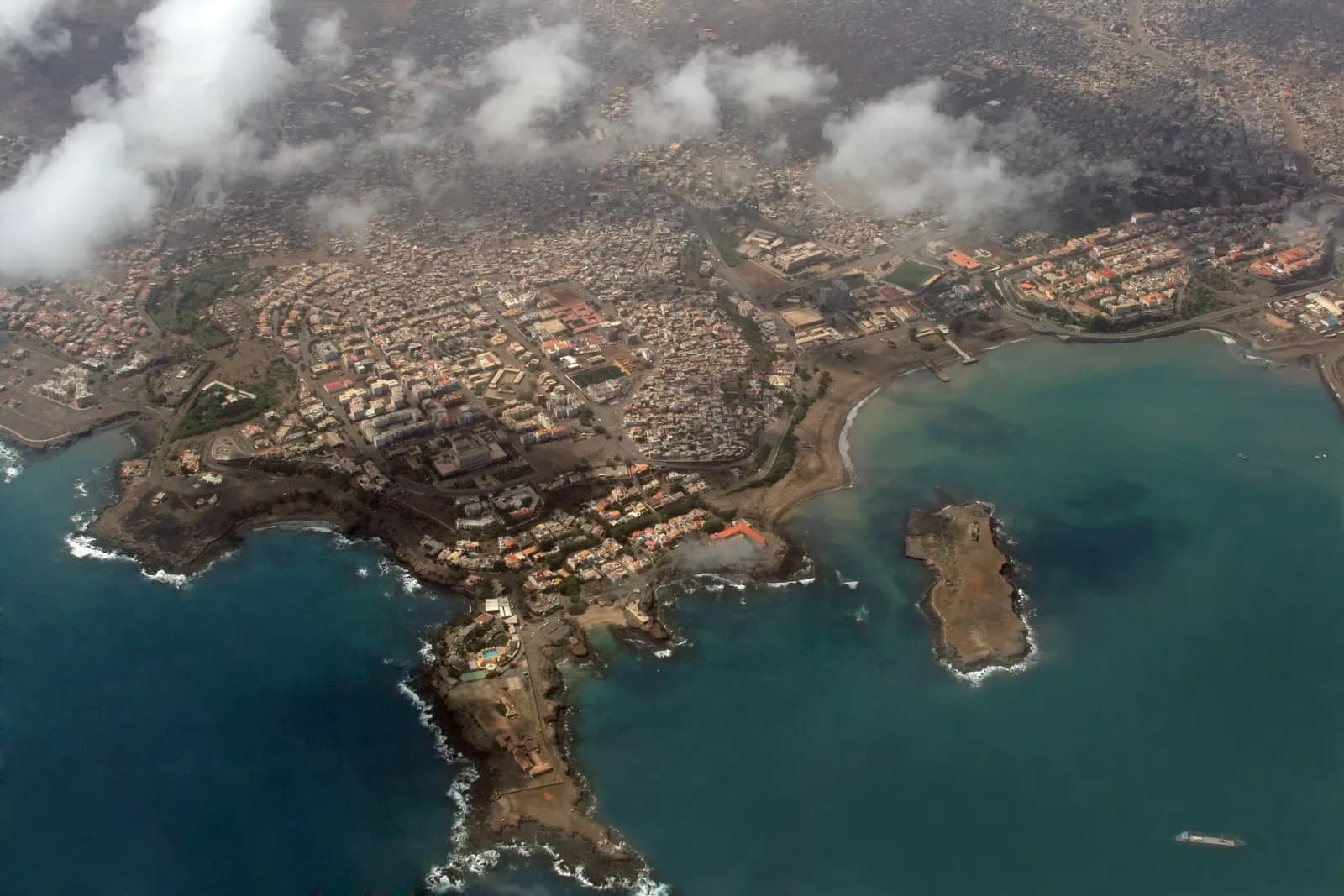
What the programme provides
Cape Verde has created a programme for people working remotely for an employer or clients located outside the archipelago.
The average reference monthly income required of the applicant stands at about €1,5001. This is a modest threshold compared with comparable European schemes.
The maximum total duration of the programme is up to 1 year2. This is the main constraint: the scheme is designed for a stay, not for settling.
This brevity is consistent with its logic: it is precisely what keeps the holder from crossing the tax residency threshold, which stands at 183 days3 of presence per year.
A stay of a full year does, however, cross this threshold. The tax question is therefore not ruled out by the duration of the permit, contrary to what its presentation suggests.
The Cape Verdean tax framework
The aggregate income scale runs from 16.5%4 on its first bracket to 27.5%5 at its top marginal rate.
The entry rate is therefore high: there is no zero-rate bracket as in most progressive scales. A modest income is proportionally taxed more heavily there than elsewhere.
Income in the capital category bears a withholding of 10%6, and certain income in the capital gains category a withholding that can go as low as 1%7.
Corporate tax has been raised to 20%8, compared with 22%9 under the previous regime.
Cape Verde is therefore not a low-tax jurisdiction for a resident. Its appeal lies in its geographical position and its cost of living, not in its tax regime.
What the archipelago really offers
The central argument is distance: a few hours' flight from Europe, with a minimal time difference, which makes remote work for European clients genuinely practicable.
This is an advantage that Asian or Latin American destinations do not offer, and it is decisive for a freelancer whose clients expect availability during European business hours.
On the other hand, the archipelago has the constraints of a remote island territory: total dependence on imports, energy costs, limited medical provision requiring evacuation for major procedures, and digital connectivity that varies from island to island.
We do not publish application fees, processing times or a typical monthly budget for Cape Verde: we have not been able to verify them in an up-to-date official source.
The cost of living deserves a nuance that presentations leave out. Services and labour are very affordable, but imported food, energy and durable goods are expensive, sometimes more so than in Europe. A household that consumes locally spends little; a household that reproduces its European habits spends a lot.
The currency is also pegged to the euro under a fixed parity agreement, which removes the exchange rate risk for income in euros. This is a concrete advantage, rare for a destination outside Europe, and it makes prices immediately readable.
Key takeaways
- The maximum duration of up to 1 year2 makes it a scheme for a stay, not for settling.
- The income threshold of about €1,5001 is one of the most accessible.
- A stay of a full year crosses the tax residency threshold of 183 days3.
- The scale starts at 16.5%4: there is no exempt bracket.
- Proximity to Europe is the scheme's real argument, not its taxation.
For a French national, the practical conclusion is that Cape Verde lends itself well to a season of remote work, and poorly to an expatriation plan. This is not a flaw in the scheme: it is what it was designed for, and presentations that make it an alternative to Portugal or Greece misunderstand its nature.
Please note
Sources and verification dates
- 1.
Cape Verde: reference average monthly income required of the remote worker : €1,500
« Proof of Income — You'll be required to present your proof of income as an individual or as a family, regarding at least the last 6 months. Individual: minimum average bank balance of 1.500€ on the last 6 months; Family: minimum average bank balance of EUR 2.700 — Turismo de Cabo Verde, page « Remote working Program in Cabo Verde ». »
visit-caboverde.comVerified on Nov 2, 2026Verified source
- 2.
Cape Verde: maximum total duration of the remote working programme : 1 year
« The Cabo Verde Remote Working Program consists of a temporary work/tourism visa lasting 6 months, with the opportunity of renewal for another 6 months after. — Turismo de Cabo Verde (office national du tourisme, « GovernmentOrganization »), page « Remote working Program in Cabo Verde ». Certificat TLS du site expiré à la date de consultation. »
visit-caboverde.comVerified on Nov 2, 2026Verified source
- 3.
Cape Verde: annual presence giving rise to tax residency : 183 days
« Artigo 21º Residência — São residentes em território nacional os sujeitos passivos em relação aos quais, no ano a que respeitem os rendimentos, ocorra alguma das seguintes situações: a) Hajam nele permanecido mais de cento e oitenta e três dias, seguidos ou interpolados em qualquer período de doze meses; b) Aí disponham em 31 de Dezembro desse ano de habitação que seja a sua residência habitual — Código do IRPS, Lei n.º 78/VIII/2014, de 31 de dezembro (B.O. I Série n.º 81), art. 21.º. Texte lu sur la reproduction du B.O. (fiscocaboverde.com/wp-content/uploads/2015/01/cirps-editado.pdf) ; le PDF du ministère des Finances est servi derrière une page dynamique. »
mf.gov.cvVerified on Nov 2, 2026Verified source
- 4.
Cape Verde: rate of the first bracket of the aggregated income schedule : 16.5%
« Artigo 45º — 1. A taxa de imposto aplicável aos rendimentos objecto de englobamento […] é de: a) 16,5% para rendimentos até 960.000$00 (novecentos e sessenta mil escudos) anuais; b) 23,1% para rendimentos superiores a 960.000$00 e até 1.800.000$00 anuais; c) 27,5% para rendimentos superiores a 1.800.000$00 (um milhão e oitocentos mil escudos) anuais. 2. Está isento de tributação o rendimento colectável até ao montante de 220.000$00 — Código do IRPS, Lei n.º 78/VIII/2014, art. 45.º. »
mf.gov.cvVerified on Nov 2, 2026Verified source
- 5.
Cape Verde: top marginal rate of the aggregated income schedule : 27.5%
« Artigo 45º — 1. A taxa de imposto aplicável […] é de: […] c) 27,5% para rendimentos superiores a 1.800.000$00 (um milhão e oitocentos mil escudos) anuais. — Código do IRPS, Lei n.º 78/VIII/2014, art. 45.º. »
mf.gov.cvVerified on Nov 2, 2026Verified source
- 6.
Cape Verde: withholding tax on category D income : 10%
« Artigo 49º Taxa de retenção da categoria D — Os rendimentos da categoria D estão sujeitos a taxa de retenção na fonte de 20%, excepto os das alíneas f), e j) do artigo 14º cuja taxa é de 10%, todos com carácter liberatório, sem opção de englobamento ; art. 14.º j) : os rendimentos obtidos pela participação em fundos próprios de qualquer tipo de entidades, tais como os dividendos e quaisquer participações nos lucros das sociedades — Código do IRPS, Lei n.º 78/VIII/2014, art. 49.º et 14.º. »
mf.gov.cvVerified on Nov 2, 2026Verified source
- 7.
Cape Verde: lowest withholding rate in category E : 1%
« Artigo 50º Taxa de retenção da categoria E — Os rendimentos da categoria E estão sujeitos às seguintes taxas de retenção na fonte, com carácter liberatório, sem opção de englobamento […]: a) 1% no caso dos rendimentos a que se referem as alíneas a) a d) do nº 1, do artigo 17º; b) 20% no caso dos rendimentos a que se refere o nº 2 do artigo 17º. Art. 17.º n.º 1 : ganhos resultantes da alienação onerosa de direitos reais sobre bens imóveis […], de partes sociais […] ou de outros valores mobiliários — Código do IRPS, Lei n.º 78/VIII/2014, art. 50.º et 17.º. »
mf.gov.cvVerified on Nov 2, 2026Verified source
- 8.
Cape Verde: corporate income tax rate resulting from the legislative amendment : 20%
« Artigo 29.º — Alteração à Lei n.º 82/VIII/2015, de 8 de janeiro — O artigo 84.º da Lei n.º 82/VIII/2015 […] que aprova o Código do Imposto sobre o Rendimento das Pessoas Coletivas (CIRPC) […] passa a ter a seguinte redação: « Artigo 84.º Taxa geral de Imposto — 1. A taxa de IRPC é de 20% (vinte por cento) para os sujeitos passivos enquadrados no regime de contabilidade organizada. » — Lei n.º 69/X/2025, de 31 de dezembro (Orçamento do Estado para 2026), Boletim Oficial I Série n.º 133, 1.º suplemento, p. 11. »
boe.incv.cvVerified on Nov 2, 2026Verified source
- 9.
Cape Verde: former corporate income tax rate : 22%
« Artigo 29.º — Alteração à Lei n.º 82/VIII/2015, de 8 de janeiro — O artigo 84.º da Lei n.º 82/VIII/2015 […] que aprova o Código do Imposto sobre o Rendimento das Pessoas Coletivas (CIRPC) […] passa a ter a seguinte redação: « Artigo 84.º Taxa geral de Imposto — 1. A taxa de IRPC é de 20% (vinte por cento) para os sujeitos passivos enquadrados no regime de contabilidade organizada. » — Lei n.º 69/X/2025, de 31 de dezembro (Orçamento do Estado para 2026), Boletim Oficial I Série n.º 133, 1.º suplemento, p. 11. »
boe.incv.cvHistorical value, applicable until January 1, 2026