News brief · Nomad visas
Estonia: e-Residency passes a new adoption milestone
Estonian e-Residency lets you run a company remotely. The official portal says so plainly: it confers neither a right of residence nor tax residency. This is the most costly confusion in all of digital expatriation.
By Editorial team · on August 10, 2026
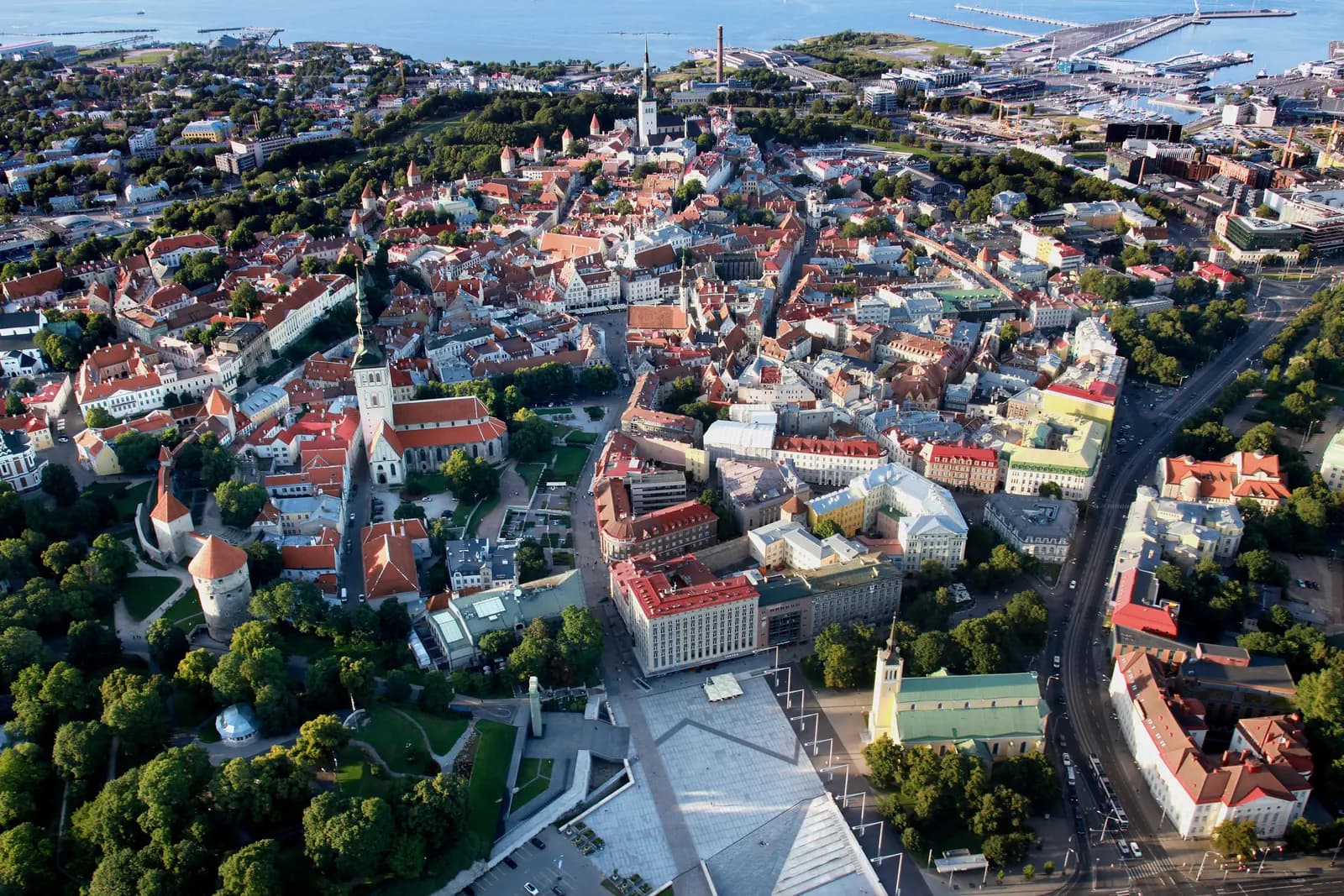
What e-Residency allows
Estonia issues foreigners a digital identity that gives access to its online public services: incorporating a company, electronic signature, filings, banking. The holder does not need to travel there to run their structure.
The scheme relies on a digital administration that is, in fact, one of the most advanced in the world. It makes it possible to manage a European company from anywhere on the globe, with very light formalities.
It is of real value for a self-employed digital worker who wants an entity in the European Union, with a European VAT number and access to payment services in the single market.
We do not publish a number of e-residents: we did not find an up-to-date official Estonian statistic to document it, and we therefore do not repeat the figure in circulation.
What it does not allow
The official portal of the Republic of Estonia states it unambiguously: e-Residency confers neither a right of residence, nor tax residency, nor a travel document. This is not a nuance; it is the core of the scheme.
An e-resident remains tax-domiciled where they live. A French national who sets up an Estonian company without leaving France remains taxable in France on all their income.
Worse, the company itself may be regarded as having its place of effective management in France, and be taxed there on that basis. Where management is located is demonstrated by facts — where decisions are made, contracts signed, meetings held — not by a trade register.
This is the main pitfall of Estonian structures sold remotely, and it is all the more serious because the scheme is presented as perfectly legal, which it is: the illegality comes not from the tool but from how it is used.
Estonia also issues a separate visa for remote workers, which requires net monthly income of at least about €4,5001 and allows a one-year stay. It is this permit, not e-Residency, that allows you to live in Estonia.
The Estonian tax regime, for those who settle there
What is distinctive about Estonia is the timing of taxation. Undistributed profit is not taxed: the applicable rate is 0%2. Tax is due on distribution.
At that point, the tax authority applies a rate of 22/78 of the net amount paid out, i.e. about 22%3 of the gross amount. The reduced rate for regular distributions was abolished on 1 January 2025.
Personal income tax stands at 22%4 for 2026, compared with 20%5 in 2024, with a general allowance of €8,4006 per year.
Social tax, payable by the employer, is added at a rate of 33%7. It determines the real cost of remuneration, and it is systematically left out of comparisons of personal tax rates.
Key takeaways
- e-Residency is a remote administration tool, not an expatriation instrument.
- An Estonian company managed from France may be taxed there on the basis of its effective management.
- Estonian tax deferral benefits a business that reinvests, and does nothing for one that distributes everything.
- Living in Estonia requires a separate permit: freedom of movement for a European, a digital nomad visa for a third-country national.
- The cost of remuneration includes the 33%7 social tax, not just income tax.
The practical conclusion can be summed up in one sentence: Estonia rewards those who settle and work there, and offers no protection at all to an executive who stays in France and merely registers a company there. The scheme is excellent; it is the way it is used in commercial offers that is misleading.
Please note
Sources and verification dates
- 1.
Estonia: minimum net monthly income for the digital nomad visa : €4,500
« Your income meets the minimum threshold of €4,500 net/monthly »
e-resident.gov.eeVerified on Nov 2, 2026Verified source
- 2.
Estonia: taxation of undistributed profits : 0%
« Corporate income tax is 22/78. From 1 January 2025 […] only the standard rate of 22/78 applies. — EMTA, « Tax rates ». L'impôt sur les sociétés estonien ne frappe que les bénéfices distribués (Income Tax Act § 50) : les bénéfices réinvestis ne sont pas imposés. »
emta.eeVerified on Nov 2, 2026Verified source
- 3.
Estonia: taxation of distributed profits, 22/78 of the net amount paid out : 22%
« Corporate income tax is 22/78. From 1 January 2025, the tax calculation of regularly distributed dividends, i.e. the lower tax rate of 14/86, was abolished and only the standard rate of 22/78 applies. »
emta.eeVerified on Nov 2, 2026Verified source
- 4.
Estonia: personal income tax rate (2026) : 22%
« 2026 The rate of withheld income tax is 22%. »
emta.eeVerified on Nov 2, 2026Verified source
- 5.
Estonia: personal income tax rate applicable in 2024, since replaced : 20%
« 2024 — The rate of withheld income tax is 20%. — Estonian Tax and Customs Board (EMTA), « Tax rates ». Le taux est passé à 22 % au 1er janvier 2025. »
emta.eeHistorical value, applicable until December 31, 2024
- 6.
Estonia: annual general income tax allowance (2026) : €8,400
« The basic exemption is 700 euros per month, i.e. 8,400 euros per year, or 776 euros per month, i.e. 9,312 euros per year at pensionable age. »
emta.eeVerified on Nov 2, 2026Verified source
- 7.
Estonia: rate of social tax payable by the employer : 33%
« The rate of social tax is 33 per cent. »
emta.eeVerified on Nov 2, 2026Verified source