News brief · Taxation
Qatar: corporate taxation capped at 10%
Qatari corporate tax is set at a single flat rate, with no scale or brackets. For an entrepreneur, it is the clarity of this regime that matters, more than its level.
By Editorial team · on February 17, 2026
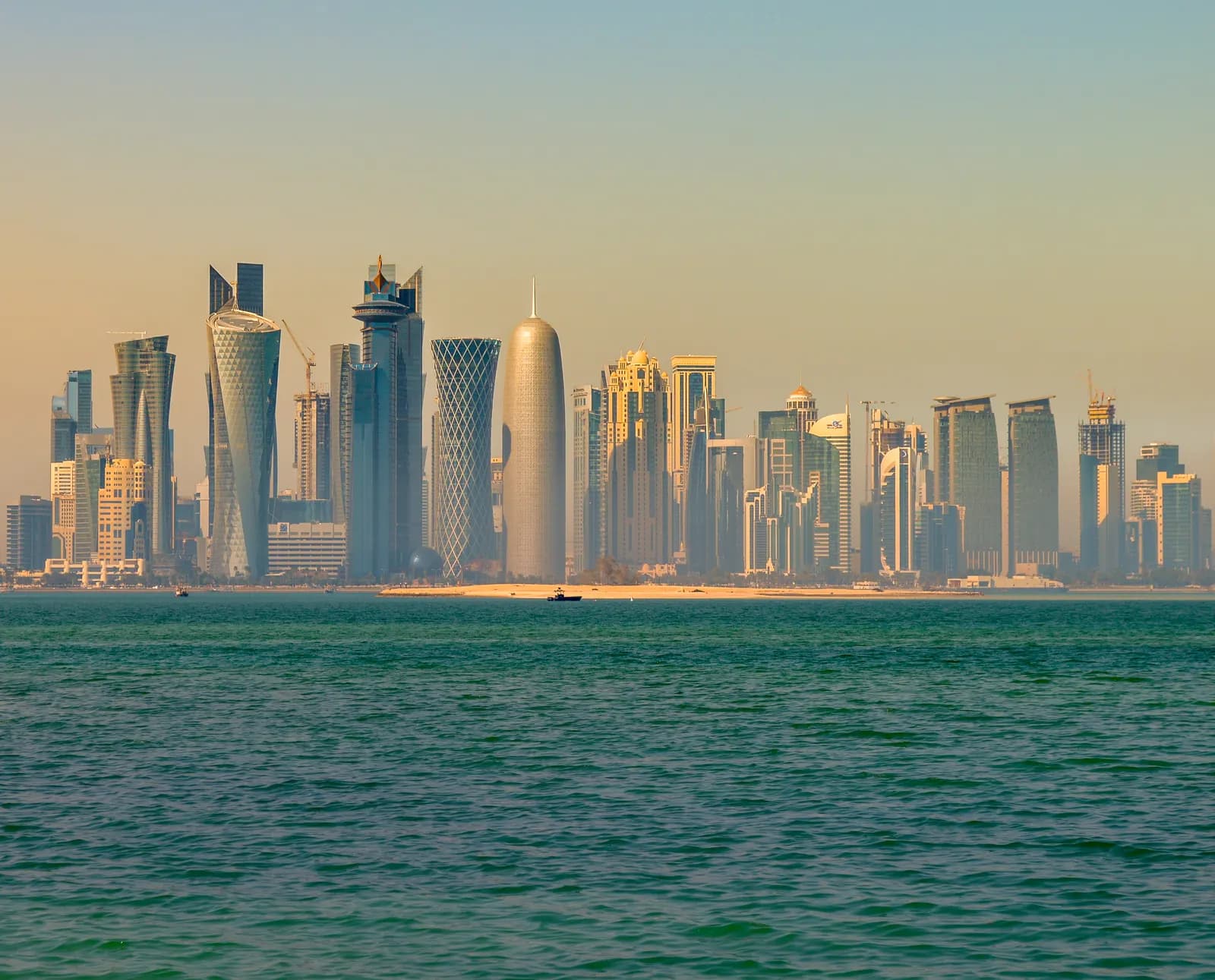
A single rate, with no scale
Qatari corporate tax is set at 10%1 of taxable income, applicable to all activities.
There is no progressive scale, no reduced bracket and no entry threshold. A modest profit and a large profit bear the same rate, which makes the calculation immediate.
This clarity is an advantage in itself. It contrasts with the Emirati regime, which applies 9%2 above a threshold of AED 375,0003, and whose free zones keep a zero rate on their qualifying income only, subject to substance requirements.
A global minimum tax has been introduced for multinational groups within its scope. Small structures are not affected, but the instrument now exists in Qatari law.
Individuals are not taxed on their income, and interest and bank income received by persons not carrying on an activity in Qatar are exempt, at a rate of 0%4.
This simplicity has a downside that rate comparisons ignore: Qatar offers no special regime for small structures or start-ups, whereas Singapore and Hong Kong provide reduced brackets on the first tranche of profits.
For a new business, the single rate is therefore less favourable than a scale with a low bracket, and the gap narrows as profit grows. An entrepreneur should run this calculation over their trajectory, not over a single year.
What the regime presupposes
We do not publish the territorial rules of this tax, the regime for companies owned by Gulf nationals or the exemptions applicable to certain activities: they do not appear in the official sources we have been able to verify.
This gap matters, because the scope of Qatari tax depends on the origin of the capital and the nature of the activity, which can lead to very different situations for two apparently comparable companies.
An entrepreneur should therefore have their structure assessed before relying on the advertised rate, and this assessment is a matter for a Qatari adviser.
The country does not yet apply value added tax — its rate remains 0%5 — whereas Bahrain has applied 10%6 since 1 January 2022. This regional exception is presented as transitional.
The personal side, which remains open
Qatari tax law defines residence: a person is resident if they have a permanent residence in the State, or stay there for more than 183 days7 over a twelve-month period.
This definition is used to issue tax residency certificates, the document needed to rely on a tax treaty. A residence permit, even a long one, does not take its place.
As long as the household or the centre of economic interests remains in France, Article 4 B of the French General Tax Code continues to apply, whatever the taxation of the Qatari company.
A company whose effective management remained in France could also be taxed there, which is the mirror-image risk and just as real.
Key points
- The single rate of 10%1 makes the calculation immediate, with no threshold or bracket.
- The scope depends on the origin of the capital and on the activity: it needs to be assessed.
- The absence of value added tax is presented as transitional.
- A residence permit is not a tax residency certificate.
- A company managed from France can be taxed there, wherever it is registered.
Finally, the property market open to foreigners is more restricted than Dubai’s. The residence permit linked to ownership requires a value of at least QAR 730,0008, or about about $200,0009, and the liquidity of the segment depends on a small pool of buyers, largely made up of expatriates whose presence is tied to an employment contract.
Please note
Sources and verification dates
- 1.
Qatar: tax rate on the taxable income of companies : 10%
« Article 9 The tax rate shall be ten percent (10%) of the taxpayer's taxable income during the tax year. »
gta.gov.qaVerified on Nov 2, 2026Verified source
- 2.
United Arab Emirates: corporate tax rate above the threshold : 9%
« CT Rate — As per Ministry of Finance, CT rates are: 0 per cent for taxable income up to AED 375,000 ; 9 per cent for taxable income above AED 375,000 […] The Federal Decree-Law applies to financial years beginning on or after 1 June 2023. — Portail officiel du Gouvernement des Émirats arabes unis (u.ae), « Corporate tax » (Federal Decree-Law No. 47 of 2022). »
u.aeVerified on Nov 2, 2026Verified source
- 3.
United Arab Emirates: taxable profit below which corporate tax is zero : AED 375,000
« As per Ministry of Finance, CT rates are: 0 per cent for taxable income up to AED 375,000 »
u.aeVerified on Nov 2, 2026Verified source
- 4.
Qatar: taxation of interest and bank income of individuals without local business activity : 0%
« […] the following income shall be exempt from tax: 1- Interest and bank returns due to natural persons who do not engage in taxable activity in the State, whether they are residents or non-residents. […] 3- Capital gains arising from the disposition of real estate or securities by natural persons, provided that the real estate or securities disposed of do not belong to the assets of a taxable activity. — Law No. (24) of 2018 Promulgating the Income Tax Law, article 4 (exemptions). Les plus-values réalisées dans le cadre d'une activité imposable restent soumises à l'impôt de 10 %. »
gta.gov.qaVerified on Nov 2, 2026Verified source
- 5.
Qatar: value added tax rate : 0%
« Taxes in Qatar — Global Minimum Tax ; Income Tax (« 10% on taxable income, applicable across all activities ») ; Capital Gains Tax ; Withholding Tax ; Excise Tax. — General Tax Authority, page « Taxes in Qatar » : aucune taxe sur la valeur ajoutée n'y figure ; la TVA prévue par l'accord-cadre du CCG n'a pas été mise en œuvre au Qatar. »
gta.gov.qaVerified on Nov 2, 2026Verified source
- 6.
Bahrain: standard rate of value added tax : 10%
« A standard rate of 10% Value Added Tax (VAT) has been applied in the Kingdom of Bahrain from 1 January 2022. »
bahrain.bhVerified on Nov 2, 2026Verified source
- 7.
Qatar: presence over twelve months establishing residency within the meaning of the tax law : 183 days
« Resident: 1- A natural person who has one of the following conditions: (a) If he has a permanent residence in the State. (b) If he has resided in the State for a period exceeding one hundred and eighty-three consecutive or intermittent days within twelve (12) months. (c) If he has vital interests in the State. — Law No. (24) of 2018 Promulgating the Income Tax Law, article 1 (définitions). »
gta.gov.qaVerified on Nov 2, 2026Verified source
- 8.
Qatar: minimum value of the property or its usufruct granting a residence permit : QAR 730,000
« Article (7) […] 2. Value of the real estate or its usufruct shall not be less than (730,000) seven hundred and thirty thousand Riyals — Decision of the Council of Ministers No. (28) of 2020. Montant légal en riyals (QAR 730 000 ≈ 200 500 USD). »
almeezan.qaVerified on Nov 2, 2026Verified source
- 9.
Qatar: approximate equivalent of the real estate threshold granting residency : $200,000
« Article (7) — Granting of the residency permit to the owners and users of the real estate shall be in accordance with the provisions of Law No. (21) of 2015 referred to, and according to the following: 1. Period of residency in the State shall not be less than ninety days per year, whether continuously or intermittently. 2. Value of the real estate or its usufruct shall not be less than (730,000) seven hundred and thirty thousand Riyals, and if the value of the real estate or its usufruct is (3,650,000) three million, six hundred and fifty thousand Riyals or more the owner of the real estate or its user shall get the privileges prescribed for holders of the permanent residency card in healthcare, education and investment. — Decision of the Council of Ministers No. (28) of 2020 (Al Meezan, portail juridique du Qatar). QAR 730 000 = 200 549 USD à la parité fixe 3,64. »
almeezan.qaVerified on Nov 2, 2026Verified source