Living in Bangkok
Living in Bangkok: neighbourhoods, cost of living and expatriation
A hectic yet surprisingly comfortable megacity, Bangkok offers a low cost of living, renowned cuisine and excellent-value private healthcare. A popular base in Asia for entrepreneurs, retirees and digital nomads.
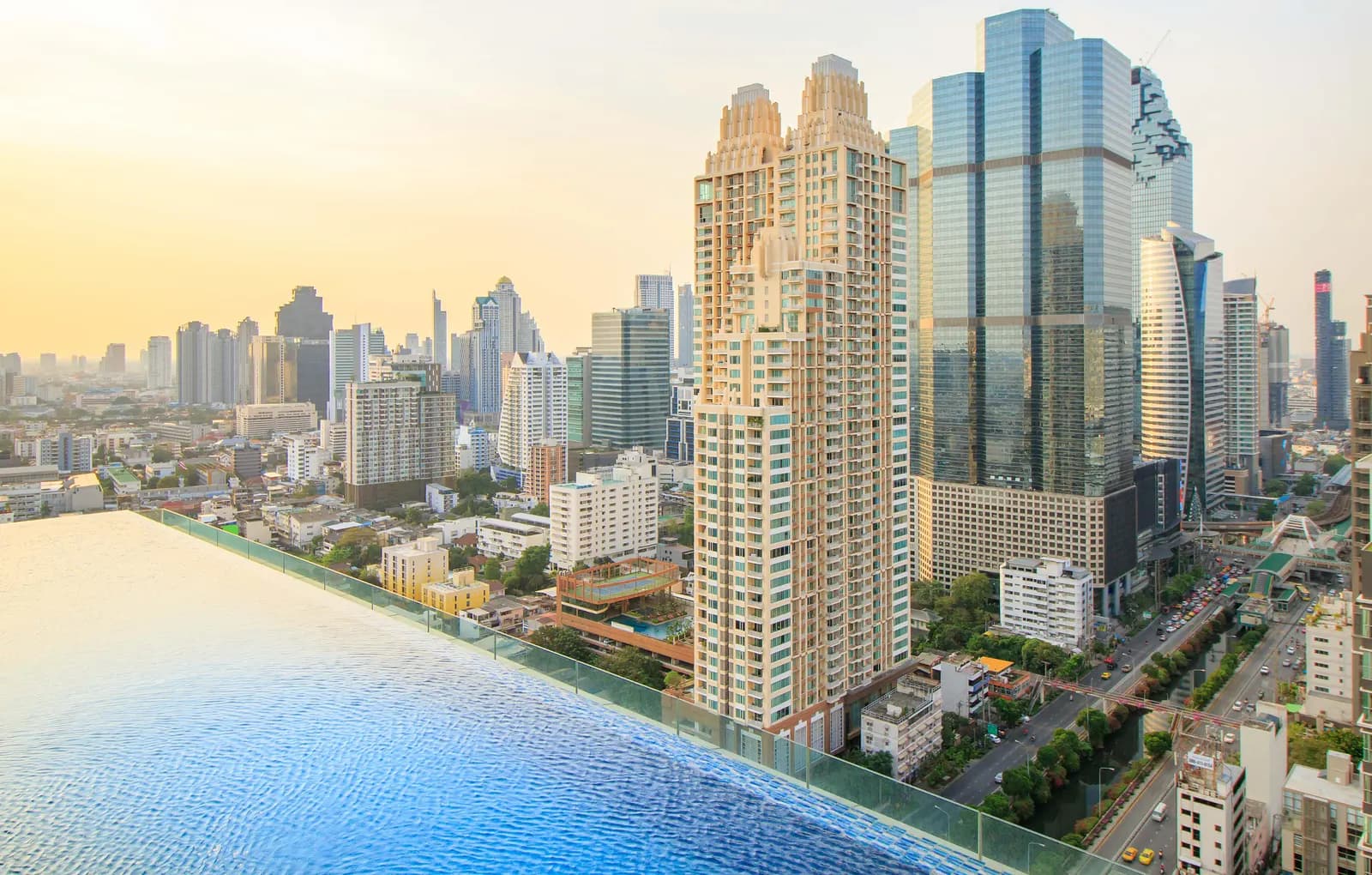
- Country
- Thailand
Key figures
- Populationabout10,000,000
- 1-bedroom rentabout€500
- Single-person budgetabout€1,800
- Flight from Parisabout11 hoursVerified on Nov 2, 2026
Where to live: the neighbourhoods
Bangkok is a vast metropolis where the choice of neighbourhood comes down first to a question of transport: living close to an elevated train or subway station radically changes daily life, so congested is the road traffic.
Sukhumvit, along the avenue of the same name, is the main expat corridor. The Phrom Phong, Thong Lo and Ekkamai areas are home to most of the residential buildings, shops and international restaurants; Asok is the junction between the two transport networks.
Silom and Sathorn form the business district, with embassies, office towers and a population of professionals. Residential towers are plentiful and commutes to work are short.
Ari and Phaya Thai, to the north, offer a more local scale and lower prices, with genuine neighbourhood life. They are the choice of a growing number of foreign residents settled for the long term rather than passing through.
The west bank of the river, Thonburi, and the areas close to the international schools in Bang Na or the northern suburbs complete the picture. They require a car, which in Bangkok means accepting long and unpredictable journeys.
Housing: the rental market
We do not publish a median rent for Bangkok: we have not found an official Thai data series publishing rents by neighbourhood, and we do not use estimates from private agencies, which are not official sources.
The rental market is plentiful and fluid, which sets Bangkok apart from most of the cities covered on this site. The supply of condominium housing is very large, and negotiation is customary, particularly on one-year leases.
A two-month security deposit is the norm, with one month's rent paid in advance. Return of the deposit is the main source of disputes, and the move-in inventory must be carefully documented.
When it comes to buying, one rule shapes everything: a foreigner cannot own land. They can, however, acquire a condominium unit outright (freehold), within the limit of a quota set for each building.
Arrangements designed to circumvent the ban on owning land, through an intermediary Thai company or a nominee, are unlawful and expose the buyer to losing the property. This is the point on which intermediaries are least clear.
Cost of living
Bangkok offers a considerable cost gap with Europe for local food, services, labour and transport. Imported goods, alcohol and cars, on the other hand, are heavily taxed.
We do not publish a typical monthly budget: we have not found an official Thai data series measuring a basket of expenses comparable to that of an expatriate.
International schooling is the item that determines a family's budget, and it is comparable to European levels. It is this, rather than housing, that tips the balance.
Thai private healthcare is of a good standard and attracts medical tourism, but its cost is rising rapidly and insurance becomes expensive with age. This item should be costed over the duration of the project, not just the first year.
The Thai income tax scale starts at 0%5 and reaches 35%6 at its top marginal rate, which does not make it a low-tax jurisdiction for high earners.
Community & expat life
The French community in Bangkok is long-established and well organised, with a complete network of schools, consular services and associations. English is more than enough for daily life in the central neighbourhoods.
The so-called long-stay destination visa, created for remote workers and long-term visitors, is valid for 5 years7 and allows stays of up to 180 days8 per entry, subject to minimum funds of from THB 500,0009.
This scheme calls for specific tax vigilance: Thai tax residency is acquired after more than 180 days10 of presence in a year, a lower threshold than in most countries.
The Thai authorities have also changed their position on the taxation of remitted foreign income. This is a shifting issue that should be checked as of the date of the project rather than taken for granted.
Practicalities: transport, health, good to know
The elevated train and the subway serve the main corridors, with regular extensions. Outside their reach, journeys become long: location relative to the network is the decisive practical criterion.
Two airports serve the city, with direct flights to Europe. Bangkok is also a convenient starting point for the whole of Southeast Asia.
Air quality is a real public health issue, with marked pollution episodes during the dry season. It is a quality-of-life factor rarely included in comparisons.
- The type of visa determines what you are allowed to do: working for a local employer requires a separate work permit.
- A foreigner cannot own land: only condominium units can be held outright.
- The tax residency threshold is 180 days10: it is crossed more quickly than elsewhere.
- Immigration reporting rules require periodic address notifications: forgetting them is a frequent cause of problems.
Frequently asked questions
What budget do you need to live in Bangkok?
about €1,8003/month for a single person for a good level of comfort (modern condo, going out), considerably less with a local lifestyle.
Which neighbourhoods for an expat in Bangkok?
Sukhumvit (Thong Lo, Ekkamai) for expat life, Sathorn/Silom for business, Ari for a trendy local feel — always close to the BTS/MRT.
Is healthcare good in Bangkok?
Yes: private hospitals are of an international standard, at prices well below those in Europe.
Sources and verification dates
- 1.
Population : 10,000,000
- 2.
1-bedroom rent : €500
- 3.
Single-person budget : €1,800
- 4.
Flight from Paris : 11 hours
Verified on Nov 2, 2026
- 5.
Thailand: rate of the first income tax bracket : 0%
« Tax rates of the Personal Income Tax — Taxable Income (baht) / Tax Rate (%) : 0-150,000 — Exempt ; more than 150,000 but less than 300,000 — 5 ; more than 300,000 but less than 500,000 — 10 ; more than 500,000 but less than 750,000 — 15 ; more than 750,000 but less than 1,000,000 — 20 ; more than 1,000,000 but less than 2,000,000 — 25 ; more than 2,000,000 but less than 4,000,000 — 30 ; Over 4,000,000 — 35 — The Revenue Department, « Personal Income Tax ». »
rd.go.thVerified on Nov 2, 2026Verified source
- 6.
Thailand: top marginal rate of personal income tax : 35%
« Tax rates of the Personal Income Tax — […] more than 2,000,000 but less than 4,000,000 — 30 ; Over 4,000,000 — 35 — The Revenue Department, « Personal Income Tax ». »
rd.go.thVerified on Nov 2, 2026Verified source
- 7.
Thailand, DTV visa: validity period of the permit : 5 years
« Visa Validity: 5 years / Multiple Entries »
london.thaiembassy.orgVerified on Nov 2, 2026Verified source
- 8.
Thailand, DTV visa: maximum stay allowed per entry : 180 days
« Period of Stay: 180 days per entry Extension of Stay (through the Thai Immigration Bureau): One time for a period not exceeding 180 days per entry. »
london.thaiembassy.orgVerified on Nov 2, 2026Verified source
- 9.
Thailand, DTV visa: minimum funds required in support of the application : THB 500,000
« Financial evidence: amount of no less than £12,000 (500,000 THB) (e.g., bank statements) »
london.thaiembassy.orgVerified on Nov 2, 2026Verified source
- 10.
Thailand: annual presence beyond which tax residency is acquired : 180 days
« "Resident" means any person residing in Thailand for a period or periods aggregating more than 180 days in any tax (calendar) year. »
rd.go.thVerified on Nov 2, 2026Verified source