News brief · Passports (CBI)
Antigua: the UWI option remains the cheapest for families
Antigua and Barbuda offers a contribution option through the university fund, more economical for large families. It is the only Caribbean programme whose cost per person genuinely falls as the household grows.
By Editorial team · on April 20, 2026
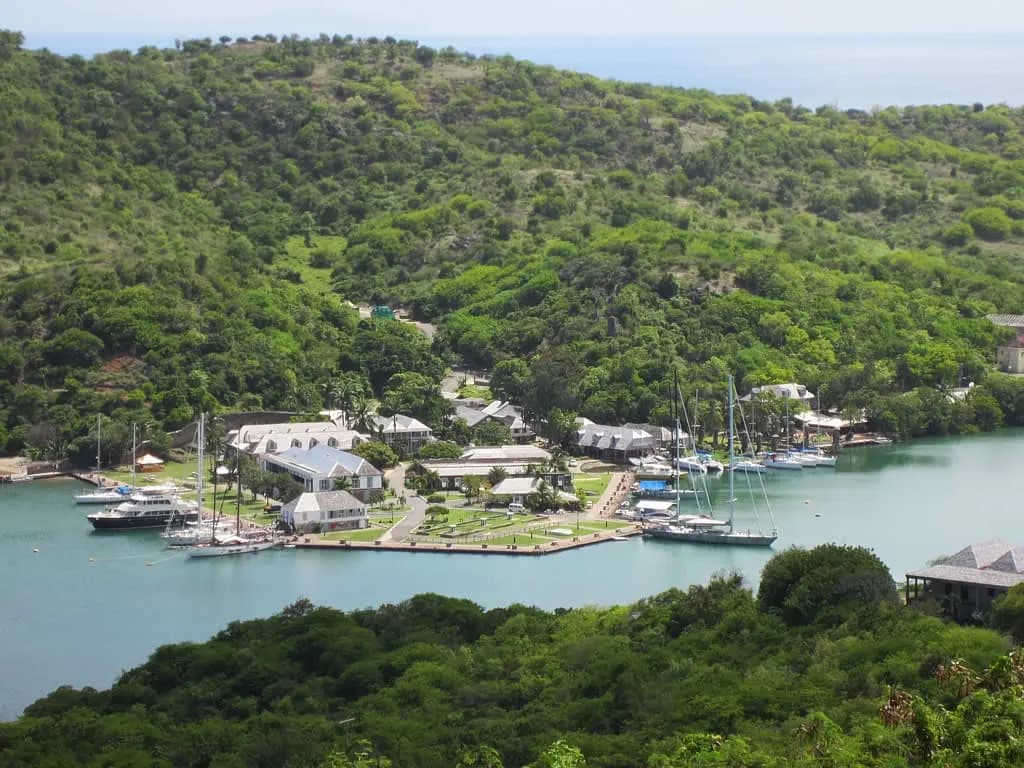
Antigua's two options
Antigua and Barbuda grants citizenship in exchange for a contribution to the National Development Fund, a real estate investment, or a contribution to the University of the West Indies fund.
The contribution to the National Development Fund is $230,0001. The real estate option is from $260,0002.
The third route, the contribution to the university fund, is designed for families: its amount is set for a household of a certain size, which lowers the cost per person once the household reaches that size.
We publish neither the amount of the university fund contribution, nor the household size from which it applies, nor the related ancillary fees: we have not been able to verify them in an up-to-date official Antiguan source.
What can be said is that the other Caribbean programmes charge for each dependant on top, which makes their cost rise with household size. Saint Kitts and Nevis, for example, charges $25,0003 or $50,0004 per additional person.
The logic of this third route is worth noting: the contribution does not go into a sovereign fund but to a regional university, which gives the payment an identifiable destination. It is a presentational argument, but also a response to criticism of public funds whose use is poorly documented.
For an applicant, this destination changes nothing legally: the contribution remains a non-refundable payment, and it confers no rights over the beneficiary institution.
The Antiguan trade-off
Antigua and Barbuda is the only one of the five Caribbean programmes to require actual presence: the new citizen must spend at least 5 days5 there over a period of 5 years6.
This obligation is modest in volume but real in principle: it turns a nationality acquired without any link to the territory into a status with a condition attached, however light.
It is also a defensive argument for the state: a programme requiring presence, even symbolic, is easier to defend against international criticism than a purely paper-based programme.
The Antiguan passport gives visa-free access to about 1517 destinations, in the upper range of Caribbean programmes, behind Saint Kitts and Nevis at about 1548.
It should be noted that this presence requirement is a condition for renewing the passport, not for keeping the nationality itself. The distinction is legally important: what has been acquired remains acquired, but the travel document may not be renewed.
What a second passport does not do
Citizenship by investment does not change tax residency. A French national who acquires it without leaving France remains taxable there on all of their income.
Benefiting from these states' tax systems requires becoming tax resident there, and therefore living there. And their tax is not zero: Dominica taxes income at up to 35%9, Grenada under a progressive scale.
Finally, the value of the passport rests on visa-free access that third countries can withdraw. Vanuatu lost it with the European Union, and its passport fell to about 9510 destinations.
For a French national, the mobility gain is in any case nil: the French passport opens more destinations than any of the five Caribbean programmes offers.
Key points
- The university fund option lowers the cost per person for a large family.
- Antigua and Barbuda is the only programme to require actual presence.
- Due diligence fees are not refundable if the application is refused.
- The passport does not move tax residency.
- Visa-free access depends on decisions by third countries and has already been withdrawn elsewhere.
The reasoning to follow is therefore this: first determine whether you need a second nationality and for what precise purpose, then choose the programme that serves that purpose, and look at the price last. A cheaper family option is only an advantage if the need exists.
Please note
Sources and verification dates
- 1.
Antigua and Barbuda: minimum contribution to the National Development Fund : $230,000
« Acquisition of citizenship under the NDF investment option requires a contribution to the National Development Fund in the minimum sum of US$230,000 per application. »
cip.gov.agVerified on Nov 2, 2026Verified source
- 2.
Antigua and Barbuda: minimum real estate investment qualifying for citizenship : $260,000
« Applicants to the Citizenship by Investment Programme who choose this option will be required to make an investment of US$260,000 for a family of six (6) or more (i.e. minimum number of persons per application is 6). »
- 3.
Saint Kitts and Nevis: SISC contribution per additional dependant under eighteen : $25,000
« Additional Dependants under 18: US$25,000 each »
ciu.gov.knVerified on Nov 2, 2026Verified source
- 4.
Saint Kitts and Nevis: SISC contribution per additional dependant aged eighteen or over : $50,000
« Additional Dependants aged 18 or over: US$50,000 each »
ciu.gov.knVerified on Nov 2, 2026Verified source
- 5.
Antigua and Barbuda: minimum presence required of the new citizen : 5 days
« Deprivation of citizenship may occur if the citizen does not spend at least 5 days in Antigua and Barbuda during the period of five calendar years after having obtained citizenship and they will not be entitled to repayment of any investment, contribution or purchase price made by them in their original application for citizenship. »
cip.gov.agVerified on Nov 2, 2026Verified source
- 6.
Antigua and Barbuda: period over which the minimum presence is assessed : 5 years
« Deprivation of citizenship may occur if the citizen does not spend at least 5 days in Antigua and Barbuda during the period of five calendar years after having obtained citizenship »
cip.gov.agVerified on Nov 2, 2026Verified source
- 7.
Antigua and Barbuda passport: visa-free destinations : 151
« Henley Passport Index — classement des passeports par nombre de destinations accessibles sans visa préalable (données IATA), consulté à la date indiquée. Valeur reprise de l’index de l’ancien site (barème à 227 destinations). »
henleyglobal.comVerified on Nov 2, 2026Verified source
- 8.
Saint Kitts and Nevis passport: visa-free destinations : 154
« Henley Passport Index — classement des passeports par nombre de destinations accessibles sans visa préalable (données IATA), consulté à la date indiquée. Valeur reprise de l’index de l’ancien site (barème à 227 destinations). »
henleyglobal.comVerified on Nov 2, 2026Verified source
- 9.
Dominica: top marginal personal income tax rate : 35%
« Personal Income Tax : From $0 to $30,000 — 0% ; From $30,001 to $50,000 — 15% ; From $50,001 to $80,000 — 25% ; From $80,001 and above — 35% — Invest Dominica Authority, page « Taxation » (montants en EC$). »
investdominica.comVerified on Nov 2, 2026Verified source
- 10.
Vanuatu passport: visa-free destinations : 95
« Henley Passport Index — classement des passeports par nombre de destinations accessibles sans visa préalable (données IATA), consulté à la date indiquée. Valeur reprise de l’index de l’ancien site (barème à 227 destinations). »
henleyglobal.comVerified on Nov 2, 2026Verified source