News brief · Nomad visas
Cape Verde: a nomad visa 3 hours' flight from Europe
Three hours' flight separate Cape Verde from Europe, with no significant time difference. That is the real selling point of the Cape Verdean remote working programme, and it matters more than one might think for a self-employed person.
By Editorial team · on May 30, 2026
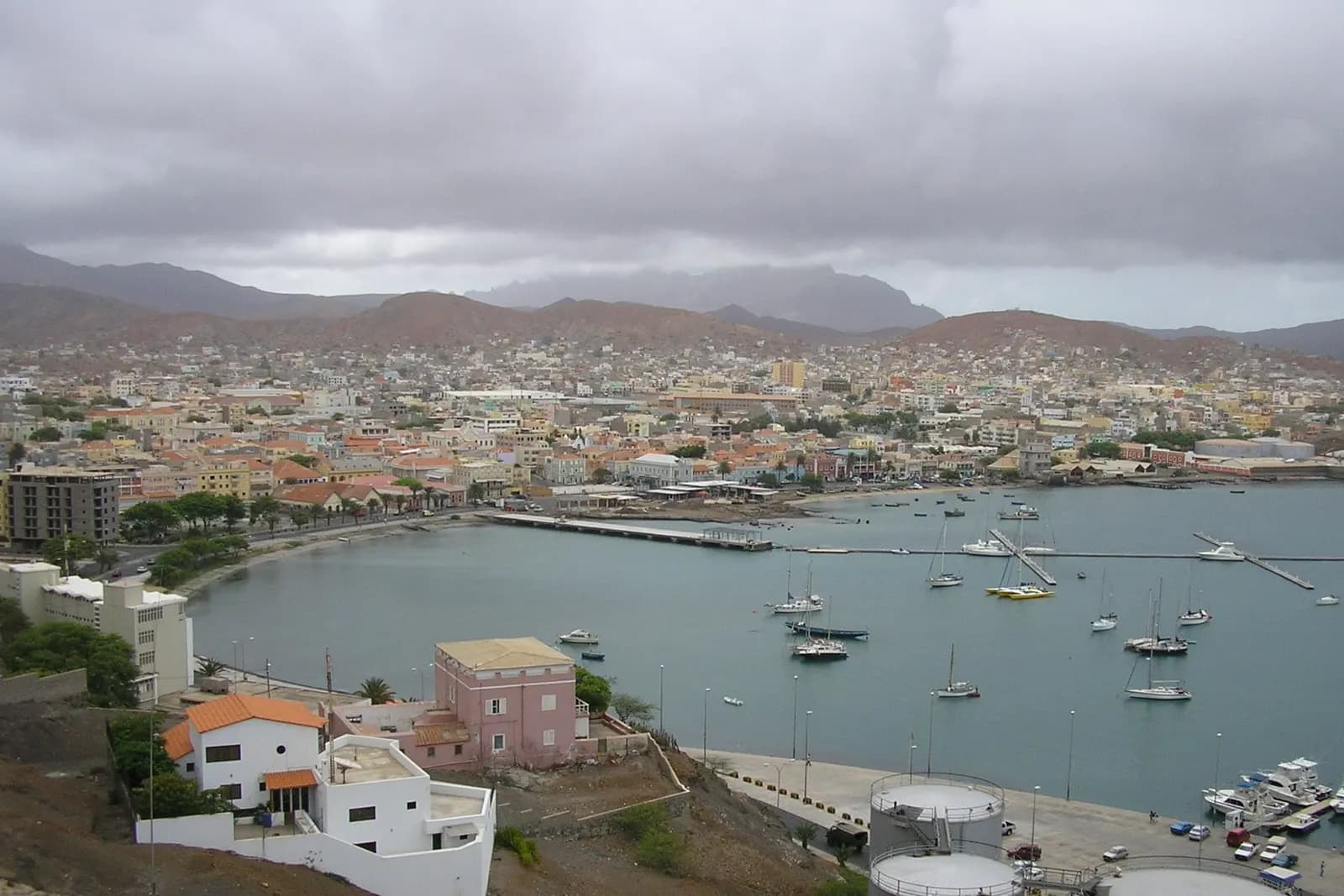
Why distance matters
A remote worker whose clients are European depends on being reachable during European business hours. A large time difference turns this constraint into a permanent organisational effort.
The most hyped destinations — Bali, Bangkok, Medellín — all involve a time difference of several hours, which forces you to shift your working day or give up certain interactions.
Cape Verde is a few hours' flight from Europe and practically in the same time zone. A self-employed person can work there on a normal European schedule, which is rare outside the continent.
There is also a practical factor: the ability to get back to France within a day, which changes everything for anyone who keeps family ties or regular professional appointments.
This proximity has an often overlooked economic corollary: the cost and frequency of trips home. A return trip to France from South-East Asia means an expense and two days of travel; from Cape Verde, it is a same-day flight at a fare comparable to a domestic European trip in high season.
For a self-employed person whose clients ask for an occasional presence, or for someone with elderly parents in France, this difference determines whether the project is feasible at all. It counts for more than a few points of tax.
What the programme provides
The programme is aimed at people working remotely for an employer or clients based outside the archipelago, and requires average monthly reference income of about €1,5001.
Its maximum total duration is up to 1 year2. The scheme is therefore designed for a long stay, not for settling permanently.
Cape Verdean tax residency is acquired through presence of 183 days3 during the year, a threshold that a stay of a full year necessarily crosses.
The Cape Verdean scale starts at 16.5%4 and peaks at 27.5%5, with no tax-free band. A resident is therefore taxed from the very first escudo.
We do not publish the treatment of income earned by the programme holder from their remote work: we have found no official Cape Verdean source indicating whether it is excluded from the tax base, as under the Croatian scheme, or taxed at the scale rates. Yet this is the decisive point for a one-year stay.
The archipelago's constraints
Cape Verde is an arid island territory, entirely dependent on imports for food, energy and durable goods. The cost of living reflects this on those items, despite affordable services and labour.
Medical provision is limited, and major procedures require evacuation to Europe or mainland Africa. Insurance covering this risk is essential.
Digital connectivity varies greatly from one island to another. Praia and Sal are adequately served; the less populated islands much less so, which is decisive for a remote worker.
Finally, the archipelago is made up of very different islands — Sal and Boa Vista geared to beach tourism, Santiago administrative and populous, Santo Antão mountainous and isolated. Choosing Cape Verde says nothing yet about where you will live.
Key points
- Proximity to Europe in terms of time zone and flights is the scheme's real selling point.
- Its up to 1 year2 duration makes it suited to a stay, not to settling permanently.
- A one-year stay crosses the 183 days3 tax residency threshold.
- The scale has no tax-free band and starts at 16.5%4.
- Connectivity and medical provision vary greatly depending on the island chosen.
Cape Verde therefore fills a precise and useful niche: a season of remote work in the sun, with no disruption to professional organisation and no time difference. It is not much, compared with the promises of competing schemes, and it is probably what a remote worker is really looking for most of the time.
Please note
Sources and verification dates
- 1.
Cape Verde: reference average monthly income required of the remote worker : €1,500
« Proof of Income — You'll be required to present your proof of income as an individual or as a family, regarding at least the last 6 months. Individual: minimum average bank balance of 1.500€ on the last 6 months; Family: minimum average bank balance of EUR 2.700 — Turismo de Cabo Verde, page « Remote working Program in Cabo Verde ». »
visit-caboverde.comVerified on Nov 2, 2026Verified source
- 2.
Cape Verde: maximum total duration of the remote working programme : 1 year
« The Cabo Verde Remote Working Program consists of a temporary work/tourism visa lasting 6 months, with the opportunity of renewal for another 6 months after. — Turismo de Cabo Verde (office national du tourisme, « GovernmentOrganization »), page « Remote working Program in Cabo Verde ». Certificat TLS du site expiré à la date de consultation. »
visit-caboverde.comVerified on Nov 2, 2026Verified source
- 3.
Cape Verde: annual presence giving rise to tax residency : 183 days
« Artigo 21º Residência — São residentes em território nacional os sujeitos passivos em relação aos quais, no ano a que respeitem os rendimentos, ocorra alguma das seguintes situações: a) Hajam nele permanecido mais de cento e oitenta e três dias, seguidos ou interpolados em qualquer período de doze meses; b) Aí disponham em 31 de Dezembro desse ano de habitação que seja a sua residência habitual — Código do IRPS, Lei n.º 78/VIII/2014, de 31 de dezembro (B.O. I Série n.º 81), art. 21.º. Texte lu sur la reproduction du B.O. (fiscocaboverde.com/wp-content/uploads/2015/01/cirps-editado.pdf) ; le PDF du ministère des Finances est servi derrière une page dynamique. »
mf.gov.cvVerified on Nov 2, 2026Verified source
- 4.
Cape Verde: rate of the first bracket of the aggregated income schedule : 16.5%
« Artigo 45º — 1. A taxa de imposto aplicável aos rendimentos objecto de englobamento […] é de: a) 16,5% para rendimentos até 960.000$00 (novecentos e sessenta mil escudos) anuais; b) 23,1% para rendimentos superiores a 960.000$00 e até 1.800.000$00 anuais; c) 27,5% para rendimentos superiores a 1.800.000$00 (um milhão e oitocentos mil escudos) anuais. 2. Está isento de tributação o rendimento colectável até ao montante de 220.000$00 — Código do IRPS, Lei n.º 78/VIII/2014, art. 45.º. »
mf.gov.cvVerified on Nov 2, 2026Verified source
- 5.
Cape Verde: top marginal rate of the aggregated income schedule : 27.5%
« Artigo 45º — 1. A taxa de imposto aplicável […] é de: […] c) 27,5% para rendimentos superiores a 1.800.000$00 (um milhão e oitocentos mil escudos) anuais. — Código do IRPS, Lei n.º 78/VIII/2014, art. 45.º. »
mf.gov.cvVerified on Nov 2, 2026Verified source