News brief · Rankings
Cities: Singapore and Zurich top the rankings for expatriates
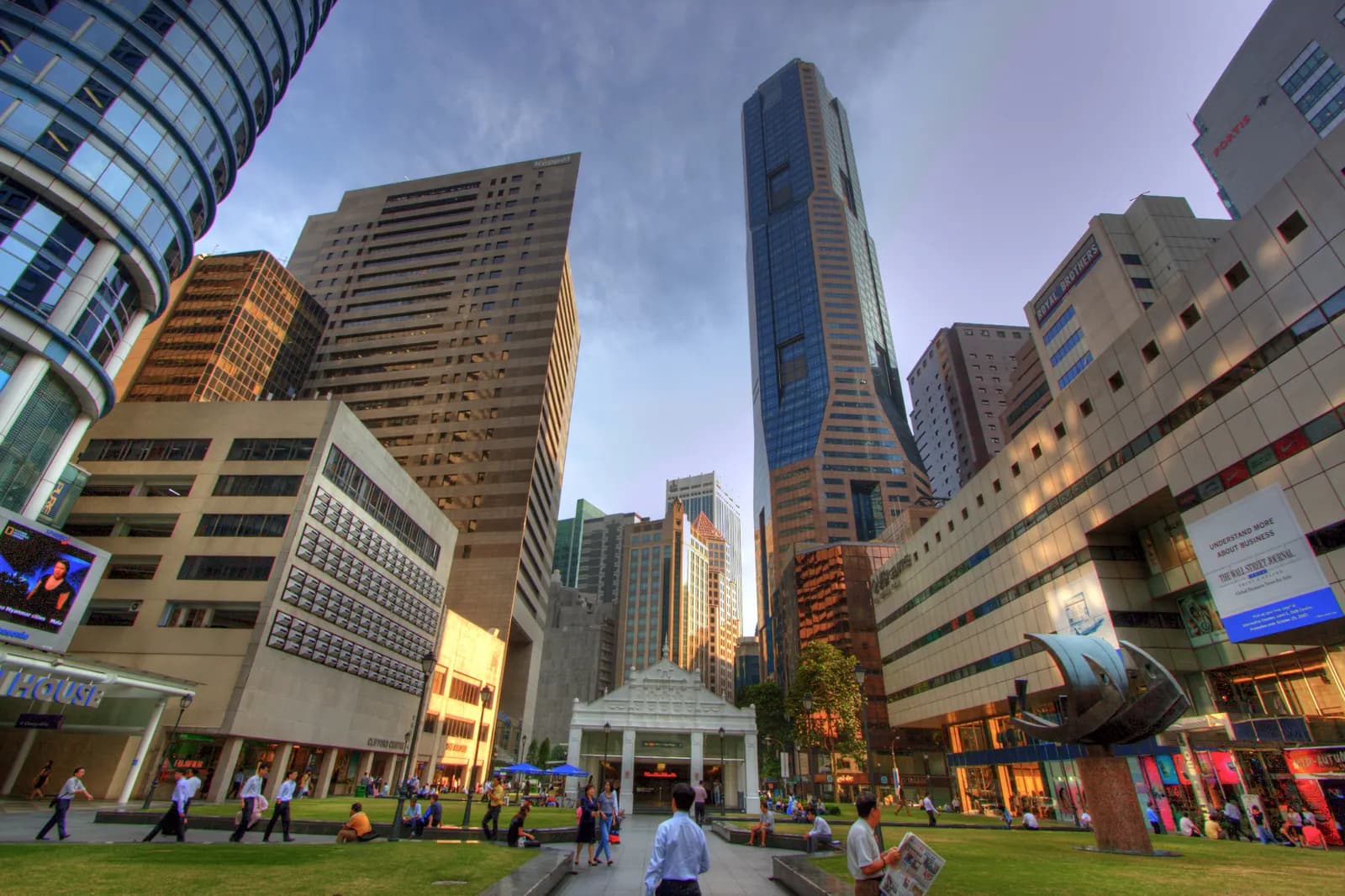
City rankings for expatriates regularly put Singapore and Zurich at the top. They measure real things, but from the point of view of an executive whose employer pays for housing and school — which changes everything.
By Editorial team · on June 5, 2026
What these rankings measure
We publish neither ranks nor scores: these league tables are compiled by private publishers whose methodology is not always verifiable, and we do not cite them as official sources.
What they capture correctly is real: safety, infrastructure, public transport, quality of healthcare, political stability, administrative reliability. On these dimensions, Singapore and Zurich are objectively very well placed.
What they capture poorly is just as real. Most reason from the point of view of a seconded executive whose employer covers housing and schooling, thereby neutralising the two items that decide a household's budget.
Yet these two cities are among the most expensive in the world precisely on those two items. For a freelancer or a retiree who bears them, the ranking is reversed.
A second bias is worth pointing out: these league tables are most often based on self-reported surveys of expatriate populations who are already settled. They therefore describe the satisfaction of those who stayed, not the experience of those who left again — which makes them an indicator of confirmation rather than prediction.
Nor do they say anything about how easy it is to get in. A city can be excellent to live in and practically closed to anyone not sent there by an employer, which is precisely the case for the top two cities in these rankings.
Singapore in practice
The personal tax scale is moderate: from 0%1 to 24%2. Gains on the disposal of property and financial instruments are not taxed, at a rate of 0%3, and there is no inheritance tax.
Access, on the other hand, is demanding. The programme for investors requires SGD 10,000,0004 for its first option, or SGD 10,000,0005 for the alternative option, with a genuine business plan.
Property purchases by foreigners bear dissuasive additional duties, and access to cars is regulated by a system of purchase entitlements that makes it one of the most expensive in the world.
Tax residency is acquired in particular through presence of 183 days6 in the year.
Zurich in practice
Swiss tax is levied at three levels — Confederation, canton, municipality — and the burden depends more on the address than on the country. Zurich is not a low-tax canton, even if some municipalities in its metropolitan area are low-tax.
Health insurance is compulsory, individual and taken out with a private insurer for each member of the household. This is the item that French newcomers underestimate most.
Tax liability arises quickly: federal law sets 30 days7 of stay with gainful activity, or 90 days8 without activity.
In return, inheritances between spouses and, as a general rule, to direct descendants are exempt, at a rate of 0%9, the tax being cantonal.
Finally, housing is the scarce resource: Zurich's vacancy rate is very low, and the standardised rental application puts a newcomer with no Swiss track record at a disadvantage.
What to make of it
- Read the ranking by asking who pays for housing and school in the scenario used.
- Cost these two items yourself for your own situation, before making any comparison.
- Check whether access is feasible: both cities are highly selective about their foreign residents.
- Distinguish the city from the country: in Switzerland, the municipality decides the taxation.
- In both cases, handle the departure from France according to its own criteria.
One last point deserves to be made. These rankings measure the quality of an environment, not the suitability of a plan. An objectively excellent city can be a bad choice for a given person — because their profession is not practised there, because their family will not follow, or because the cost of entry absorbs the entire advantage sought. The best ranking has never chosen for anyone.
Please note
Sources and verification dates
- 1.
Singapore: rate of the first band of the resident schedule : 0%
« Resident tax rates — From YA 2024 onwards — Chargeable Income / Income Tax Rate (%) / Gross Tax Payable ($) : First $20,000 — 0 — 0 ; Next $10,000 — 2 — 200 — IRAS, « Individual Income Tax rates » (dernière mise à jour 27 avril 2026). »
iras.gov.sgVerified on Nov 2, 2026Verified source
- 2.
Singapore: top marginal rate of the resident schedule : 24%
« Singapore's personal income tax rates for tax resident individuals are progressive, meaning individuals with higher income are taxed at a higher rate. The current highest personal income tax rate is at 24%. — Resident tax rates from YA 2024 onwards : […] In excess of $1,000,000 — 24 — IRAS, « Individual Income Tax rates » (dernière mise à jour 27 avril 2026). »
iras.gov.sgVerified on Nov 2, 2026Verified source
- 3.
Singapore: taxation of gains on the disposal of property, shares and financial instruments : 0%
« Gains from the sale of a property, shares and financial instruments in Singapore are generally not taxable. However, gains from "trading in properties" may be taxable. […] The following gains are generally not taxable: Gains derived from the sale of a property in Singapore as it is a capital gain. Profits or losses derived from the buying and selling of shares or other financial instruments (including digital tokens) are generally viewed as personal investments. — IRAS, « Gains from sale of property, shares and financial instruments » (dernière mise à jour 27 février 2026). »
iras.gov.sgVerified on Nov 2, 2026Verified source
- 4.
Singapore: minimum investment under the first option of the investor programme : SGD 10,000,000
« Option A — Demonstrate an investment of minimally S$10 million in a new business entity or in the expansion of an existing business operation in Singapore. Option B — Invest S$25 million in a GIP-select fund that invests in Singapore-based companies. Option C — Establish a Singapore-based Single Family Office with Assets Under Management (AUM) of at least S$200 million, where minimally S$50 million must be transferred into Singapore — Singapore Economic Development Board, « Global Investor Programme » factsheet (Updated 5 May 2025). »
edb.gov.sgVerified on Nov 2, 2026Verified source
- 5.
Singapore: minimum investment under the first option of the investor programme : SGD 10,000,000
« Option A — Demonstrate an investment of minimally S$10 million in a new business entity or in the expansion of an existing business operation in Singapore. Option B — Invest S$25 million in a GIP-select fund that invests in Singapore-based companies. Option C — Establish a Singapore-based Single Family Office with Assets Under Management (AUM) of at least S$200 million, where minimally S$50 million must be transferred into Singapore — Singapore Economic Development Board, « Global Investor Programme » factsheet (Updated 5 May 2025). »
edb.gov.sgVerified on Nov 2, 2026Verified source
- 6.
Singapore: annual presence conferring tax resident status : 183 days
« Foreigner who has stayed/worked in Singapore: a. For at least 183 days in the previous calendar year; or »
iras.gov.sgVerified on Nov 2, 2026Verified source
- 7.
Switzerland: length of stay with gainful activity creating a tax connection (LIFD art. 3) : 30 days
« Art. 3 — 3 Une personne séjourne en Suisse au regard du droit fiscal lorsque, sans interruption notable : a. elle y réside pendant 30 jours au moins et y exerce une activité lucrative ; b. elle y réside pendant 90 jours au moins sans y exercer d'activité lucrative. — LIFD, art. 3 al. 3 (état le 1er janvier 2026). »
fedlex.data.admin.chVerified on Nov 2, 2026Verified source
- 8.
Switzerland: length of stay without gainful activity creating a tax connection (LIFD art. 3) : 90 days
« Une personne séjourne en Suisse au regard du droit fiscal lorsque, sans interruption notable: a. elle y réside pendant 30 jours au moins et y exerce une activité lucrative; b. elle y réside pendant 90 jours au moins sans y exercer d'activité lucrative. »
fedlex.data.admin.chVerified on Nov 2, 2026Verified source
- 9.
Switzerland: taxation of inheritances between spouses and, as a rule, to direct descendants : 0%
« En règle générale, les époux et les partenaires enregistrés ainsi que les descendants (enfants et petits-enfants) sont exonérés de cet impôt. — ch.ch, portail officiel de la Confédération, des cantons et des communes, « L'impôt sur les successions en Suisse ». L'impôt sur les successions est cantonal (pas d'impôt fédéral) ; l'AFC précise que les cantons exonèrent le conjoint survivant et, en règle générale, les descendants (dossier « Impôts sur les successions et les donations »). »
ch.chVerified on Nov 2, 2026Verified source