Philippines
Moving to the Philippines in 2026: Retirement Visa (SRRV) and Low Cost of Living
The Philippines offers the SRRV retirement visa, valued for its accessibility, in an English-speaking country with a very low cost of living. A tropical archipelago suited to retirees and nomads looking for affordability.
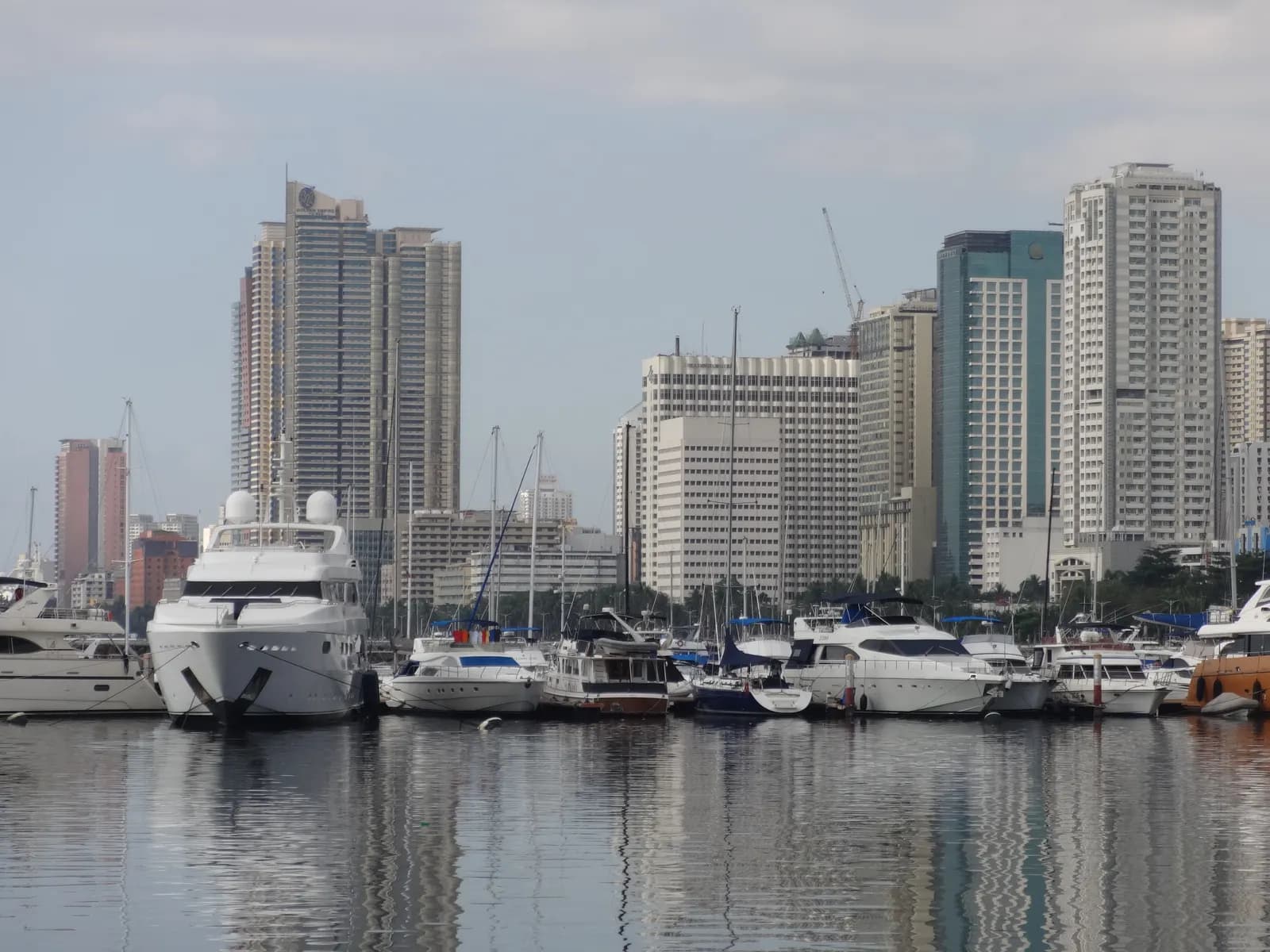
- Capital
- Manila
- Currency
- PHP
- Region
- Asia
Tax regimes at a glance
Each regime answers the same questions. A zero rate applies only to the income, person and period stated.
Your personal taxation
Personal income tax: general regimeGeneral regime
- Who for?
- Any individual, with distinct rules depending on the category: resident citizen, non-resident citizen, resident alien, non-resident alien.
- Which income?
- Earned income under the progressive scale, the first bracket of which is exempt; dividends subject to a final tax; gains on unlisted shares and on real estate subject to their own levies, the latter based on the sale price or the highest zonal value rather than on the gain; estate tax at a single rate on the net estate.
- Which source?
- Resident citizen: worldwide income. Resident alien: Philippine-source income only. Immigration status and nationality therefore determine the extent of taxation.
- Conditions
- Qualification as a resident alien under the tax code; the France–Philippines tax treaty must be examined for French-source income.
- Duration
- Permanent regime.
- Since when?
- Scale resulting from the TRAIN law (Republic Act 10963); in force in 2026.
- 0% Philippines: rate of the first bracket of the scale for earned income
- 35% Philippines: top marginal rate of the scale for earned income
- 10% Philippines: final tax on dividends
- 15% Philippines: taxation of gains on disposals of shares not traded on a stock exchange
- 6% Philippines: levy on the disposal of real property, based on the price or the assessed value
- 6% Philippines: estate tax rate on the net estate
Special Resident Retiree’s Visa (SRRV)Special regime
- Who for?
- Foreigners who have reached the programme's minimum age, as well as their spouse and unmarried children within the limits of the programme; Classic option, and Courtesy option for certain groups (notably former Filipinos).
- Which income?
- Permanent residence permit. The Philippine Retirement Authority mentions an exemption from tax on pensions and annuities, a one-time exemption from customs duties on personal effects and an exemption from the travel tax; for other income, the general regime for resident aliens applies.
- Which source?
- That of the general regime for resident aliens (Philippine-source income).
- Conditions
- Time deposit held in an accredited bank, the amount of which depends on age and on whether a minimum lifetime pension is received; the deposit may be applied to investments allowed by the programme. The permit does not authorise salaried employment without the required authorisations and does not lead to citizenship.
- Duration
- Stay of indefinite duration, as long as the programme's conditions, including the deposit, are maintained.
- Since when?
- Deposit scale published by the Philippine Retirement Authority, expanded programme updated in 2025.
- from 40 years Philippines: minimum age of the main SRRV applicant
- $15,000 Philippines: SRRV Classic deposit, retiree receiving a pension, older age bracket
- $25,000 Philippines: SRRV Classic deposit, retiree receiving a pension, lower age bracket
- $30,000 Philippines: SRRV Classic deposit, applicant without a pension, higher age bracket
- $50,000 Philippines: SRRV Classic deposit, applicant without a pension, lower age bracket
- from $800 Philippines: minimum monthly lifetime pension for a sole applicant under the SRRV Classic (retiree option)
Your company
Corporate income tax: normal rateGeneral regime
- Who for?
- Domestic corporations, incorporated in the Philippines.
- Which income?
- Taxable income for the year.
- Which source?
- Income from all sources, in the Philippines and abroad (Section 27(A) of the tax code).
- Conditions
- Rules specific to foreign corporations and registered enterprises are not detailed here.
- Duration
- Permanent regime.
- Since when?
- Rate in force since 1 July 2020 (CREATE law, Republic Act 11534), confirmed by the CREATE MORE law of 2024.
- 25% Philippines: corporate income tax rate for domestic corporations
Reduced rate for small domestic corporationsConditional
- Who for?
- Domestic corporations whose net taxable income and total assets, excluding the land on which offices and facilities are located, do not exceed the statutory ceilings.
- Which income?
- Taxable income for the year.
- Which source?
- Same as for the normal regime.
- Conditions
- Cumulative conditions assessed for each taxable year.
- Duration
- As long as the conditions are met.
- Since when?
- In force since 1 July 2020 (CREATE law), maintained by the CREATE MORE law.
- 20% Philippines: reduced corporate income tax rate for small domestic corporations
- up to ₱5,000,000 Philippines: net taxable income ceiling for the reduced rate for small companies
- up to ₱100,000,000 Philippines: total asset ceiling (excluding the land on which the business is established) for the reduced rate for small companies
Registered enterprises and economic zones: CREATE MORE incentivesSpecial regime
- Who for?
- Registered business enterprises with an investment promotion agency, notably in economic zones, for projects included in the Strategic Investment Priority Plan (SIPP).
- Which income?
- Income from registered projects and activities: temporary income tax exemption, then, at the enterprise's choice, a special tax on gross income in lieu of national and local taxes (export enterprises) or the enhanced deductions regime at a reduced rate; local tax on gross income capped during the exemption and the enhanced deductions regime.
- Which source?
- Income from registered activities; other income follows the normal regime.
- Conditions
- Registration and approval of the project; durations depend on the location, the sector and the approval route (promotion agency or Fiscal Incentives Review Board for large projects).
- Duration
- Temporary exemption of variable duration, followed by a period of SCIT or EDR; longer total duration for projects approved by the FIRB.
- Since when?
- CREATE MORE law (Republic Act 12066) approved on 8 November 2024 and in force after its publication, within the period set by its section 35.
- 5% Philippines: special corporate income tax (SCIT) on gross income of registered export enterprises
- 20% Philippines: corporate income tax rate under the enhanced deductions regime (EDR)
- up to 2% Philippines: cap on the local income tax on the gross revenue of registered business enterprises (RBE local tax)
- from 4 years Philippines: minimum duration of the income tax holiday (ITH) for registered export enterprises
- up to 7 years Philippines: maximum duration of the income tax holiday (ITH) for registered export enterprises
- 10 years Philippines: duration of the SCIT or EDR following the temporary exemption (export enterprises)
- up to 27 years Philippines: maximum duration of the SCIT or EDR for projects approved by the FIRB
Compare with other countries:Foreign incomeCompany taxationRegimes for new residents
Key figures
- Population115,000,000Verified on Nov 2, 2026
- Flight from Parisabout15 hoursVerified on Nov 2, 2026
Personal taxation
The Philippine tax code carefully distinguishes between categories of taxpayers. A resident alien is taxed only on Philippine-source income, whereas a resident citizen is taxed on worldwide income. This distinction is the starting point for any analysis, and it works in the expatriate's favour.
The scale applicable to earned income has a first exempt bracket, at a rate of 0%3, and peaks at 35%4 above the last threshold.
Investment income
Dividends in cash or in kind are subject to a final tax at a rate of 10%5, provided for in section 24.
Capital gains fall under two distinct regimes, which is a particularity of Philippine law. Gains on the sale of shares not traded on a stock exchange are taxed at 15%6. Gains on the sale of real estate are subject to a levy of 6%7.
This latter rate deserves attention: under the code, it applies to the sale price or the highest zonal value, and not to the gain actually realised. A property sold at a loss can therefore still bear the tax — a point that international comparisons systematically omit.
Estate tax is set at a single rate of 6%8 on the net value of the estate, and corporate income tax at 25%9.
Two arrangements temper this rate. A domestic corporation whose net taxable income is up to ₱5,000,00010 and whose total assets, excluding the land on which it is located, are up to ₱100,000,00011 is taxed at 20%12. And the CREATE MORE law (Republic Act 12066, approved on 8 November 2024) sets out the incentives for registered enterprises, notably in economic zones: for an exporter, a temporary exemption of up to 7 years13, then, for 10 years14, either a special tax of 5%15 on gross income in lieu of national and local taxes, or enhanced deductions with a rate of 20%16.
This distinction between resident alien and resident citizen has a practical consequence that should be measured: it makes immigration status directly relevant to taxation, which is rare. The same income, received by two people living side by side, will be taxed differently depending on their nationality and residence status.
It also explains why the practical impossibility of obtaining Philippine citizenship is not, for an expatriate, the handicap it would seem elsewhere: remaining a foreigner is precisely what preserves the tax advantage.
Residence routes and visas
The Philippines has a residence scheme for retirees that has built its reputation in the region, administered by a dedicated agency, as well as investor visas and standard work visas.
The retirement programme is based on a bank deposit held with an accredited bank, the amount of which varies with the applicant's age and with whether or not they receive a pension. The deposit may, under certain conditions, be converted into a real estate investment.
The Philippine Retirement Authority publishes the scale for this Special Resident Retiree’s Visa (SRRV), accessible from 40 years17 in the Classic option. The deposit is $15,00018 or $25,00019 depending on the age bracket for an applicant who can show a lifetime monthly pension of from $80020 if single, and $30,00021 or $50,00022 without a pension, the higher amount applying to the youngest applicants. The agency also announces, for holders, an exemption from tax on pensions and annuities.
The conditions for converting the deposit into an investment and those of the programme's other options are not covered here: the scale has been amended several times and must be checked with the competent agency at the date of the application.
It is worth stressing what this visa is not: it does not, in itself, authorise paid work locally, and it is not a route to citizenship. It is a residence permit, renewable as long as the deposit is maintained.
One structural feature distinguishes the Philippines from many destinations: Philippine citizenship is in practice not available to a foreigner through ordinary residence. A relocation project must therefore be seen as long-term residence, never as naturalisation.
Real estate
This is the country's main constraint, and it is constitutional. A foreigner cannot own land in the Philippines. The rule is a matter of public policy and cannot be modified by contract.
A foreigner may, however, own a condominium apartment, within a foreign ownership quota set for each building. They may also enter into a long-term lease on land, the duration and renewal conditions of which are regulated.
Arrangements designed to circumvent the prohibition — a Philippine company held by nominees, a purchase in the name of a Filipino spouse with a secret agreement — expose the parties to nullity of the transaction and to penalties. This is not a grey area: it is a prohibition.
The foreign quota in condominiums also affects resale: a building that has reached its limit can no longer sell to a foreigner, which restricts the exit market to local buyers.
We do not publish Philippine transfer taxes, property tax, or the exact level of the foreign condominium quota: they do not appear in our extracts.
One consequence for the estate deserves to be anticipated: a Franco-Filipino couple who purchase in the name of the Filipino spouse place the property outside the expatriate's estate. In the event of separation or death, the fate of the property is governed by Philippine family and succession law, which differs significantly from French law. This question should be addressed with a notary in both countries, before the purchase.
Cost of living
The cost of living in the Philippines is far below European levels, particularly for services and labour. The common use of English in administration and services makes settling in considerably easier.
We do not publish a typical monthly budget: we have not found an official Philippine series measuring a basket of expenses comparable to that of an expatriate.
Four items structure a budget. Housing, which varies greatly between Manila, Cebu and the provinces. Healthcare, where private hospitals in the large cities are of good standard but where insurance becomes expensive with age — a decisive item for a retirement project. Electricity, among the most expensive in Southeast Asia. And transport, in an archipelago where every inter-island journey requires a flight or a ferry.
Exposure to typhoons and earthquakes is a given of the project. It affects the choice of region, the build quality sought and the cost of insurance.
In return, the archipelago offers a rare diversity of living environments, from the dense metropolis to sparsely populated islands, at price levels that remain affordable on a European income.
Procedures and timelines
- Choose the route: retirement programme, investor visa or work visa, the conditions being in no way comparable;
- check with the competent agency the amounts in force, as the scheme has been amended;
- make the bank deposit with an accredited bank, a prerequisite for issuance;
- for a real estate project, limit yourself to condominiums and check the building's foreign quota before any preliminary agreement;
- treat the departure from France according to its own criteria and under the applicable tax treaty.
The fourth point is the one that gives rise to the most disputes. The quota is checked with the condominium association, not with the seller, and the check must come before any payment.
We do not publish processing times: we have no official, dated and quantified source for Philippine visas.
Points to watch
- A resident foreigner is taxed only on income from Philippine sources: this is the main advantage, and it is written into the code.
- Capital gains tax on real estate is levied at 6%7 on the price or the zonal value, not on the gain: a sale at a loss is still taxed.
- Land ownership is constitutionally closed to foreigners: workaround structures are void, not merely risky.
- The foreign ownership quota in a condominium determines whether the property can be resold.
- Citizenship is in practice not attainable: the project should be conceived as a long-term residence.
Finally, a Philippine passport opens access to far fewer destinations than a European passport: the question of naturalisation, which arises elsewhere, does not arise here. What the Philippines offers is a low cost of living, an accessible language and a tax territoriality that favours resident foreigners — provided one accepts never owning the land one lives on.
Pros & cons
Pros
Foreign income of resident foreigners is not taxed
SRRV retirement visa, among the most accessible in the world, English-speaking
Very low cost of living, 7,000 islands
Cons
Foreigners cannot own land
Uneven safety and infrastructure, typhoons
Healthcare of variable quality outside the major cities
Check the status of the new digital nomad visa before relying on it
Frequently asked questions
What is the SRRV visa?
The Special Resident Retiree's Visa allows retirees (and other profiles) to reside in the Philippines in exchange for a bank deposit, with an unlimited stay.
Is English spoken in the country?
Yes, English is widely spoken and commonly used in administrative matters.
Is the cost of living low?
Yes, it is among the lowest in Southeast Asia.
Banks and accounts
Accounts held in this country
Accept residents of this country
See this country on the tax map
Please note
Sources and verification dates
- 1.
Population : 115,000,000
Verified on Nov 2, 2026
- 2.
Flight from Paris : 15 hours
Verified on Nov 2, 2026
- 3.
Philippines: rate of the first bracket of the scale for earned income : 0%
« Tax Schedule Effective January 1, 2023 and onwards: "Not over ₱250,000 0% »
lawphil.netVerified on Nov 2, 2026Verified source
- 4.
Philippines: top marginal rate of the scale for earned income : 35%
« Tax Schedule Effective January 1, 2023 and onwards: […] Over ₱8,000,000 — ₱2,202,500 + 35% of the excess over ₱8,000,000 — Republic Act No. 10963 (TRAIN), sec. 5 (NIRC sec. 24(A)(2)(a)). »
lawphil.netVerified on Nov 2, 2026Verified source
- 5.
Philippines: final tax on dividends : 10%
« "(2) Cash and/or Property Dividends. - A final tax at the rate of ten percent (10%) shall be imposed upon the cash and/or property dividends actually or constructively received by an individual from a domestic corporation or from a joint stock company, insurance or mutual fund companies and regional operating headquarters of multinational companies" »
lawphil.netVerified on Nov 2, 2026Verified source
- 6.
Philippines: taxation of gains on disposals of shares not traded on a stock exchange : 15%
« (C) Capital Gains from Sale of Shares of Stock not Traded in the Stock Exchange. - The provisions of Section 39(B) notwithstanding, a final tax at the rate of fifteen percent (15%) is hereby imposed upon the net capital gains realized during the taxable year from the sale, barter, exchange or other disposition of shares of stock in a domestic corporation, except shares sold, or disposed of through the stock exchange. »
lawphil.netVerified on Nov 2, 2026Verified source
- 7.
Philippines: levy on the disposal of real property, based on the price or the assessed value : 6%
« (D) Capital Gains from Sale of Real Property. - (1) In General. - The provisions of Section 39(B) notwithstanding, a final tax of six percent (6%) based on the gross selling price or current fair market value as determined in accordance with Section 6(E) of this Code, whichever is higher, is hereby imposed upon capital gains presumed to have been realized from the sale, exchange, or other disposition of real property located in the Philippines, classified as capital assets, including pacto de retro sales and other forms of conditional sales, by individuals, including estates and trusts »
lawphil.netVerified on Nov 2, 2026Verified source
- 8.
Philippines: estate tax rate on the net estate : 6%
« Sec. 84. Rate of Estate Tax. - There shall be levied, assessed, collected and paid upon the transfer of the net estate as determined in accordance with Sections 85 and 86 of every decedent, whether resident or nonresident of the Philippines, a tax at the rate of six percent (6%) based on the value of such net estate. »
lawphil.netVerified on Nov 2, 2026Verified source
- 9.
Philippines: corporate income tax rate for domestic corporations : 25%
« SEC. 27. Rates of Income Tax on Domestic Corporations. - "(A) In General, — Except as otherwise provided in this Code, an income tax rate of twenty-five percent (25%) effective July 1, 2020, is hereby imposed upon the taxable income derived during each taxable year from all sources within and without the Philippines by every corporation »
lawphil.netVerified on Nov 2, 2026Verified source
- 10.
Philippines: net taxable income ceiling for the reduced rate for small companies : ₱5,000,000
« corporations with net taxable income not exceeding Five million pesos (P5,000,000) and with total assets not exceeding One hundred million pesos (P1,000,000,000) »
Congress of the Philippines (texte reproduit par lawphil.net), « Republic Act No. 12066 (Section 27(A) du code fiscal, tel que modifié) »Verified on Nov 2, 2026Verified source
- 11.
Philippines: total asset ceiling (excluding the land on which the business is established) for the reduced rate for small companies : ₱100,000,000
« corporations with net taxable income not exceeding Five million pesos (P5,000,000) and with total assets not exceeding One hundred million pesos (P1,000,000,000) »
Congress of the Philippines (texte reproduit par lawphil.net), « Republic Act No. 12066 (Section 27(A) du code fiscal, tel que modifié) »Verified on Nov 2, 2026Verified source
- 12.
Philippines: reduced corporate income tax rate for small domestic corporations : 20%
« shall be taxed at twenty percent (20%) »
Congress of the Philippines (texte reproduit par lawphil.net), « Republic Act No. 12066 (Section 27(A) du code fiscal, tel que modifié) »Verified on Nov 2, 2026Verified source
- 13.
Philippines: maximum duration of the income tax holiday (ITH) for registered export enterprises : 7 years
« For export enterprise under the SIPP, ITH of four (4) to seven (7) years, depending on location and industry priorities »
Congress of the Philippines (texte reproduit par lawphil.net), « Republic Act No. 12066 (CREATE MORE), Section 296(A) »Verified on Nov 2, 2026Verified source
- 14.
Philippines: duration of the SCIT or EDR following the temporary exemption (export enterprises) : 10 years
« followed by SCIT or EDR for ten (10) years, »
Congress of the Philippines (texte reproduit par lawphil.net), « Republic Act No. 12066 (CREATE MORE), Section 296(A) »Verified on Nov 2, 2026Verified source
- 15.
Philippines: special corporate income tax (SCIT) on gross income of registered export enterprises : 5%
« For export enterprise, a tax rate equivalent to five percent (5%) based on the gross income earned, in lieu of all national and local taxes and local fees and charges. »
Congress of the Philippines (texte reproduit par lawphil.net), « Republic Act No. 12066 (CREATE MORE), Section 294(B) »Verified on Nov 2, 2026Verified source
- 16.
Philippines: corporate income tax rate under the enhanced deductions regime (EDR) : 20%
« shall be taxed at a rate equivalent to twenty percent (20%) »
Congress of the Philippines (texte reproduit par lawphil.net), « Republic Act No. 12066 (CREATE MORE), Section 27(A) »Verified on Nov 2, 2026Verified source
- 17.
Philippines: minimum age of the main SRRV applicant : 40 years
« 40 years old and above »
Philippine Retirement Authority, « SRRV »Verified on Nov 2, 2026Verified source
- 18.
Philippines: SRRV Classic deposit, retiree receiving a pension, older age bracket : $15,000
« Pensioner USD 15,000.00 USD 25,000.00 »
Philippine Retirement Authority, « SRRV »Verified on Nov 2, 2026Verified source
- 19.
Philippines: SRRV Classic deposit, retiree receiving a pension, lower age bracket : $25,000
« Pensioner USD 15,000.00 USD 25,000.00 »
Philippine Retirement Authority, « SRRV »Verified on Nov 2, 2026Verified source
- 20.
Philippines: minimum monthly lifetime pension for a sole applicant under the SRRV Classic (retiree option) : $800
« Proof of lifetime pension of at least USD 800.00/month for single applicants and »
Philippine Retirement Authority, « SRRV »Verified on Nov 2, 2026Verified source
- 21.
Philippines: SRRV Classic deposit, applicant without a pension, higher age bracket : $30,000
« Non-Pensioner USD 30,000.00 USD 50,000.00 »
Philippine Retirement Authority, « SRRV »Verified on Nov 2, 2026Verified source
- 22.
Philippines: SRRV Classic deposit, applicant without a pension, lower age bracket : $50,000
« Non-Pensioner USD 30,000.00 USD 50,000.00 »
Philippine Retirement Authority, « SRRV »Verified on Nov 2, 2026Verified source