News brief · Taxation
Bahrain: the kingdom bets on 0% to attract the wealthy
Bahrain is the Gulf state that states most clearly that it levies no direct taxation. It is also the one that introduced value added tax first, and then doubled its rate — a trajectory worth reading.
By Editorial team · on August 4, 2026
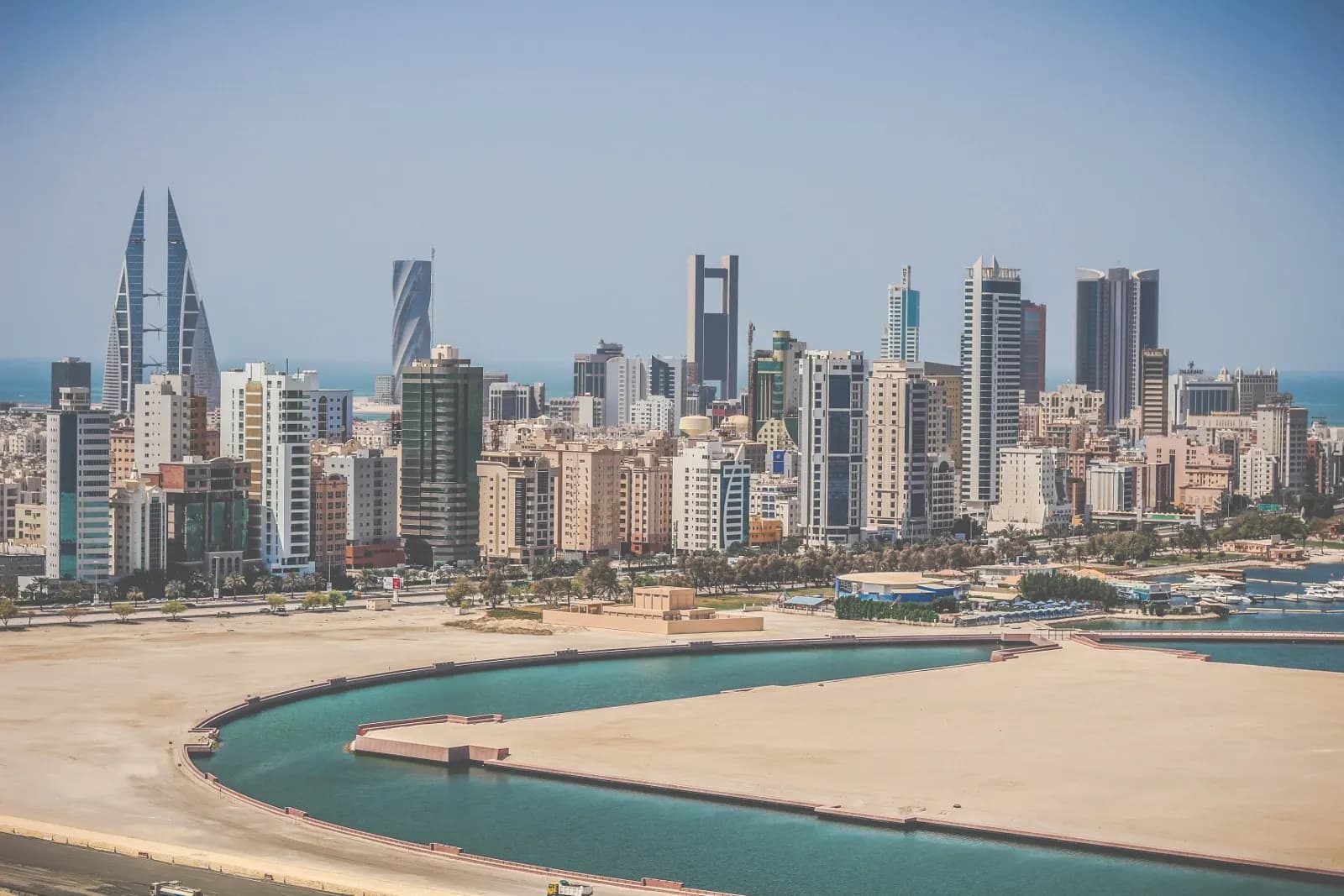
The trajectory, and what it indicates
Bahrain was the first Gulf state to introduce value added tax, and then the first to double its rate. This is no detail: it is the most reliable signal available on the direction of public finances in the region.
The kingdom is the least resource-rich in the region and the most dependent on its neighbours. It was therefore forced to act before them, and its path probably foreshadows theirs.
Qatar, by comparison, has not yet introduced value added tax — its rate remains 0%4 — but itself presents this situation as transitional. Its corporate tax stands at 10%5.
For a long-term plan, the conclusion is clear: the absence of direct taxation in the Gulf is real today, but it is no longer a structural given. It is shifting towards consumption, which hits residents in their everyday lives.
We do not publish the tax residency criteria used in Bahraini law or the conditions for issuing a certificate: they do not appear in the sources we have been able to consult. Yet this is the document on which the application of any tax treaty depends.
The Bahraini route in
Residence has traditionally been based on sponsorship by an employer, but the kingdom has opened an independent route based on property ownership.
This so-called self-sponsorship permit is open to owners of a property worth at least BHD 50,0006, or about about $132,0007.
This threshold is the lowest in the Gulf, an order of magnitude below that of the Emirates or Qatar. It is the main selling point of the Bahraini scheme, and it makes the region accessible to mid-sized estates.
Two caveats come with it. The property must be located in an area open to foreign ownership, and keeping the property is a condition for keeping the permit. Finally, the market is narrow and its liquidity low.
Key takeaways
- The absence of direct taxation is stated by an official source, but it already has two exceptions.
- Value added tax has doubled since its introduction: the burden has shifted towards consumption.
- The BHD 50,0006 self-sponsorship threshold is the lowest in the region, subject to the area.
- A residence permit is not a tax residency certificate: without one, no tax treaty can be relied on.
- A French national whose household or centre of economic interests remains in France remains domiciled there.
Bahrain therefore occupies a particular place in the Gulf: more socially open, cheaper, more accessible, but also more economically dependent on its neighbours and further along in the transition to consumption-based taxation. For an expatriate, it is a destination where the cost of entry is modest and the quality of life real; for an investor, a narrow market whose value depends largely on decisions taken elsewhere.
Please note
Sources and verification dates
- 1.
Bahrain: general personal income tax : 0%
« Currently, there is no general taxation on the personal income of individuals or corporations and no withholding taxes, and no estate or gift taxes in Bahrain. — Kingdom of Bahrain, « Information on Residency for tax purposes », fiche officielle déposée par le Royaume auprès de l'OCDE (portail CRS). »
oecd.orgVerified on Nov 2, 2026Verified source
- 2.
Bahrain: general corporate income tax : 0%
« Currently, there is no general taxation on the personal income of individuals or corporations and no withholding taxes, and no estate or gift taxes in Bahrain. — Kingdom of Bahrain, « Information on Residency for tax purposes » (OCDE). Exceptions : sociétés pétrolières et gazières (46 %) et, depuis le 1er janvier 2025, groupes multinationaux ≥ 750 M€ de chiffre d'affaires soumis au Domestic Minimum Top-up Tax de 15 % (Decree-Law No. (11) of 2024). »
oecd.orgVerified on Nov 2, 2026Verified source
- 3.
Bahrain: standard rate of value added tax : 10%
« A standard rate of 10% Value Added Tax (VAT) has been applied in the Kingdom of Bahrain from 1 January 2022. »
bahrain.bhVerified on Nov 2, 2026Verified source
- 4.
Qatar: value added tax rate : 0%
« Taxes in Qatar — Global Minimum Tax ; Income Tax (« 10% on taxable income, applicable across all activities ») ; Capital Gains Tax ; Withholding Tax ; Excise Tax. — General Tax Authority, page « Taxes in Qatar » : aucune taxe sur la valeur ajoutée n'y figure ; la TVA prévue par l'accord-cadre du CCG n'a pas été mise en œuvre au Qatar. »
gta.gov.qaVerified on Nov 2, 2026Verified source
- 5.
Qatar: tax rate on the taxable income of companies : 10%
« Article 9 The tax rate shall be ten percent (10%) of the taxpayer's taxable income during the tax year. »
gta.gov.qaVerified on Nov 2, 2026Verified source
- 6.
Bahrain: minimum property value qualifying for the self-sponsored residence permit : BHD 50,000
« Certified copy of ownership title deed (property value not less than 50,000 BHD) »
npra.gov.bhVerified on Nov 2, 2026Verified source
- 7.
Bahrain: approximate equivalent of the self-sponsorship real estate threshold : $132,000
« Self-Sponsorship Residence Permit and Re-entry Visa (For foreigners who own property in Bahrain) — Certified copy of ownership title deed (property value not less than 50,000 BHD) ; Evidence of a stable income of 500 BHD or more ; Self-sponsorship residence permit for durations of 2, 5, or 10 years (fees 200 / 400 / 600 BHD). — Nationality, Passports & Residence Affairs (NPRA), ministère de l'Intérieur. BHD 50 000 = 132 980 USD (parité fixe 1 BHD = 2,6596 USD). »
npra.gov.bhVerified on Nov 2, 2026Verified source