News brief · Banking
Cayman Islands: the financial centre strengthens its transparency
The Cayman Islands levy no tax, and that is a fact. What has changed is not the taxation but the transparency: the jurisdiction publishes, exchanges and registers — which changes how it can be used without changing its rate.
By Editorial team · on June 21, 2026
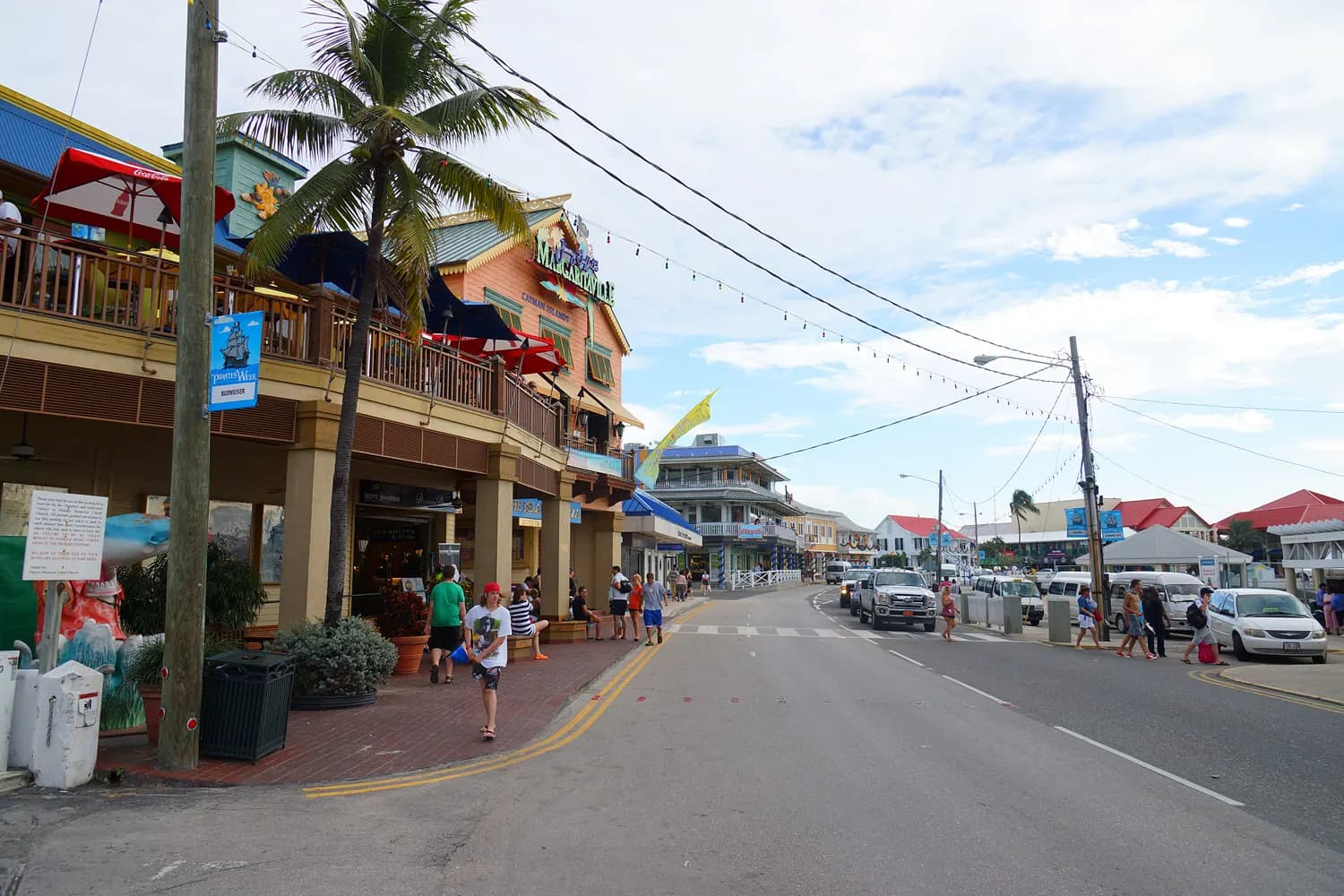
What the jurisdiction does not tax
The Cayman Islands apply no direct taxation: the level of taxation is 0%1. There is no income tax, no corporate tax, no capital gains tax and no inheritance tax.
This absence is long-standing and inherent to the territory's economic model, which is financed by customs duties, registration fees and taxes on property transactions.
The certificate of residence for persons of independent means requires an investment of KYD 1,000,0002, or roughly about $1,200,0003, and a reference annual income of about $146,0004.
This certificate is issued for 25 years5, making it one of the longest-lasting permits in the world. An absence from the territory beyond 30 days6 does, however, require discretionary leniency from the authorities.
The length of the certificate deserves emphasis, as it has no equivalent among comparable schemes. Whereas most residency by investment permits are renewed every two to five years, this one covers a quarter of a century, offering rare visibility for a long-term wealth plan.
What has really changed
Under international pressure, the territory has adopted a set of transparency rules: registers of beneficial owners, economic substance requirements for entities carrying on certain activities, and participation in the automatic exchange of information.
These substance requirements are the most far-reaching change. An entity domiciled in the Caymans that carries on a relevant activity must have staff, premises and genuine expenditure there, and show that its decisions are taken there.
In other words, the letterbox company no longer works. What remains is a jurisdiction without taxation, but one that requires a real presence in order to benefit from it — exactly as the Emirates have done for their free zones.
We do not publish the list of activities subject to the substance requirements, the applicable thresholds or the timetable of these reforms: they do not appear in the official sources we have been able to verify.
The territory has also been added to and then removed from European lists of non-cooperative jurisdictions as these changes unfolded. Such listings have concrete consequences for banking relationships and for the reporting obligations of counterparties.
What this means for a French national
The absence of local taxation does not end French tax domicile. As long as the household or the centre of economic interests remains in France, Article 4 B of the Code général des impôts continues to apply.
There is no tax treaty between France and the Cayman Islands to settle a case of dual residence. The only protection lies in an effective and documented severance of ties.
A move to the territory also triggers the exit tax above more than €800,0007 in securities, and the deferral is not automatic: it requires guarantees and a tax representative, applied for at least from 90 days8 before the transfer.
Finally, holding assets or shareholdings in a jurisdiction of this kind entails specific French reporting obligations, failure to meet which is heavily penalised, even where no income at all is received.
Key takeaways
- The absence of direct taxation is real and long-standing: 0%1.
- Substance requirements have put an end to structures with no real presence.
- The certificate of residence requires an investment of KYD 1,000,0002 and a high reference income.
- There is no tax treaty with France.
- The cost of island living there is very high, as everything is imported.
The Cayman case illustrates a general trend: jurisdictions without taxation have not disappeared, they have stopped being accessible from a distance. What they offer today is aimed at those who genuinely settle there, and the entry ticket — investment, income, cost of living — strongly filters that population. The difference from the previous decade is not fiscal: it is practical, and it is considerable.
Please note
Sources and verification dates
- 1.
Cayman Islands: level of direct taxation : 0%
« Following the abolition in 1985 of an annual head tax of CI$10 on all adult male residents up to 60 years, there are no direct taxes in the Cayman Islands. There is no income tax, company or corporation tax, inheritance tax, capital gains or gift tax. — Cayman Islands Government, « Our Finance & Economy ». »
cigarchives.gov.kyVerified on Nov 2, 2026Verified source
- 2.
Cayman Islands: investment required for the residency certificate : KYD 1,000,000
« […] and you have invested the sum of one million dollars, of which at least five hundred thousand dollars is in developed real estate in Grand Cayman — Caymanian Protection (Amendment) Regulations, 2026 (SL 16 of 2026), Schedule 5, Part B, 5(a). Montant légal : CI$ 1 000 000. »
- 3.
Cayman Islands: approximate equivalent of the investment required : $1,200,000
« […] and you have invested the sum of one million dollars, of which at least five hundred thousand dollars is in developed real estate in Grand Cayman, and that you continue to maintain that level of investment — Caymanian Protection (Amendment) Regulations, 2026 (SL 16 of 2026), Schedule 5, Part B, 5(a). Montant légal : CI$ 1 000 000 (≈ 1 219 500 US$ par la parité fixe). »
- 4.
Cayman Islands: reference annual income required of the certificate holder : $146,000
« Persons who hold a Residency Certificate for Persons of Independent Means issued under section 41 of the Act — 5. A declaration that (a) if you reside in Grand Cayman (i) you have a continuous source of annual income of no less than one hundred and twenty thousand dollars, without the need to engage in employment in the Cayman Islands — Caymanian Protection (Amendment) Regulations, 2026 (SL 16 of 2026), Schedule 5, Part B. Montant légal : CI$ 120 000 (1 KYD = 1,2195 USD, parité fixe) ≈ 146 341 US$. »
- 5.
Cayman Islands: duration of the residency certificate for persons of independent means : 25 years
« 41. (2) An applicant under this section shall be granted a Residency Certificate for Persons of Independent Means, without the right to work, valid for twenty-five years and renewable thereafter at the discretion of the Director of WORC — Immigration (Transition) Act (2022 Revision), section 41(2). Section 41 non modifiée par les Immigration (Transition) (Amendment and Validation) Acts 2025 et 2026 (en vigueur le 1er mai 2026). »
- 6.
Cayman Islands: period of absence beyond which a discretionary allowance applies : 30 days
« 46. The holder of a Residency Certificate for Persons of Independent Means […] may, at the discretion of the Director of WORC, have the right to reside in the Islands revoked if — […] (b) the holder was not physically present in the Islands for a minimum of thirty days in aggregate in any calendar year — Immigration (Transition) Act (2022 Revision), section 46(b). »
- 7.
France, exit tax: total value of securities triggering taxation of unrealised capital gains : €800,000
« droits sociaux, titres ou droits atteignant une valeur globale d'au moins 800 000 € ou représentant au moins 50 % des bénéfices sociaux »
- 8.
France, exit tax: deadline before departure to file a request for deferral with guarantees : 90 days
« Pour les départs intervenus à compter du 22 novembre 2019, la demande doit être déposée au plus tard 90 jours avant le transfert du domicile fiscal hors de France. — Direction générale des finances publiques, impots.gouv.fr. »