News brief · Real estate
Dubai: off-plan property now eligible for the Golden Visa
Making off-plan properties eligible for Dubai's long-term residence permit opens the scheme to younger buyers. It also shifts onto them a developer risk that buying completed properties avoided.
By Editorial team · on June 9, 2026
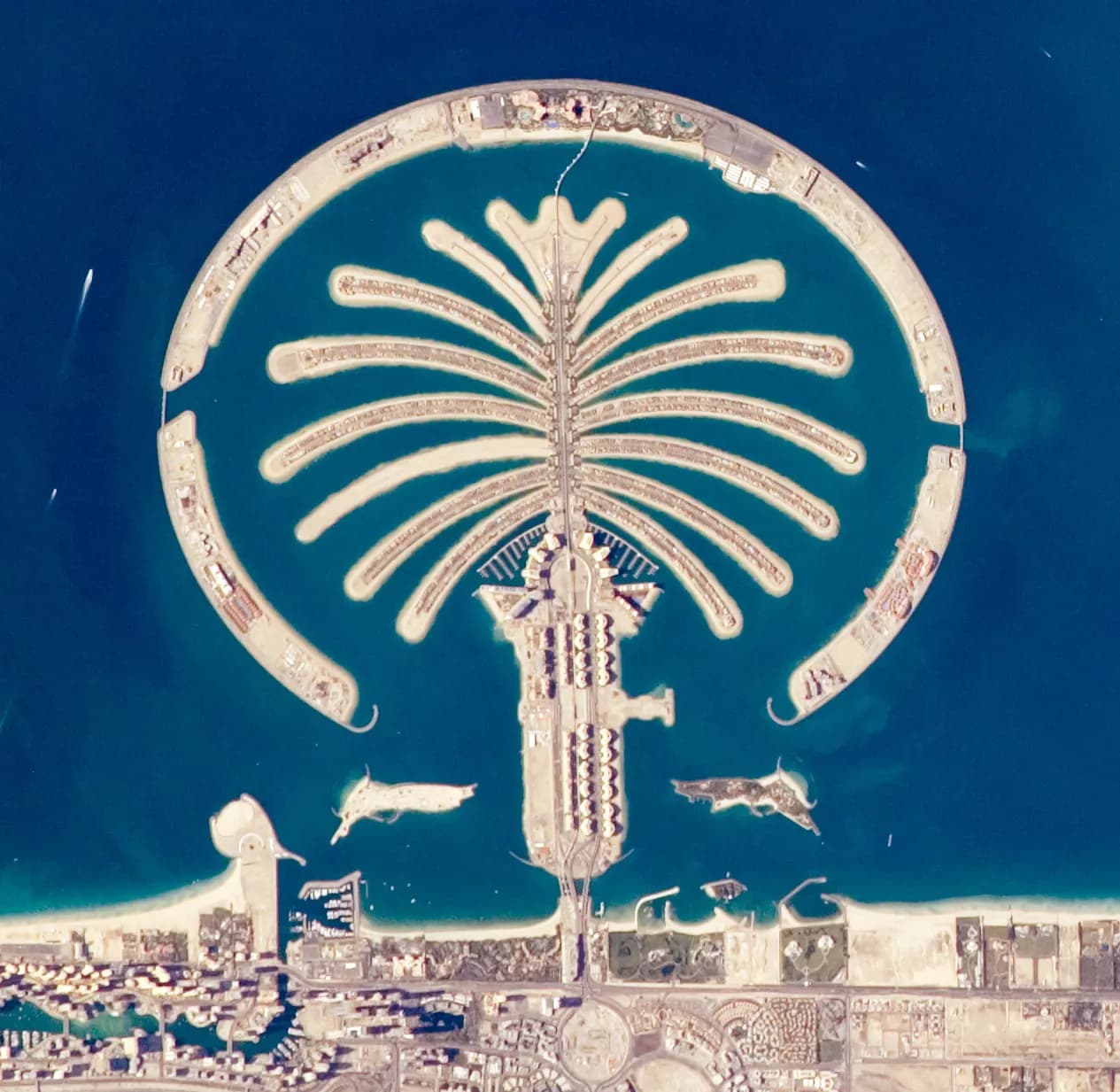
What the scheme provides
Acquiring a property worth at least from AED 2,000,0001, or roughly about €520,0002, gives access to a renewable residence permit of 10 years3.
This permit allows the holder to sponsor family members and domestic staff, and does not require continuous presence, unlike ordinary residence visas.
Freehold ownership is open to foreigners only in the emirate's designated areas, and keeping the permit requires keeping the property.
We do not publish the precise eligibility conditions for off-plan properties, the share of payment required at the time of application, or the list of approved developers: they are set by administrative decisions whose current version we have not been able to verify. They should be confirmed with the Dubai Land Department.
What can be said is that opening the scheme to off-plan properties lowers the amount of cash needed to enter, as the buyer pays only a fraction of the price at the time of applying for the permit.
The risk this shifts
A completed property can be bought, inspected and let immediately. An off-plan property is bought on a promise, and the buyer bears the risk of completion, delay and compliance.
The instalment payment schedule, usual in these developments, also commits the buyer over several years. A change in professional situation during construction — frequent for an expatriate — can make these instalments hard to meet.
And the difficulty becomes circular when the residence permit depends on the purchase: being unable to pay an instalment puts the property at risk, and the property underpins the right of residence.
The developer's soundness therefore matters more than in a market of existing properties. Escrow arrangements and completion guarantees must be examined with the same care as the location.
The Dubai market has gone through two severe corrections in twenty years, one of which left developments unfinished. This history is short but it is documented, and it justifies caution.
One last point of method: the price of an off-plan property is not comparable to that of a completed property of the same size. It includes a risk discount and a cash-flow advantage, but it also includes the developer's margin on a product that does not yet exist. Comparing the two per square metre, as most presentations do, makes no sense.
What the permit does not settle
A residence permit, even one valid for ten years, is not a tax residency certificate. The Emirates require presence of from 183 days4 over twelve months, and the certificate is a separate procedure.
Without it, the tax treaty concluded with France cannot be invoked. A non-resident owner remains taxable in France on rental income from the Emirates, with the treaty determining how double taxation is eliminated.
The tax framework for holding property has also changed. Individuals are not taxed — 0%5 — but holding through a company falls under corporate tax, at a rate of 9%6 above AED 375,0007.
The choice of holding structure is therefore no longer neutral, and it must be settled before the purchase.
What to check
- Confirm that the property is in an area open to foreign freehold ownership.
- Examine the completion guarantees and the escrow arrangements.
- Measure how exposed the payment schedule is to a change in professional situation.
- Cost the service charges and registration fees, which are left out of advertised yields.
- Apply for a tax residency certificate if you are considering actually settling there.
Opening the scheme to off-plan properties is therefore an easier way in, not a lighter risk. It suits a buyer who is settling there and knows the market; it exposes more the buyer who purchases from a distance solely for the residence permit, and who will discover at the first incident that their right of residence rests on a building site.
Please note
Sources and verification dates
- 1.
Dubai: minimum purchase value of a property qualifying for the investor Golden Visa : AED 2,000,000
« Golden Visa application - Investor — This service allows the real estate investor owning a property the purchase value of which is equal to or more than 2 million AED at the time of purchase, to apply for a 10-years renewable residence permit. The husband or wife, children and parents […] — Dubai Land Department (Government of Dubai). »
dubailand.gov.aeVerified on Nov 2, 2026Verified source
- 2.
Dubai: approximate equivalent of the Golden Visa real estate threshold : €520,000
« […] a property the purchase value of which is equal to or more than 2 million AED at the time of purchase — Dubai Land Department. AED 2 000 000 = 544 600 USD (parité fixe 3,6725) ≈ 465 000–500 000 € au cours 2026. »
dubailand.gov.aeVerified on Nov 2, 2026Verified source
- 3.
Dubai: duration of the residence visa granted to the real estate investor : 10 years
« This service allows the real estate investor owning a property the purchase value of which is equal to or more than 2 million AED at the time of purchase, to apply for a 10-years renewable residence permit. »
dubailand.gov.aeVerified on Nov 2, 2026Verified source
- 4.
United Arab Emirates: presence over twelve months giving rise to an individual’s tax residency : 183 days
« If he has been physically present in the State for a period of (183) one hundred and eighty-three days or more, within the relevant (12) twelve consecutive months. »
tax.gov.aeVerified on Nov 2, 2026Verified source
- 5.
United Arab Emirates: taxation of personal income : 0%
« Taxation — The UAE does not levy income tax on individuals. However, it levies 5 per cent value added tax on the purchase of goods and services, levied at each stage of the supply chain and ultimately borne by the end consumer. — Portail officiel du Gouvernement des Émirats arabes unis (u.ae), « Taxation ». »
u.aeVerified on Nov 2, 2026Verified source
- 6.
United Arab Emirates: corporate tax rate above the threshold : 9%
« CT Rate — As per Ministry of Finance, CT rates are: 0 per cent for taxable income up to AED 375,000 ; 9 per cent for taxable income above AED 375,000 […] The Federal Decree-Law applies to financial years beginning on or after 1 June 2023. — Portail officiel du Gouvernement des Émirats arabes unis (u.ae), « Corporate tax » (Federal Decree-Law No. 47 of 2022). »
u.aeVerified on Nov 2, 2026Verified source
- 7.
United Arab Emirates: taxable profit below which corporate tax is zero : AED 375,000
« As per Ministry of Finance, CT rates are: 0 per cent for taxable income up to AED 375,000 »
u.aeVerified on Nov 2, 2026Verified source