News brief · Residency
Malta: the non-dom regime and the GRP still attractive
Malta combines an ordinary tax base rule, the remittance basis, with paid residence programmes. The two are different in nature, and only the first is truly stable.
By Editorial team · on April 22, 2026
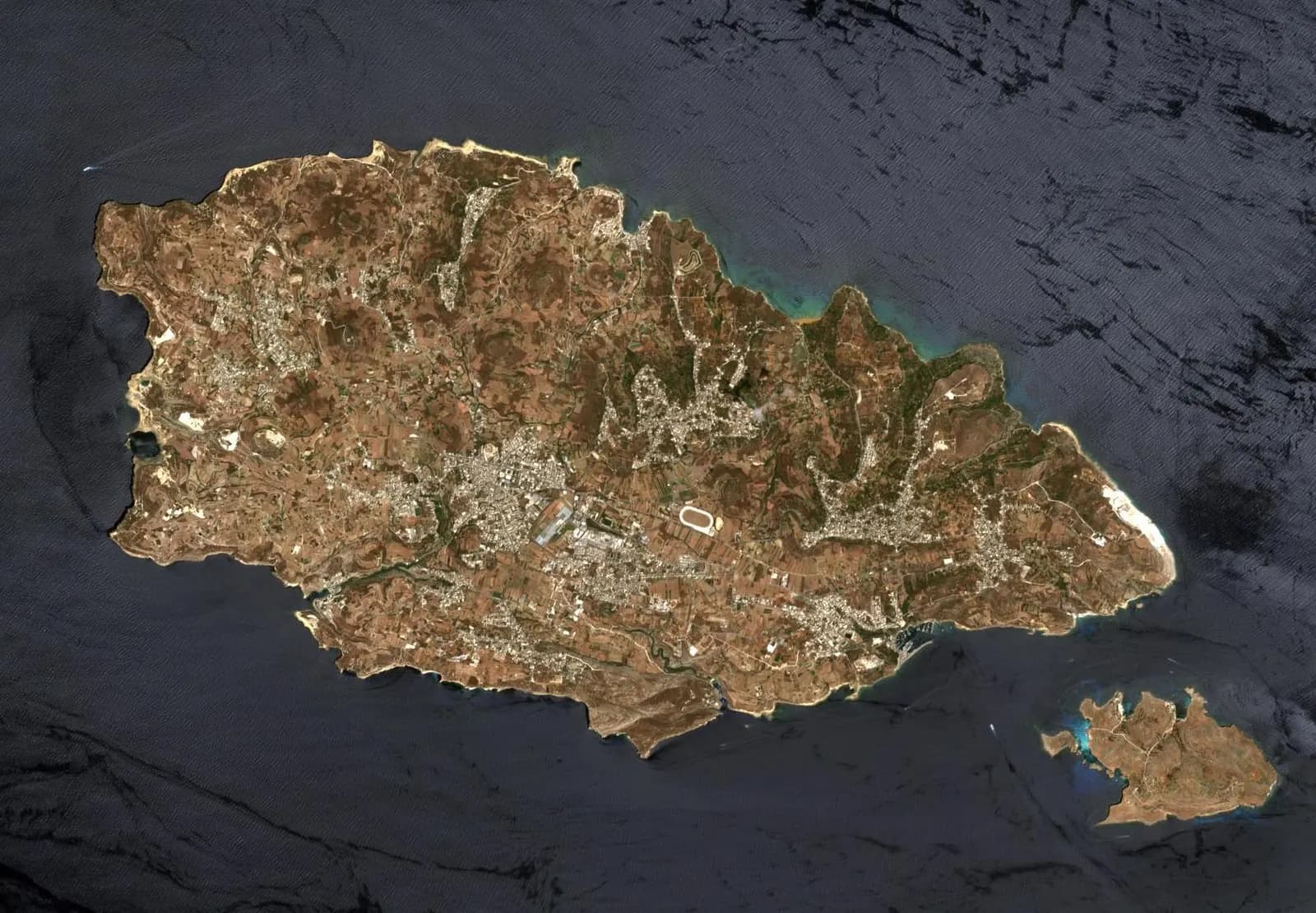
The remittance basis
Maltese taxation combines residence and domicile. A person who is resident in Malta but not domiciled there is taxed only on Maltese-source income and on foreign income remitted to Malta.
This mechanism, inherited from British law, is neither an exemption nor a reduced rate: it is a tax base rule. What stays outside Malta stays outside Maltese tax.
The concept of domicile, distinct from residence, is a civil law concept that is difficult to change. A French national in principle retains their domicile of origin unless they show a lasting intention to the contrary.
The benefit of the regime therefore does not come from filing an application but from a factual situation, which the taxpayer must prove. This is what makes it accessible, and fragile if the situation is poorly documented.
As part of the ordinary rules applicable to any non-domiciled resident, this rule is more stable than a preferential scheme: abolishing it would require an overhaul of the system, not just closing a door.
The residence programme, and what it costs
The Residency Malta agency administers a permanent residence programme for third-country nationals. Its financial conditions are published.
The applicant pays a non-refundable administrative fee of €60,0001 and a government contribution of €37,0002, plus €7,5003 per adult dependant, excluding the spouse.
The property requirement is met by renting an eligible property for an annual rent of at least from €14,0004, or by buying one for a minimum value of €375,0005.
In addition, there is a mandatory donation of €2,0006 to a local non-governmental organisation, and proof of capital assets of at least from €500,0007, part of which must be in financial assets.
The fees and contributions, non-refundable and with no asset in return, add up on their own to a considerable sum, separate from the property investment. Comparing Malta with another scheme on the property threshold alone therefore significantly underestimates its cost.
What distinguishes the two
The remittance basis is an ordinary tax regime; the residence programme is a paid preferential scheme. The first cannot be bought, and the second confers no tax advantage in itself.
For a French national, the second is in any case pointless: freedom of movement allows them to live in Malta without any investment requirement. Only the remittance basis concerns them.
Several of Malta's schemes have been challenged at European level, and its citizenship by investment programme was the subject of proceedings before the Court of Justice of the European Union.
This institutional scrutiny makes Malta's preferential schemes more unstable than elsewhere, but it has so far left the ordinary tax regime intact. This is an argument for building on the former rather than the latter.
We do not publish the Maltese tax scale, the rate applicable to remitted foreign income or the minimum annual tax required of certain non-domiciled residents: these figures do not appear in the official sources we have been able to verify.
What to do
- Have a Maltese adviser establish how the remittance basis applies to your situation.
- Organise your flows: what comes into Malta becomes taxable, what stays outside does not.
- Document the reality of your presence in Malta: housing, stays, ties.
- Check any minimum annual tax that may be required, which sets the floor cost of the regime.
- Handle the departure from France under its own criteria and under the France–Malta tax treaty.
Finally, Malta is not cheap. Housing costs have risen sharply, the archipelago depends entirely on imports, including for water produced by desalination, and its population density is among the highest in the world. The tax advantage is real; the living environment must be judged separately.
Please note
Sources and verification dates
- 1.
Malta: non-refundable administrative fee under the MPRP : €60,000
« As part of the application, applicants are required to pay a non-refundable administrative fee of €60,000 and a Government contribution of €37,000. »
residencymalta.gov.mtVerified on Nov 2, 2026Verified source
- 2.
Malta: government contribution under the MPRP : €37,000
« As part of the application, applicants are required to pay a non-refundable administrative fee of €60,000 and a Government contribution of €37,000. »
residencymalta.gov.mtVerified on Nov 2, 2026Verified source
- 3.
Malta: fee per adult dependant under the MPRP, excluding the spouse : €7,500
« A fee of €7,500 applies for each adult dependant, excluding the spouse. »
residencymalta.gov.mtVerified on Nov 2, 2026Verified source
- 4.
Malta: minimum annual rent for a property eligible for the MPRP : €14,000
« Applicants must satisfy the MPRP property requirement by either renting a qualifying residential property in Malta, including Gozo, for a minimum annual rent of €14,000, or purchasing a qualifying residential property for a minimum value of €375,000. »
residencymalta.gov.mtVerified on Nov 2, 2026Verified source
- 5.
Malta: minimum purchase value of a property eligible for the MPRP : €375,000
« Applicants must satisfy the MPRP property requirement by either renting a qualifying residential property in Malta, including Gozo, for a minimum annual rent of €14,000, or purchasing a qualifying residential property for a minimum value of €375,000. »
residencymalta.gov.mtVerified on Nov 2, 2026Verified source
- 6.
Malta: mandatory donation to a local non-governmental organisation (MPRP) : €2,000
« applicants must make a donation of €2,000 to a local NGO registered with the Commissioner for Voluntary Organisations and active in the philanthropic, cultural, scientific, artistic, sport or animal welfare sectors. »
residencymalta.gov.mtVerified on Nov 2, 2026Verified source
- 7.
Malta: minimum capital assets required of the MPRP applicant, including €150,000 in financial assets : €500,000
« They must also show that they have capital assets of not less than €500,000, out of which €150,000 must be financial assets, or not less than €650,000, out of which €75,000 must be financial assets. »
residencymalta.gov.mtVerified on Nov 2, 2026Verified source