News brief · Cost of living
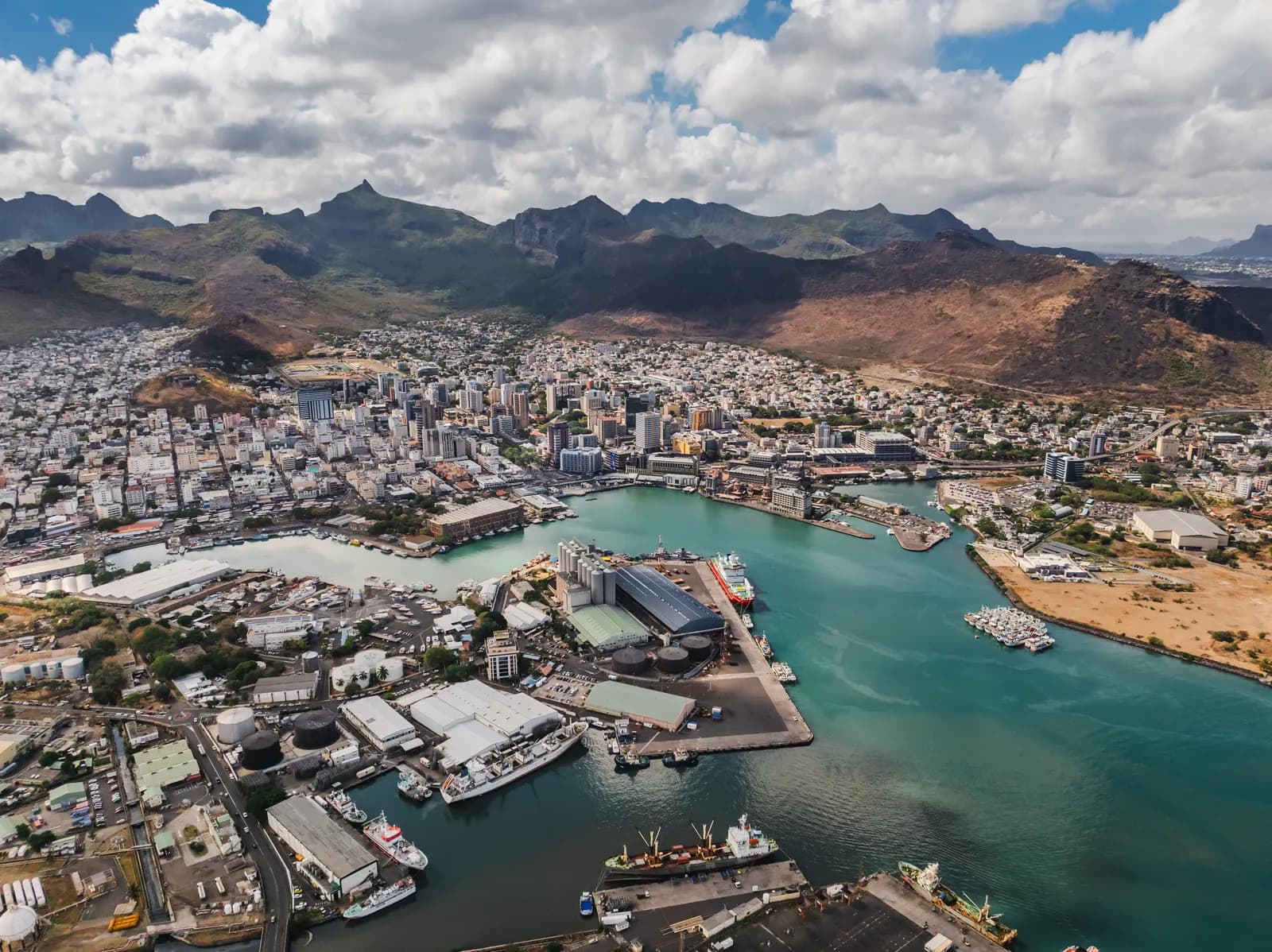
Mauritius: a tropical setting on a controlled budget
Mauritius offers a tropical setting with a degree of legal certainty unusual in these latitudes. The budget can be kept under control, provided you distinguish the market aimed at foreigners from the rest of the island.
By Editorial team · on March 17, 2026
What the island offers that is rare
Mauritius's main asset is not tax but legal. Its law is mixed, of French and British inspiration, the land register is reliable, and some deeds are available in French.
For a buyer, this significantly reduces the cost and risk of due diligence — which is not the case in Thailand, the Philippines or Indonesia, where land law bars foreigners from full ownership.
The Mauritian scale is short and progressive: it starts at 0%1, rises to 0%2 on the second band, each band having a width of MUR 500,0003, and reaches 20%4 above that.
There is no capital gains tax and no inheritance tax. It is this combination, rather than the level of the scale, that explains the island's appeal for wealthy households.
Finally, the island has a dense treaty network, notably with India and several African States, which has made it a structuring hub for investments into these markets.
Two markets, two budgets
Acquisition by a non-citizen is only possible within approved schemes. Outside them, the property market is closed to foreigners.
There are therefore two markets: that of the approved schemes, with prices calibrated for an international clientele, and that of the rest of the island, on a completely different scale and inaccessible.
The acquisition threshold giving access to a residence permit stands at from $375,0005.
The same reasoning applies to the everyday cost of living. Services, labour and local products are affordable; imported food, electronics and cars are expensive, and so is international schooling.
We do not publish a typical monthly budget for Mauritius: we found no official series measuring a basket of expenses comparable to that of an expatriate.
Three items deserve anticipating beyond housing. Healthcare, for which the Mauritian private sector is adequate for routine care but requires travel to Réunion or South Africa for the most serious procedures.
Schooling, where the international offering is real but concentrated, and whose fees are approaching European levels. And energy, on an island that imports most of what it consumes and where air conditioning runs for much of the year.
Routes to settling there
The occupation permit for investors requires an investment of $100,0006 for the first option, or $100,0007 for the second, depending on the nature of the project.
The non-citizen retiree status is open from more than 50 years8, on proof of funds transferred into the country. It does not require any property purchase.
The property-based permit is tied to ownership of the property: selling it has consequences for the right of residence, which weighs on liquidity.
The Mauritian budget has also raised the taxation of property transactions by non-citizens, which increases the cost of entry without changing the threshold. This amount must be obtained before making any offer.
Finally, the Mauritian passport gives visa-free access to about 1509 destinations, but naturalisation requires long residence and is not the purpose of these schemes.
Key takeaways
- Legal certainty is the island's rare asset, more than its tax system.
- Acquisition is only possible within approved schemes, whose market is narrow.
- The property-based permit requires keeping the property.
- The increase in transaction duties raises the cost of entry, and cannot be recovered.
- No tax on capital gains or inheritance: this is what attracts wealthy households.
One last point deserves to be raised: liquidity. Properties in approved schemes are mainly resold to other applicants for the same scheme, which ties the property's value to the regime's attractiveness. An increase in duties reduces that attractiveness, and therefore the pool of buyers on resale. This is the mechanism that sales presentations never describe, because it concerns the exit.
Please note
Sources and verification dates
- 1.
Mauritius: rate of the first bracket of the scale : 0%
« Chargeable Income (Rs) / Rate of Income Tax : First Rs 500,000 — 0% ; Next Rs 500,000 — 10% ; On the remainder — 20%. […] 5. Fair Share Contribution — An individual is liable to pay, in addition to his income tax liability, a Fair Share Contribution where, in an income year, his Fair Share Contribution Income Threshold exceeds 12 million rupees [au taux de 15 %]. — Mauritius Revenue Authority, « Payroll Taxes », 6 octobre 2025 (année de revenu 2025/26). »
mra.muVerified on Nov 2, 2026Verified source
- 2.
Mauritius: rate of the first bracket of the scale : 0%
« Chargeable Income (Rs) / Rate of Income Tax : First Rs 500,000 — 0% ; Next Rs 500,000 — 10% ; On the remainder — 20%. […] 5. Fair Share Contribution — An individual is liable to pay, in addition to his income tax liability, a Fair Share Contribution where, in an income year, his Fair Share Contribution Income Threshold exceeds 12 million rupees [au taux de 15 %]. — Mauritius Revenue Authority, « Payroll Taxes », 6 octobre 2025 (année de revenu 2025/26). »
mra.muVerified on Nov 2, 2026Verified source
- 3.
Mauritius: width of each bracket of the income tax scale : MUR 500,000
« Chargeable Income (Rs) / Rate of Income Tax : First Rs 500,000 — 0% ; Next Rs 500,000 — 10% ; On the remainder — 20%. — Mauritius Revenue Authority, « Payroll Taxes », 6 octobre 2025. »
mra.muVerified on Nov 2, 2026Verified source
- 4.
Mauritius: rate applicable beyond the first two brackets : 20%
« Chargeable Income (Rs) / Rate of Income Tax : First Rs 500,000 — 0% ; Next Rs 500,000 — 10% ; On the remainder — 20%. — Mauritius Revenue Authority, « Payroll Taxes », 6 octobre 2025. »
mra.muVerified on Nov 2, 2026Verified source
- 5.
Mauritius: minimum acquisition price of a property under an approved scheme granting a residence permit : $375,000
« a non-citizen, who purchases – (a) an immovable property under the Integrated Resort Scheme, Real Estate Scheme, Invest Hotel Scheme, Property Development Scheme or Smart City Scheme; or (b) an apartment used, or available for use, as a residence in a building of at least 2 floors above ground floor, – for a purchase price of at least USD 375,000, or its equivalent in any other hard convertible foreign currency, where the exchange rate to be used to calculate the US Dollar equivalent shall be the selling rate in force at the time of signature of the title deed shall be eligible for an RP. »
business.edbmauritius.orgVerified on Nov 2, 2026Verified source
- 6.
Mauritius, investor occupation permit: investment required under the first option : $100,000
« 2.2 Criteria — An Investor may apply for an OP (Investor) under two options: (i) Option 1 - Investor USD 100,000 ; (ii) Option 2 - Investor for Innovative Start-Ups. 2.2.1 Option 1: Investor USD 100,000 — Initial investment of USD 100,000 or its equivalent in freely convertible foreign currency […] 4. Self-Employed — 4.2 Criteria 1. Initial investment of USD 50,000, or its equivalent in freely convertible foreign currency, provided that the self-employed is engaged in the services sector only — EDB Mauritius, « Occupation Permit Guidelines ». »
business.edbmauritius.orgVerified on Nov 2, 2026Verified source
- 7.
Mauritius, investor occupation permit: investment required under the first option : $100,000
« 2.2 Criteria — An Investor may apply for an OP (Investor) under two options: (i) Option 1 - Investor USD 100,000 ; (ii) Option 2 - Investor for Innovative Start-Ups. 2.2.1 Option 1: Investor USD 100,000 — Initial investment of USD 100,000 or its equivalent in freely convertible foreign currency […] 4. Self-Employed — 4.2 Criteria 1. Initial investment of USD 50,000, or its equivalent in freely convertible foreign currency, provided that the self-employed is engaged in the services sector only — EDB Mauritius, « Occupation Permit Guidelines ». »
business.edbmauritius.orgVerified on Nov 2, 2026Verified source
- 8.
Mauritius: minimum age for non-citizen retiree status : 50 years
« A Retired Non-Citizen is a person who is not a citizen of Mauritius and who is aged 50 years or above. »
business.edbmauritius.orgVerified on Nov 2, 2026Verified source
- 9.
Mauritian passport: visa-free destinations : 150
« Henley Passport Index — classement des passeports par nombre de destinations accessibles sans visa préalable (données IATA), consulté à la date indiquée. Valeur reprise de l’index de l’ancien site (barème à 227 destinations). »
henleyglobal.comVerified on Nov 2, 2026Verified source