News brief · Taxation
Qatar: 0% income tax and 0% VAT, a unique case in the Gulf
Qatar levies neither personal income tax nor value added tax. This now makes it an exception in the Gulf, and the authorities themselves present it as temporary.
By Editorial team · on July 20, 2026
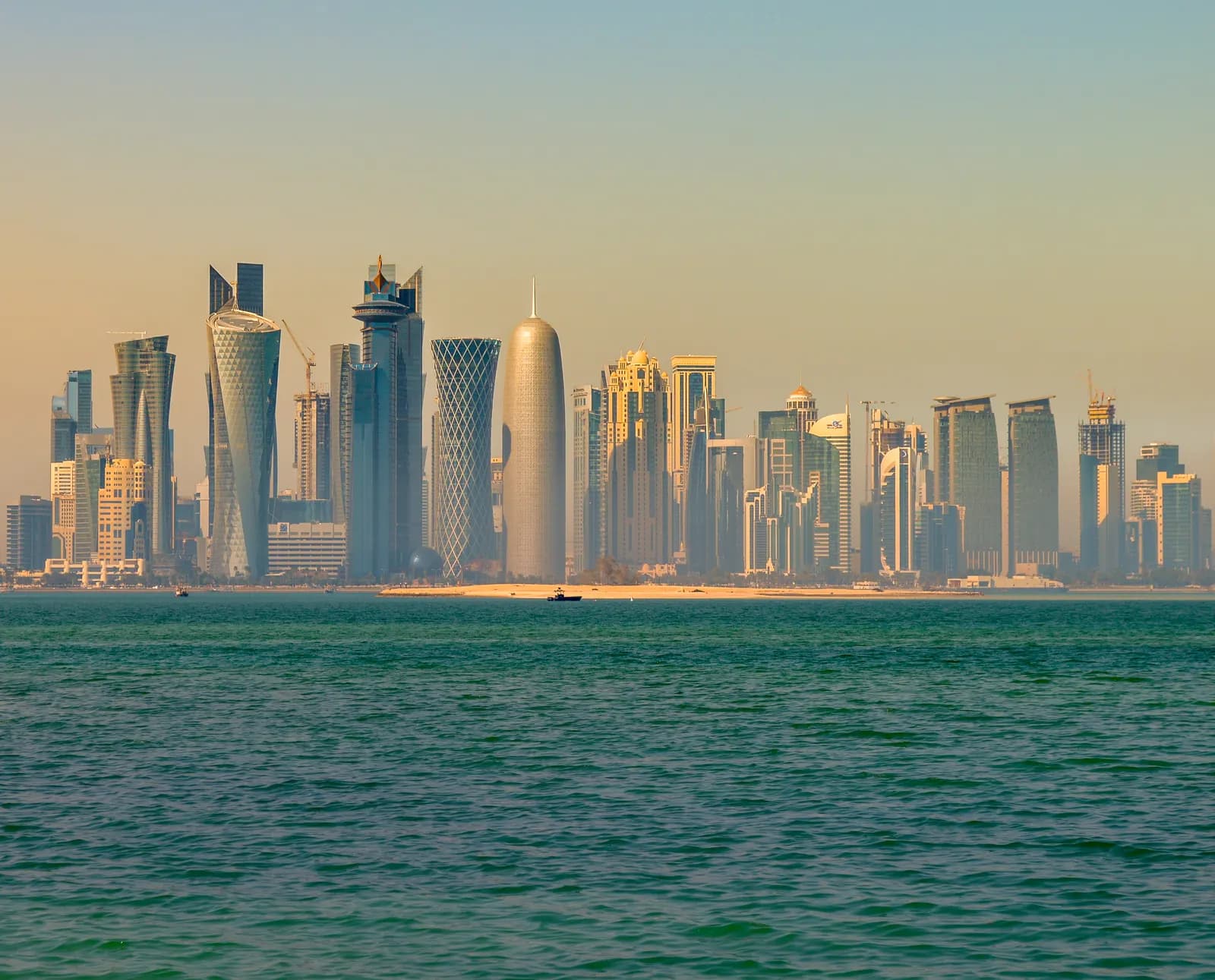
What Qatar levies, and what it does not
Qatar does not tax personal income. Salaries are received net, which is the central financial argument of expatriation contracts in the country.
Interest and bank income received by individuals not carrying on business in Qatar are exempt, at a rate of 0%1.
Nor does the country apply value added tax: its rate remains 0%2. Several of its Gulf neighbours have nonetheless introduced it.
Corporate income tax, on the other hand, does exist: it is set at 10%3 of taxable income and applies to all activities. A global minimum tax has also been introduced for groups within its scope.
Why this exception is fragile
Bahrain was the first Gulf state to introduce value added tax, and then the first to double its rate, which has stood at 10%4 since 1 January 2022.
This trajectory is the most reliable signal available on the direction of public finances in the region: the tax burden is shifting from income to consumption, and it is doing so first in the states with the fewest resources.
Qatar, with its abundant gas reserves, has been able to postpone this introduction. The authorities nevertheless present it as a prospect, and the regional legal framework has long been in place.
For a long-term project, the conclusion is clear: the absence of a consumption tax is a real advantage today, but it should not be treated as a permanent structural feature over fifteen years.
We do not publish a timetable for the introduction of value added tax in Qatar: no date has been set by any official source we have been able to verify.
The tax residency trap
Qatari tax law defines residency: a person is resident if they have a permanent residence in the State, or stay there for more than 183 days5 in a twelve-month period.
The purpose of this definition is not to create a tax: it serves to issue tax residency certificates, a document required to invoke a tax treaty.
This is where the most costly mistake lies. A residence permit, even a long-term one, is not a tax residency certificate, and without that certificate the treaty concluded with France remains a dead letter.
As long as the household or the centre of economic interests remains in France, article 4 B of the French General Tax Code (code général des impôts) continues to apply. A French executive whose business and family remain in France remains domiciled in France, however long they spend in Qatar.
What to weigh against it
Qatar is not a cheap destination. Housing, international schooling and mandatory health insurance are three high cost items, and there is no public alternative for foreigners.
An expatriation contract that covers housing and schooling changes the equation entirely. For a self-employed person who bears these costs, the net advantage shrinks significantly.
- Determine the residence route: sponsorship by an employer, or an independent permit backed by a property investment, from QAR 730,0006.
- Obtain the Qatari ID card, which is required to open a bank account.
- Take out the required health insurance.
- Apply for the tax residency certificate as soon as the conditions are met.
- Document the departure from France — household, centre of economic interests — because that is where most of the outcome is decided.
Finally, the climate is a factor that financial comparisons never take into account: air conditioning runs for much of the year and outdoor life is very limited for several months.
Please note
Sources and verification dates
- 1.
Qatar: taxation of interest and bank income of individuals without local business activity : 0%
« […] the following income shall be exempt from tax: 1- Interest and bank returns due to natural persons who do not engage in taxable activity in the State, whether they are residents or non-residents. […] 3- Capital gains arising from the disposition of real estate or securities by natural persons, provided that the real estate or securities disposed of do not belong to the assets of a taxable activity. — Law No. (24) of 2018 Promulgating the Income Tax Law, article 4 (exemptions). Les plus-values réalisées dans le cadre d'une activité imposable restent soumises à l'impôt de 10 %. »
gta.gov.qaVerified on Nov 2, 2026Verified source
- 2.
Qatar: value added tax rate : 0%
« Taxes in Qatar — Global Minimum Tax ; Income Tax (« 10% on taxable income, applicable across all activities ») ; Capital Gains Tax ; Withholding Tax ; Excise Tax. — General Tax Authority, page « Taxes in Qatar » : aucune taxe sur la valeur ajoutée n'y figure ; la TVA prévue par l'accord-cadre du CCG n'a pas été mise en œuvre au Qatar. »
gta.gov.qaVerified on Nov 2, 2026Verified source
- 3.
Qatar: tax rate on the taxable income of companies : 10%
« Article 9 The tax rate shall be ten percent (10%) of the taxpayer's taxable income during the tax year. »
gta.gov.qaVerified on Nov 2, 2026Verified source
- 4.
Bahrain: standard rate of value added tax : 10%
« A standard rate of 10% Value Added Tax (VAT) has been applied in the Kingdom of Bahrain from 1 January 2022. »
bahrain.bhVerified on Nov 2, 2026Verified source
- 5.
Qatar: presence over twelve months establishing residency within the meaning of the tax law : 183 days
« Resident: 1- A natural person who has one of the following conditions: (a) If he has a permanent residence in the State. (b) If he has resided in the State for a period exceeding one hundred and eighty-three consecutive or intermittent days within twelve (12) months. (c) If he has vital interests in the State. — Law No. (24) of 2018 Promulgating the Income Tax Law, article 1 (définitions). »
gta.gov.qaVerified on Nov 2, 2026Verified source
- 6.
Qatar: minimum value of the property or its usufruct granting a residence permit : QAR 730,000
« Article (7) […] 2. Value of the real estate or its usufruct shall not be less than (730,000) seven hundred and thirty thousand Riyals — Decision of the Council of Ministers No. (28) of 2020. Montant légal en riyals (QAR 730 000 ≈ 200 500 USD). »
almeezan.qaVerified on Nov 2, 2026Verified source