News brief · Taxation
Switzerland: lump-sum taxation abolished in another canton
One more Swiss canton has abolished taxation based on expenditure. The federal scheme remains, but its availability depends on a cantonal map that is shrinking, and that must be checked before any project.
By Editorial team · on April 10, 2026
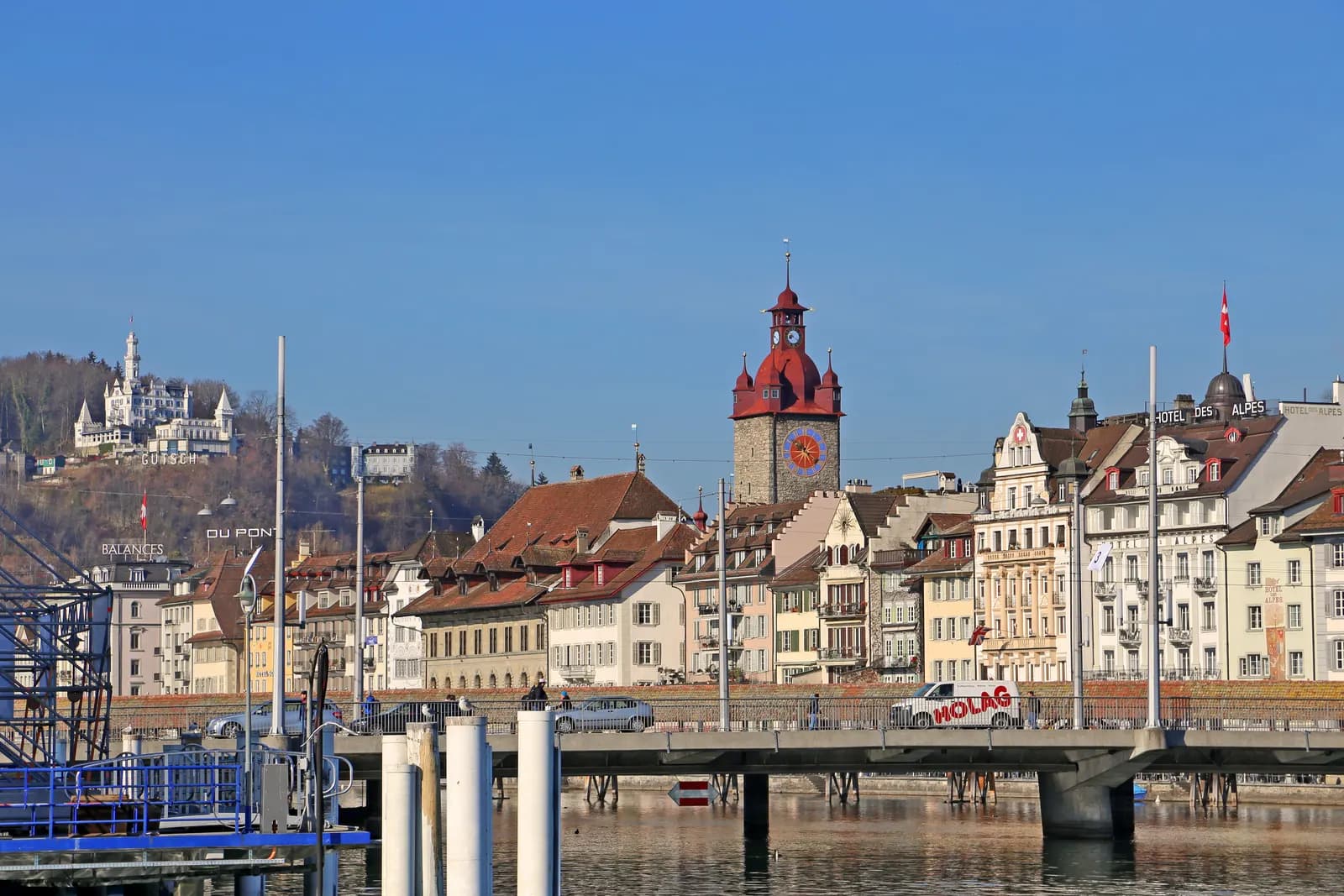
What federal law provides
Article 14 of the Federal Act on Direct Federal Taxation allows a foreigner with no gainful activity in Switzerland to be taxed not on their income but on their annual expenditure.
The tax is calculated on the expenditure of the taxpayer and their dependants, incurred in Switzerland and abroad to maintain their standard of living, but at least on the highest of three amounts.
The first is an absolute floor of about CHF 435,0001 per year, indexed annually. The second is seven times the annual rent or rental value for a head of household. The third is three times the annual board and lodging price for other taxpayers.
It is the highest of the three that serves as the base, not the first. A taxpayer living in a lakeside villa will very probably have the second applied.
The substantive condition is the absence of gainful activity in Switzerland. The regime is aimed at people living off their assets or foreign income; carrying on an activity in the country means losing it, without exception.
What the cantons decide
Swiss tax is levied at three levels: the Confederation, the canton and the municipality. The Article 14 floor concerns only direct federal tax.
The cantons set their own minimums for cantonal and municipal tax, generally above the federal floor. The real burden of lump-sum taxation therefore depends mainly on the canton chosen.
Above all, several cantons have abolished lump-sum taxation following popular votes. A canton that has abolished it applies the ordinary scale to its foreign residents, whatever the federal rule.
This geography is therefore the first parameter of a Swiss project based on lump-sum taxation, and it changes with each cantonal vote.
We publish neither the cantonal minimums, nor the list of cantons that have abolished lump-sum taxation, nor the date of the most recent abolition: they fall under twenty-six separate legislations and we have not been able to verify them in up-to-date official sources. They must be established canton by canton.
Why checking is essential
Swiss lump-sum taxation does not apply automatically: it is subject to a prior agreement with the cantonal tax authority, negotiated before moving. This is the real step in an application.
This feature distinguishes Switzerland from the Italian or Greek flat-tax regimes, whose amount is set by law and applies on simple election.
It also means that an agreement obtained in one canton is worthless in another, and that moving between cantons requires renegotiation.
Tax liability also arises quickly: federal law uses 30 days2 of stay with gainful activity, or 90 days3 without activity — much shorter periods than the six-month threshold common elsewhere.
What to do
- Check that the target canton still offers lump-sum taxation, as several have abolished it by popular vote.
- Obtain prior agreement from the cantonal administration on the base used, before moving.
- Measure the effect of the rent-based floor, often higher than the federal floor.
- Refrain from any gainful activity in Switzerland for the duration of the regime.
- Prepare for the exit tax: as Switzerland is outside the European Economic Area, the deferral application must be filed at least from 90 days4 before the transfer.
On the other hand, inheritances between spouses and, as a general rule, in the descending line are exempt, at a rate of 0%5, the tax being cantonal. This parameter weighs heavily on an estate-planning project, and it too varies from one canton to another — which confirms the general rule of any Swiss project: it is not the country you choose, it is the municipality.
Please note
Sources and verification dates
- 1.
Switzerland: minimum expenditure used as the basis for taxation on expenditure (LIFD art. 14) : CHF 435,000
« a.19 435 000 francs par an; »
fedlex.data.admin.chVerified on Nov 2, 2026Verified source
- 2.
Switzerland: length of stay with gainful activity creating a tax connection (LIFD art. 3) : 30 days
« Art. 3 — 3 Une personne séjourne en Suisse au regard du droit fiscal lorsque, sans interruption notable : a. elle y réside pendant 30 jours au moins et y exerce une activité lucrative ; b. elle y réside pendant 90 jours au moins sans y exercer d'activité lucrative. — LIFD, art. 3 al. 3 (état le 1er janvier 2026). »
fedlex.data.admin.chVerified on Nov 2, 2026Verified source
- 3.
Switzerland: length of stay without gainful activity creating a tax connection (LIFD art. 3) : 90 days
« Une personne séjourne en Suisse au regard du droit fiscal lorsque, sans interruption notable: a. elle y réside pendant 30 jours au moins et y exerce une activité lucrative; b. elle y réside pendant 90 jours au moins sans y exercer d'activité lucrative. »
fedlex.data.admin.chVerified on Nov 2, 2026Verified source
- 4.
France, exit tax: deadline before departure to file a request for deferral with guarantees : 90 days
« Pour les départs intervenus à compter du 22 novembre 2019, la demande doit être déposée au plus tard 90 jours avant le transfert du domicile fiscal hors de France. — Direction générale des finances publiques, impots.gouv.fr. »
- 5.
Switzerland: taxation of inheritances between spouses and, as a rule, to direct descendants : 0%
« En règle générale, les époux et les partenaires enregistrés ainsi que les descendants (enfants et petits-enfants) sont exonérés de cet impôt. — ch.ch, portail officiel de la Confédération, des cantons et des communes, « L'impôt sur les successions en Suisse ». L'impôt sur les successions est cantonal (pas d'impôt fédéral) ; l'AFC précise que les cantons exonèrent le conjoint survivant et, en règle générale, les descendants (dossier « Impôts sur les successions et les donations »). »
ch.chVerified on Nov 2, 2026Verified source