International mobility news

Andorra

Moving to Andorra in 2026: income tax capped at 10%, residence and the Pyrenean setting

Nestled in the Pyrenees between France and Spain, Andorra caps income tax at 10%, has no inheritance tax or wealth tax, and requires effective presence. A coherent choice for estates seeking proximity and light taxation, provided one accepts life in the mountains.

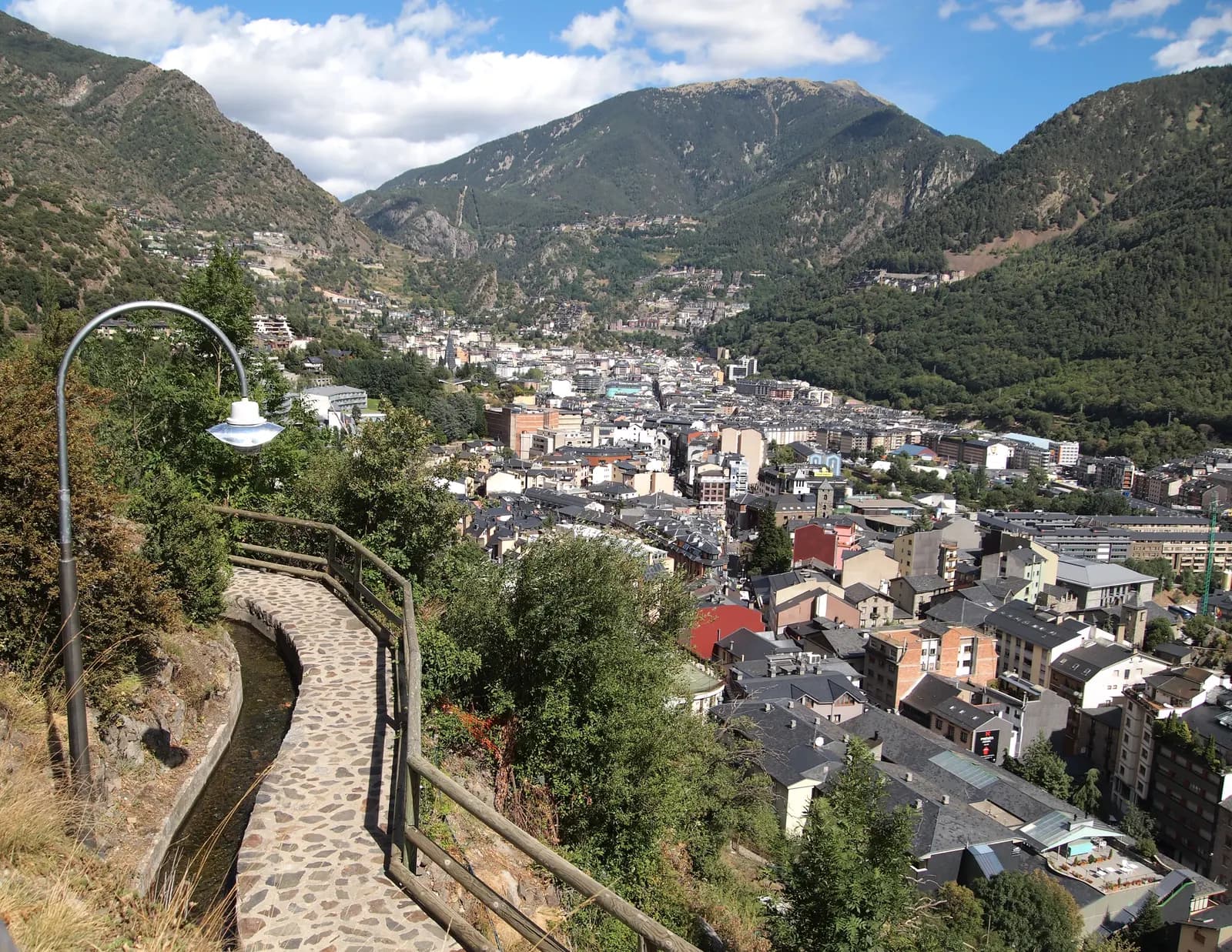
View of Andorra
Photo: Tiia Monto — Wikimedia Commons (CC BY-SA)
Capital
Andorra la Vella
Currency
EUR
Region
Europe

Tax regimes at a glance

Each regime answers the same questions. A zero rate applies only to the income, person and period stated.

Your personal taxation

  • Personal income tax (IRPF, Law 5/2014)General regime

    Who for?
    Andorran tax residents: presence in the territory beyond the annual threshold, or the main centre of activities or economic interests in Andorra (alternative criteria).
    Which income?
    Employment income, income from economic activities, income from movable and immovable capital, capital gains; dividends from Andorran entities are exempt.
    Which source?
    Residents: worldwide income; non-residents are subject to a separate tax on Andorran-source income, not detailed here.
    Conditions
    Single rate after reductions; a reduction for the personal minimum exempting the first portion of the tax base; a bonus on employment income, income from economic activities and income from immovable capital, built around a threshold.
    Duration
    Permanent regime.
    Since when?
    In force since 2015 (Law 5/2014).
    • 183 days Andorra: annual presence giving rise to tax residency
    • 10% Andorra: personal income tax rate
    • 0%
    • €40,000 Andorra: threshold for the reduction on income from employment, economic activities and real estate capital
    • 0% Andorra: taxation of dividends from holdings in Andorran entities

    Official source · portaljuridicandorra.ad

  • Residence without gainful activity (passive residence)Special regime

    Who for?
    People who settle in Andorra without carrying out a gainful activity there: retirees and people living on their assets.
    Which income?
    No tax advantage of its own: it is a residence permit; taxation falls under the IRPF as soon as tax residence is acquired.
    Which source?
    Not applicable.
    Conditions
    Permanent investment in Andorran assets; a final payment to the Andorran Financial Authority, plus a payment per dependant; a minimum investment in the Housing Fund provided for by Law 2/2026, whose interaction with the overall investment is to be confirmed; a minimum annual presence commitment, separate from and well below the tax residence threshold; the number of permits issued is limited.
    Duration
    Renewable permit, subject to maintaining the investment and the presence.
    Since when?
    Financial conditions resulting from Law 2/2026 of 22 January 2026, applicable since 13 February 2026; the refundable deposit under the previous regime is replaced by a final payment.
    • from €1,000,000 Andorra — passive residence: minimum investment in Andorran assets (Law 2/2026)
    • €50,000 Andorra — passive residence: definitive payment by the main holder to the AFA (Law 2/2026)
    • €12,000 Andorra — passive residence: definitive payment per dependant (Law 2/2026)
    • from €400,000 Andorra — passive residence: minimum investment in the Housing Fund (Law 2/2026)
    • 90 days Andorra: annual physical presence to which the holder of a residence without gainful activity commits

    Official source · bopadocuments.blob.core.windows.net

  • Residence and self-employment (active residence through foreign investment)Special regime

    Who for?
    Foreigners who set up or take over an Andorran company and are in effective charge of its management.
    Which income?
    No tax advantage of its own: residence and work permit; income is taxed under the IRPF, and company profits under corporate income tax.
    Which source?
    Not applicable.
    Conditions
    Prior foreign investment authorisation; a shareholding above the regulatory threshold; a role within the administrative body with effective management; a non-interest-bearing deposit with the Andorran Financial Authority where applicable; activity registered and carried out within the regulatory deadline; immigration quotas.
    Duration
    Permit renewable as long as the activity is maintained.
    Since when?
    Conditions from the official form dated 24 April 2025 (Decree 123/2025); the possible impact of Law 2/2026 on the deposit is to be confirmed with the immigration department.
    • more than 34% Andorra, residence and self-employment (foreign investment): required shareholding in the Andorran company (greater than)
    • €50,000 Andorra, residence and self-employment (foreign investment): non-interest-bearing deposit with the Andorran Financial Authority

    Official source · govern.ad

Your company

  • Corporate income tax: general rateGeneral regime

    Who for?
    Companies and other entities resident in Andorra, and permanent establishments of non-resident entities.
    Which income?
    Taxable profit; dividends paid by the company to a resident shareholder are exempt from IRPF.
    Which source?
    Detailed territoriality rules not verified in our sources.
    Conditions
    General rate; any special regimes not verified.
    Duration
    Permanent regime.
    Since when?
    In force (Law 95/2010).
    • 10% Andorra: standard corporate income tax rate
    • 0% Andorra: taxation of dividends from holdings in Andorran entities

    Official source · portaljuridicandorra.ad

Compare with other countries:Foreign incomeCompany taxationRegimes for new residents

Key figures

  • Flight from Paris2 hoursVerified on Nov 2, 2026

Taxation of individuals

Andorra is not a tax-free territory: it is a low-tax territory, which is different and can be verified from the texts themselves. Personal income tax was introduced there by Law 5/2014.

Persons who stay in Andorran territory for more than 183 days2 in the calendar year, or who have the main centre of their activities or economic interests there, are considered tax residents. The criteria are alternative.

The tax rate is single: 10%3. It applies after reductions, including a reduction for the personal minimum which in practice exempts modest incomes.

A bonus also applies to employment income, income from economic activities and income from immovable capital, built around a threshold of €40,0004.

Capital income

Dividends and other returns on holdings in Andorran entities are exempt: Article 5 of the law lists them among exempt income, at a rate of 0%5. Corporate income tax is set at the general rate of 10%6.

The architecture is therefore coherent: a moderate rate on income, a company taxed at the same level, and a dividend distribution that does not bear a second layer of tax. For a company director, it is the whole picture that matters, not just the headline rate.

We do not publish the capital gains scale, nor the Andorran inheritance and gift regime: they do not appear in the extracts of texts available to us.

This coherence has a counterpart that must be weighed. A low single rate comes with a broad tax base: few tax niches, few deferral mechanisms, little room for optimisation once settled. The advantage lies at the outset, in the decision to relocate, not in annual management.

Residence routes and visas

As Andorra belongs neither to the European Union nor to the Schengen area, a French national has no automatic right of residence there. Everyone is subject to Andorran immigration law, and this is a major difference from other European destinations.

Residence without gainful activity

This is the route for retirees and people living on their assets. It involves two separate financial commitments, set out in Article 96 of the immigration law: an investment in Andorran assets, and a payment to the financial authority.

Since Law 2/2026, for applications submitted from 22 January 2026, the main holder pays €50,0007 to the Andorran Financial Authority, and €12,0008 per dependant. This payment is final and non-refundable, except if the initial authorisation is refused: it must be treated as an entry cost, not as a tied-up sum. The refundable deposit of the former regime now applies only to earlier applications.

The same law sets the permanent investment in Andorran assets — notably real estate, holdings in Andorran companies, Andorran securities and funds, public debt and life insurance — at a minimum of from €1,000,0009, a amount reduced to from €400,00010 when the investment is made in the Housing Fund. Along with the payment, this is the main item in the file; the eligibility of the chosen assets should be confirmed with the immigration department before any commitment.

There is also an effective presence requirement: the applicant undertakes to establish their residence in Andorra for at least 90 days11 per calendar year. This threshold is not that of tax residence — it is far below it — and confusing the two is the costliest mistake in an Andorran file.

An active residence, open to anyone who carries out an activity or manages an Andorran company, is subject to different conditions, notably regarding shareholding and quotas.

One last element distinguishes Andorra from its neighbours: the number of permits issued for residence without gainful activity is limited, and the country pursues a policy of selection rather than volume. A complete and fundable file therefore does not, on its own, guarantee issuance within a given timeframe.

Real estate

Acquisition by a non-resident is subject to prior administrative authorisation. This is not a mere formality: it conditions the transaction and forms part of a land-control policy specific to a small territory.

The housing stock is limited by geography — narrow valleys, little buildable land — and foreign demand has created lasting pressure. The constraint is not cyclical: it is physical.

Real estate can also serve as the vehicle for the investment required for residence without gainful activity, which ties the residence file to the wealth file. A property acquired to meet an immigration condition cannot be resold with the same freedom as an ordinary investment.

We do not publish Andorran transfer taxes, nor local property-holding taxation: they do not appear in the sources we were able to consult.

Cost of living

Andorra combines low taxation with a cost of living that is not low. Housing is the dominant item, owing to the combined effect of land scarcity and demand from foreign residents.

We do not publish a typical monthly budget: we have not found an official Andorran series measuring a basket of expenses comparable to that of an expatriate.

Three items shape a budget. Housing, already mentioned. The car, indispensable in a mountain territory where distances are measured in elevation as much as in kilometres. And healthcare, organised around an insurance system to which residents contribute, with out-of-pocket costs to be anticipated.

Conversely, indirect taxation is low, which is visible on consumer goods and fuel — this is the historical origin of Andorran retail trade. The difference therefore favours those who consume locally and works against those who must find housing.

Procedures and timelines

  1. Choose the route — residence without gainful activity, or active residence — since the financial conditions and presence obligations differ;
  2. have the immigration department confirm that the assets chosen for the required investment are accepted, an indispensable step before any costing;
  3. make the payment to the Andorran financial authority, building it into the budget as a sum permanently acquired by the State;
  4. obtain the prior authorisation if the transaction involves a property acquisition by a non-resident;
  5. organise effective presence, at least at the level of the commitment made, and document it year by year.

The order matters: the investment amount drives the overall costing, and the acquisition authorisation determines the property timetable. Entering into a preliminary sale agreement before settling these two points risks a delay that is hard to make up.

We do not publish processing times: we have no official, dated and quantified source for Andorran immigration authorisations.

Points to watch

  • The presence commitment of 90 days11 per year is a condition of the residence permit. It is not enough to establish Andorran tax residence, which requires more than 183 days2 or the centre of economic interests.
  • This gap is the main trap: a resident who complies with their immigration commitment without genuinely transferring their centre of interests may remain domiciled in France.
  • The payment to the financial authority has been final since Law 2/2026, non-refundable except if the initial authorisation is refused, and is in addition to the required investment.
  • Andorra is neither in the European Union nor in Schengen: the rights attached to European citizenship cannot be exercised there, and travel to the Schengen area follows its own rules.
  • The Andorran passport gives about 17112 visa-free access, but naturalisation there is lengthy and demanding.

Finally, within a decade Andorra has gone from an almost total absence of direct taxation to a complete tax system, with information exchange and treaties. Reasoning from the territory's reputation rather than its positive law leads to considerable errors of judgement — in either direction.

For a French national, the decisive question remains the centre of economic interests. A company director who keeps most of his or her income tied to a French activity meets one of the criteria of Article 4 B of the French General Tax Code (code général des impôts), and Andorra's geographic proximity makes this situation common. Distance offers no protection; what matters is where the income is tied.

Advantages & disadvantages

Pros

  • Income tax capped at 10%3, no inheritance or wealth tax

  • Within 2 hours1 30 of Toulouse and Barcelona, free French school system

  • Complete safety, mountain setting

Cons

  • Landlocked: no international airport, limited social life

  • Entry threshold for passive residence sharply raised

  • Tight and expensive property market

  • Investment conditions are changing (Omnibus law) — check the thresholds when the application is filed

Frequently asked questions

How is Andorra taxed?

Income tax is capped at 10%3 (above €40,0004), corporate tax is 10%3, and there are no inheritance taxes or wealth tax.

How do you obtain residence in Andorra?

Since Law 2/2026, passive residence requires an investment in Andorran assets, with a required amount of from €1,000,0009 (or from €400,00010 in the Housing Fund), and a definitive payment to the financial authority (AFA). Active residence is obtained through a company or local employment.

Do you really have to live in Andorra to keep your residence?

Yes: Andorra genuinely checks effective presence (90 days11 for passive residence, more for active residence). Substance is mandatory.

Residence and citizenship by investment programmes

Data shared with the comparison tool: same amounts, same sources. Compare with other programmes

Residence without gainful activity (passive residence)

Residence · Open · Official page

Minimum entry
Government fees (main applicant)
Not provided
Family
Processing time
Not provided
Required stay
Not provided
Permit duration
Not provided

Banks and accounts

Banks and accounts for this country

See this country on the tax map

Please note

General information, as of the date shown. A draft reform is not a rule in force: check the conditions with the authorities or a professional before deciding. Terms of use and disclaimers

Sources and verification dates

  1. 1.

    Flight from Paris : 2 hours

    Verified on Nov 2, 2026

  2. 2.

    Andorra: annual presence giving rise to tax residency : 183 days

    « Que romanguin més de 183 dies, durant l'any natural, en el territori andorrà. Per determinar aquest període en territori andorrà es computen les absències esporàdiques, excepte que l'obligat tributari acrediti la seva residència fiscal en un altre país. »

    portaljuridicandorra.adVerified on Nov 2, 2026Verified source

  3. 3.

    Andorra: personal income tax rate : 10%

    « Article 43. Tipus de gravamen — El tipus de gravamen de l'impost és el 10 per cent. — Llei 5/2014 de l'impost sobre la renda de les persones físiques, art. 43. Article 41 de la Llei 95/2010 de l'impost sobre societats : El tipus general de gravamen per als obligats tributaris d'aquest impost és del 10 per cent. »

    portaljuridicandorra.adVerified on Nov 2, 2026Verified source

  4. 4.

    Andorra: threshold for the reduction on income from employment, economic activities and real estate capital : €40,000

    « Article 46. Bonificació per obtenció de rendes del treball, d'activitats econòmiques o del capital immobiliari — L'obligat tributari […] es dedueix de la quota de tributació una bonificació del 50 per cent de la quantitat que resulti d'aplicar el tipus de gravamen de l'impost sobre l'import de la base de tributació general […] minorada en la quantitat corresponent a la reducció prevista en el primer paràgraf de l'apartat 1 de l'article 35 […]. Aquesta bonificació no pot excedir la quantitat de 800 euros. — Llei 5/2014, art. 46. Le plafond de 800 € correspond à 5 % de 16 000 €, soit une base de 40 000 € (24 000 € exonérés + 16 000 €) : au-delà de 40 000 €, le taux plein de 10 % s'applique. »

    portaljuridicandorra.adVerified on Nov 2, 2026Verified source

  5. 5.

    Andorra: taxation of dividends from holdings in Andorran entities : 0%

    « Article 5. Rendes exemptes — Estan exemptes de l'impost les rendes següents: […] j) Els dividends i altres rendiments derivats de la participació en el patrimoni net, a què es fa referència a l'apartat 1 de l'article 22, quan siguin satisfets per entitats residents fiscals a Andorra o per organismes d'inversió col·lectiva de dret andorrà sempre que estiguin subjectes a l'impost sobre societats andorrà. — Llei 5/2014 (IRPF), art. 5 j). »

    portaljuridicandorra.adVerified on Nov 2, 2026Verified source

  6. 6.

    Andorra: standard corporate income tax rate : 10%

    « El tipus general de gravamen per als obligats tributaris d'aquest impost és del 10 per cent. »

    portaljuridicandorra.adVerified on Nov 2, 2026Verified source

  7. 7.

    Andorra — passive residence: definitive payment by the main holder to the AFA (Law 2/2026) : €50,000

    « Efectuar un ingrés, a favor de l'Autoritat Financera Andorrana, en el mateix moment en què es presenta la sol·licitud d'autorització d'immigració, d'un import de cinquanta mil euros (50.000 €), el qual s'ingressa amb caràcter definitiu i no és reemborsable, llevat que l'autorització d'immigració inicial sigui denegada. »

    Consell General del Principat d'Andorra, « Llei 2/2026, del 22 de gener, de continuïtat i consolidació de les mesures per al creixement sostenible (BOPA núm. 15, 12 de febrer del 2026) », Jan 22, 2026Verified on Nov 2, 2026Verified source

  8. 8.

    Andorra — passive residence: definitive payment per dependant (Law 2/2026) : €12,000

    « el titular principal també ha de fer un ingrés d'un import addicional de dotze mil euros (12.000 €) per a cadascuna de les persones al seu càrrec que adquireixin la condició de resident sense activitat lucrativa. […] L'import de cinquanta mil euros (50.000 €), corresponent a l'autorització del titular principal, i l'import de dotze mil euros (12.000 €), per a cada persona a càrrec, s'ingressen amb caràcter definitiu i no són reemborsables, llevat que l'autorització d'immigració inicial sigui denegada. »

    Consell General del Principat d'Andorra, « Llei 2/2026, del 22 de gener, de continuïtat i consolidació de les mesures per al creixement sostenible (BOPA núm. 15, 12 de febrer del 2026) », Jan 22, 2026Verified on Nov 2, 2026Verified source

  9. 9.

    Andorra — passive residence: minimum investment in Andorran assets (Law 2/2026) : €1,000,000

    « El titular principal d'una residència sense activitat lucrativa ha d'invertir de forma permanent i efectiva una quantitat d'almenys un milió d'euros (1.000.000 €) en alguna o diverses de les tipologies d'actius que s'indiquen a continuació »

    Consell General del Principat d'Andorra, « Llei 2/2026, del 22 de gener, de continuïtat i consolidació de les mesures per al creixement sostenible (BOPA núm. 15, 12 de febrer del 2026) », Jan 22, 2026Verified on Nov 2, 2026Verified source

  10. 10.

    Andorra — passive residence: minimum investment in the Housing Fund (Law 2/2026) : €400,000

    « aquesta quantitat queda reduïda a l'import de quatre-cents mil euros (400.000 €) sempre que la inversió es faci directament o indirectament i de forma permanent i efectiva en el Fons d'Habitatge »

    Consell General del Principat d'Andorra, « Llei 2/2026, del 22 de gener, de continuïtat i consolidació de les mesures per al creixement sostenible (BOPA núm. 15, 12 de febrer del 2026) », Jan 22, 2026Verified on Nov 2, 2026Verified source

  11. 11.

    Andorra: annual physical presence to which the holder of a residence without gainful activity commits : 90 days

    « Estableixi la seva residència principal i efectiva al Principat d'Andorra durant almenys 90 dies per any natural. »

    govern.adVerified on Nov 2, 2026Verified source

  12. 12.

    Andorran passport: visa-free destinations : 171

    « Henley Passport Index — classement des passeports par nombre de destinations accessibles sans visa préalable (données IATA), consulté à la date indiquée. Valeur reprise de l’index de l’ancien site (barème à 227 destinations). »

    henleyglobal.comVerified on Nov 2, 2026Verified source