Bulgaria
Moving to Bulgaria in 2026: 10% flat tax, the euro and a low cost of living
Bulgaria offers one of the simplest and lowest tax systems in the European Union: a 10% flat tax on income and 5% on dividends. Its entry into the euro area in 2026 and a very low cost of living add to its appeal for entrepreneurs and self-employed professionals.
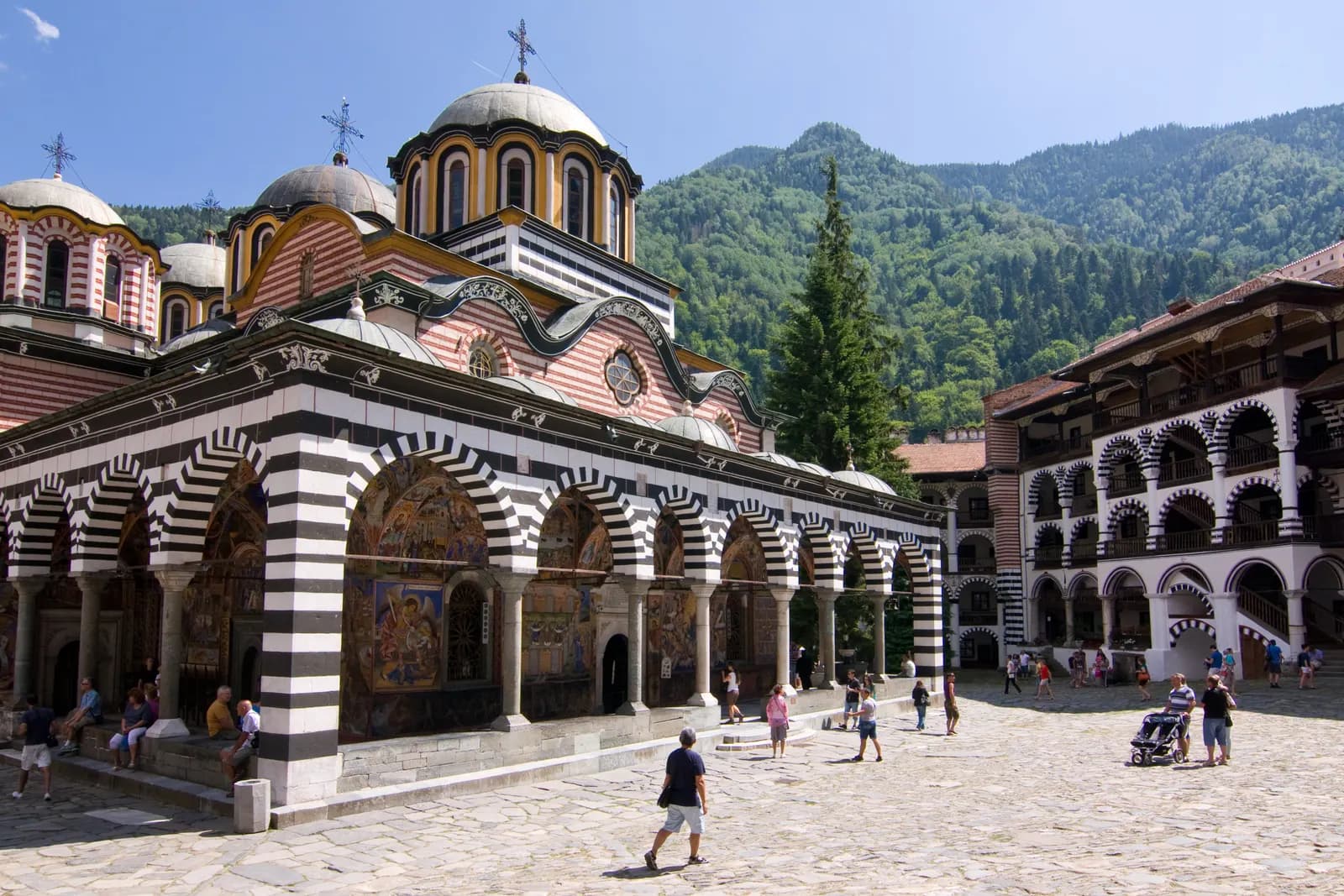
- Capital
- Sofia
- Currency
- EUR
- Region
- Europe
- Memberships
- European Union, Schengen Area, Eurozone
Tax regimes at a glance
Each regime answers the same questions. A zero rate applies only to the income, person and period stated.
Your personal taxation
Personal income tax: proportional rateGeneral regime
- Who for?
- Any individual resident within the meaning of Article 4 of the Bulgarian income tax law: permanent address, stay beyond the statutory threshold in any twelve-month period, or centre of vital interests in Bulgaria.
- Which income?
- General annual base: salaries, self-employment, rents and other income taxable at the proportional rate; dividends and certain disposals follow their own rules.
- Which source?
- Residents: Bulgarian and foreign-source income. Non-residents: Bulgarian-source income only.
- Conditions
- Single rate under Article 48, with no general tax-exempt bracket; a purely formal permanent address is not enough if the centre of vital interests remains abroad; social contributions not verified.
- Duration
- Standard regime, with no time limit.
- Since when?
- In force; amounts expressed in euros since Bulgaria adopted the euro on 1 January 2026, with no change in rate.
- 10% Bulgaria: tax rate on the general annual tax base (art. 48)
- 183 days Bulgaria: length of stay giving rise to tax residency (art. 4)
Final withholding tax on dividendsGeneral regime
- Who for?
- Resident or non-resident individuals receiving dividends or liquidation proceeds from a Bulgarian company.
- Which income?
- Dividends and similar distributions.
- Which source?
- Dividends paid by a Bulgarian company; detailed treatment of foreign-source dividends not verified.
- Conditions
- Final tax provided for in Article 38, withheld at source by the distributing company; it is in addition to the corporate income tax paid on the distributed profit. The increase considered in the draft 2026 budget was not adopted.
- Duration
- Standard regime.
- Since when?
- In force.
- 5% Bulgaria: final withholding tax on dividends (art. 38)
Exemption for disposals of financial instrumentsSpecial regime
- Who for?
- Individuals disposing of financial instruments within the meaning of the law.
- Which income?
- Gains on disposals of financial instruments covered by Article 13 and the definition in the supplementary provisions (notably securities traded on a regulated market).
- Which source?
- According to the statutory definition of the instruments covered; extension to securities not covered is excluded.
- Conditions
- Exemption limited to instruments meeting the statutory definition; it does not extend by analogy to other capital gains, which are taxed under the standard rules.
- Duration
- No time limit.
- Since when?
- In force since 2009 in its current wording.
- 0% Bulgaria: exemption for disposals of financial instruments as defined by law (art. 13)
Your company
Corporate income tax: single rateGeneral regime
- Who for?
- Companies resident in Bulgaria and permanent establishments of foreign companies.
- Which income?
- Annual taxable profit.
- Which source?
- Resident companies: worldwide profits; permanent establishments: profits attributable to Bulgaria.
- Conditions
- Single rate under Article 20 of the corporate income tax law; activities subject to an alternative tax fall outside the tax base; distributions also bear the dividend withholding tax. Minimum tax for large groups not verified.
- Duration
- Standard regime.
- Since when?
- In force.
- 10% Bulgaria: corporate income tax rate (Art. 20 ZKPO)
Compare with other countries:Foreign incomeCompany taxationRegimes for new residents
Key figures
- Population6,400,000Verified on Nov 2, 2026
- Flight from Parisabout3 hoursVerified on Nov 2, 2026
Taxation of individuals
Under Article 4 of the Bulgarian personal income tax law, a person is resident, whatever their nationality, if they have their permanent address in Bulgaria, stay there for more than 183 days3 in any twelve-month period, or have their centre of vital interests there.
The last criterion deserves emphasis: a permanent address is not enough if the centre of vital interests remains elsewhere. Bulgarian law expressly provides for this reservation, which deprives purely formal arrangements of any effect.
The tax is proportional. Article 48 sets the rate applicable to the general annual base at 10%4. There is no progressive scale and no general tax-exempt bracket.
Dividends are subject to a separate final withholding tax, provided for in Article 38, at a rate of 5%5. The combination of corporate income tax and this withholding tax determines the real cost of distributing a profit to the company's manager.
Finally, Article 13 exempts certain income, notably that arising from the disposal of financial instruments within the meaning of the law, which would otherwise be taxed at 0%6. This exemption is framed by a precise definition of the instruments covered and cannot be extended by analogy.
Corporate income tax is also levied at a single rate: Article 20 of the law governing it sets it at 10%7 of taxable profit, according to the National Revenue Agency. The dividend paid to the shareholder also bears the final withholding tax.
We do not publish social contribution rates: they do not appear in the extracts available to us. They are nevertheless essential to calculating the full cost of remuneration, and must be verified with the National Revenue Agency.
As with Romania, the 10%4 rate is part of the standard law and not a special regime reserved for new arrivals. It is neither limited in time nor conditional on a recent move, which makes it structurally more stable than an attractiveness regime, which can be closed overnight.
For a French national, the rule remains: this rate takes effect only after an actual transfer of tax residence, assessed under Article 4 B of the French General Tax Code and the France–Bulgaria tax treaty.
Residence routes and visas
Bulgaria is a member of the European Union. A French national can travel and settle there freely: no visa is required, and the right of residence derives from the treaty.
Beyond three months, the formality consists of applying for a residence certificate from the migration directorate. It records a pre-existing right rather than granting one, and requires proof of sufficient resources and health cover, or of an activity.
After five years of continuous residence, the right of permanent residence is acquired. Bulgaria has also joined the Schengen area, which removes checks at internal borders and simplifies travel to Western Europe.
For a self-employed person, the step that really matters is therefore not residence but registration: obtaining a personal identification number, registering the activity and opening a bank account. This is where delays and administrative burden are concentrated.
Note that Bulgaria has ended its citizenship-by-investment programme, which had drawn the attention of the European Commission. Commercial offers that still refer to it are out of date, and the residence-by-investment schemes that remain are subject to separate conditions.
We do not publish the processing times for the residence certificate or the quantified conditions of the residence-by-investment schemes: we have no dated, quantified official Bulgarian source.
Real estate
A national of the European Union may freely acquire a built property in Bulgaria. The historical restrictions on land, notably agricultural land, were lifted for Europeans at the end of the transitional periods provided for in the accession treaty.
The market has three distinct segments, each with its own logic. Sofia is a deep urban market, supported by technology-sector salaries. The Black Sea coast is geared towards foreign buyers and is highly seasonal. And the mountain resorts follow a comparable model.
The last two segments went through a severe liquidity crisis after the wave of speculative purchases of the noughties, from which some developments never recovered. Properties are marketed there at prices that seem derisory; they are as hard to resell as they are easy to buy, and their service charges are sometimes disproportionate.
Two checks are therefore essential before any purchase in a resort: the real amount of the annual charges, often left unsaid by the seller, and the occupancy rate of the building or complex, which determines its ability to fund maintenance.
We publish neither Bulgarian transfer taxes, nor local property tax, nor the tax treatment of rental income: they do not appear in our extracts.
Cost of living
Bulgaria is among the least expensive countries in the European Union. The gap with France is clear for housing, services and dining out, and it remains significant even in Sofia.
We do not publish a typical monthly budget: we have not found an official Bulgarian series measuring a basket of expenses comparable to that of an expatriate.
Bulgaria adopted the euro on 1 January 2026, after nearly thirty years in which the lev was pegged to the European currency through a currency board. A budget in euros there therefore no longer carries any exchange-rate risk, which distinguishes it from Romania and its neighbours outside the euro area; older prices and contracts denominated in leva were converted at the rate set by the Council of the Union.
Three items deserve attention. Healthcare, where the public system is underfunded and pushes people towards a private sector concentrated in Sofia. International schooling, which is scarce outside the capital. And heating, whose cost is real in a country with continental winters.
On the other hand, digital connectivity is good and the cost of professional services — accounting, legal advice — is far below French levels, which noticeably eases the running of a small business.
Steps and timelines
- Settle without any visa formality, as free movement applies by right;
- beyond three months, apply for the residence certificate from the migration directorate;
- obtain a personal identification number, a prerequisite for registration and for opening an account;
- have the full cost of a distribution calculated — corporate income tax, then the 5%5 withholding tax — and not just the personal rate;
- handle the departure from France according to its own criteria and the France–Bulgaria tax treaty.
The fourth point is where comparisons most often go wrong. The Bulgarian personal rate is low, but an entrepreneur does not receive a salary: they receive a distributed profit, the cost of which combines two successive levies.
We do not publish processing times: we have no dated, quantified official Bulgarian source.
Points to watch
- The 10%4 rate is part of the standard law, not a temporary regime: its stability is not of the same nature as that of an attractiveness regime.
- The centre-of-vital-interests criterion deprives a purely formal permanent address of any effect.
- The exemption for disposals of financial instruments is framed by a precise definition: it does not extend by analogy.
- The coast and the mountain resorts suffer from low liquidity and sometimes disproportionate charges.
- The citizenship-by-investment programme has been abolished: offers that refer to it are out of date.
Finally, Bulgaria is the Union country where the gap between the advertised tax burden and the real cost of settling is most often misjudged. The proportional rate and the cost of living are genuinely attractive; what is less so is the quality of public services, administrative slowness and a peripheral property market with low liquidity. The country suits a mobile self-employed person with modest service needs well, and much less a family looking for a school and medical system comparable to the one it is leaving.
Pros & cons
Frequently asked questions
What is the tax system in Bulgaria?
Is Bulgaria in the eurozone?
Yes: Bulgaria adopted the euro in 2026 and is a member of the EU and the Schengen Area, which makes relocating and doing business easier.
Can a French citizen easily move to Bulgaria?
Yes: as an EU citizen, you only need to register locally. Tax residence is acquired after 183 days3 or when the centre of vital interests is in the country.
Banks and accounts
See this country on the tax map
Please note
Sources and verification dates
- 1.
Population : 6,400,000
Verified on Nov 2, 2026
- 2.
Flight from Paris : 3 hours
Verified on Nov 2, 2026
- 3.
Bulgaria: length of stay giving rise to tax residency (art. 4) : 183 days
« което пребивава на територията на България повече от 183 дни през всеки 12-месечен период »
lex.bgVerified on Nov 2, 2026Verified source
- 4.
Bulgaria: tax rate on the general annual tax base (art. 48) : 10%
« Размерът на данъка върху общата годишна данъчна основа се определя, като общата годишна данъчна основа по чл. 17 се умножи по данъчна ставка 10 на сто. »
lex.bgVerified on Nov 2, 2026Verified source
- 5.
Bulgaria: final withholding tax on dividends (art. 38) : 5%
« Чл. 38. (1) С окончателен данък се облагат облагаемите доходи от: 1. дивиденти в полза на едноличен търговец; 2. дивиденти и ликвидационни дялове в полза на: а) местно или чуждестранно физическо лице от източник в България; б) местно физическо лице от източник в чужбина. […] Чл. 46. (3) Ставката на данъка е 5 на сто за доходите по чл. 38, ал. 1. — ЗДДФЛ, чл. 38, ал. 1 et чл. 46, ал. 3. »
lex.bgVerified on Nov 2, 2026Verified source
- 6.
Bulgaria: exemption for disposals of financial instruments as defined by law (art. 13) : 0%
« Чл. 13. (1) Не са облагаеми: […] 3. доходите от разпореждане с финансови инструменти по смисъла на § 1, т. 11 от допълнителните разпоредби ; § 1, т. 11 : „Разпореждане с финансови инструменти“ за целите на чл. 13, ал. 1, т. 3 са сделките: а) с дялове и акции на колективни инвестиционни схеми и на национални инвестиционни фондове, акции, права и държавни ценни книжа, извършени на регулиран пазар и/или на пазар за растеж — ЗДДФЛ, чл. 13, ал. 1, т. 3 et § 1, т. 11 (modifié ДВ бр. 113/2025, en vigueur le 1er janvier 2026). Exonération des plus-values sur titres cédés sur un marché réglementé (Bulgarie, UE/EEE) ; les autres plus-values restent imposées à 10 %. »
lex.bgVerified on Nov 2, 2026Verified source
- 7.
Bulgaria: corporate income tax rate (Art. 20 ZKPO) : 10%
« Размер на данъка 10 на сто (чл. 20 от ЗКПО). »
Национална агенция за приходите, « Закон за корпоративното подоходно облагане »Verified on Nov 2, 2026Verified source