Croatia
Moving to Croatia in 2026: the euro, the digital nomad visa and the Adriatic coast
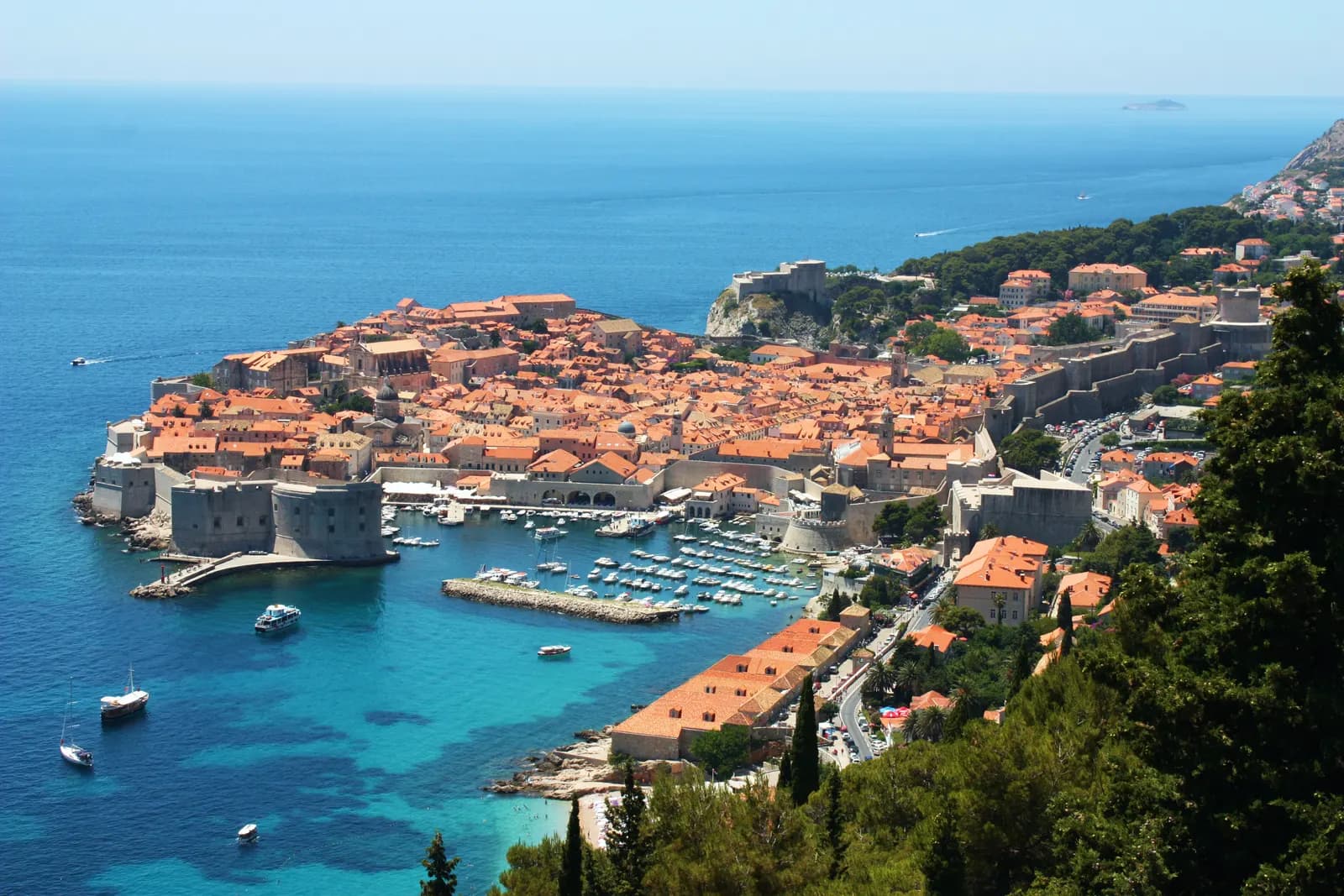
A member of the EU, the eurozone and Schengen, Croatia appeals for its Adriatic coast, a favourable digital nomad visa (foreign income is not taxed locally for holders) and a moderate cost of living.
- Capital
- Zagreb
- Currency
- EUR
- Region
- Europe
- Memberships
- European Union, Schengen Area, Eurozone
Tax regimes at a glance
Each regime answers the same questions. A zero rate applies only to the income, person and period stated.
Your personal taxation
Income tax: scale set by the municipalityGeneral regime
- Who for?
- Individuals with a domicile or habitual residence in Croatia; for a single person, residence is assessed in particular by where they generally stay beyond the reference period.
- Which income?
- Employment and self-employment income, pensions and other income subject to the scale.
- Which source?
- Residents: worldwide income. Non-residents: Croatian-source income only.
- Conditions
- Two rates, a lower and a higher one: the lower rate applies up to the annual taxable income threshold, the higher rate above it. Each local authority chooses its two rates within ranges set by the State, which are wider for Zagreb; if no decision is made within the deadline, the default rates apply. The place of residence therefore changes the tax burden at equal income.
- Duration
- General regime.
- Since when?
- Threshold and ranges resulting from the reform applicable from 1 January 2025.
- 20% Croatia: example of a lower rate in the municipal income tax schedule
- 30% Croatia: example of a higher rate in the municipal income tax schedule
- €60,000 Croatia: annual taxable income threshold above which the higher income tax rate applies
- 183 days Croatia: presence giving rise to tax residency
Capital income: dividends, interest and gains on financial assetsGeneral regime
- Who for?
- Resident individuals receiving dividends, profit shares, interest or gains on the disposal of financial assets.
- Which income?
- Dividends, profit shares, interest and similar income; gains on the disposal of financial assets.
- Which source?
- Croatian and foreign-source income for a resident.
- Conditions
- Proportional final tax, withheld at source for dividends and interest; same rate for gains on the disposal of financial assets. Real estate gains fall under a separate regime, not covered here. A possible exemption of gains after a holding period has not been verified against an official source.
- Duration
- General regime.
- Since when?
- Current rate applicable to gains since 1 January 2024.
- 10% Croatia: tax rate on dividends and profit shares
- 12% Croatia: higher rate applicable to certain capital gains
Inheritance and gift taxGeneral regime
- Who for?
- Individuals and legal entities who, in Croatian territory, inherit, receive a gift or acquire property free of charge.
- Which income?
- Cash, receivables, securities and movable property, after deduction of debts and costs relating to the asset; movable property is taxed only above a unit value threshold.
- Which source?
- Acquisitions made in Croatia; the official page does not specify the treatment according to residence.
- Conditions
- Local tax at a single rate. Exempt in particular: spouse, descendants and ascendants in the direct line, adoptees and adopters; public bodies, religious institutions and humanitarian organisations. Real estate is not covered by this regime; its treatment (real estate transfer tax) has not been verified.
- Duration
- General regime.
- Since when?
- In force (Local Taxes Act).
- 4% Croatia: rate of inheritance and gift tax
- more than €6,700 Croatia: unit market value above which movable property received by inheritance or gift is taxable
Temporary stay for digital nomads and exemption of their remunerationTemporary
- Who for?
- Third-country nationals holding the temporary digital nomad stay permit, working remotely for an employer not registered in Croatia or for their own business.
- Which income?
- Remuneration for employment or activity carried out for an employer not registered in Croatia: it is not considered taxable income.
- Which source?
- Income paid from abroad; any work or service for an employer registered in Croatia is excluded.
- Conditions
- Exemption provided for by Article 9, paragraph 1, point 26 of the Income Tax Act, added by Article 2 of the amending act published in Narodne novine No. 138/20, provided that digital nomad status has been obtained under the aliens regulations. Proof of means of subsistence is required; a new application is possible only after a waiting period. The numbering in the consolidated text after later reforms has not been rechecked.
- Duration
- Duration of the authorised stay, with no extension under the same status.
- Since when?
- Exemption in force since 1 January 2021.
- up to 18 months Croatia: maximum duration of temporary stay for digital nomads
- €3,622.5 Croatia: means of subsistence required of the digital nomad
Flat-rate taxation of small self-employed activitiesConditional
- Who for?
- Self-employed individuals not subject to VAT, including in a joint venture (supoduzetništvo).
- Which income?
- Annual self-employment income, replaced by a flat-rate income set by decision of the tax administration office according to receipts.
- Which source?
- Activity carried out in Croatia.
- Conditions
- Annual receipts from the activity not exceeding the threshold for mandatory VAT registration, and no liability to VAT. The list of excluded activities has not been verified against an official source. Per-bed flat rates for tourist rentals fall under a separate scheme.
- Duration
- As long as receipts remain below the threshold.
- Since when?
- Ceiling aligned with the VAT threshold raised on 1 January 2025.
- up to €60,000 Croatia: mandatory VAT registration threshold, which also caps the receipts allowed under the flat-rate scheme for self-employed persons
Your company
Profit tax: two rates depending on revenueGeneral regime
- Who for?
- Resident companies, permanent establishments, and craftsmen or self-employed persons whose receipts in the previous period exceed the statutory threshold.
- Which income?
- Taxable profit.
- Which source?
- Resident companies: worldwide profits; non-residents: profits of the permanent establishment.
- Conditions
- Reduced rate when revenue for the tax period does not exceed the statutory threshold, normal rate above it. Withholding tax on payments to non-residents: a specific rate for dividends and profit shares, a general rate for interest, royalties and certain services, and an increased rate for non-cooperative jurisdictions (not covered here), subject to tax treaties.
- Duration
- General regime.
- Since when?
- Current threshold applicable since 1 January 2026.
- 10% Croatia: profit tax rate below the turnover threshold
- 18% Croatia: profit tax rate above the threshold
- up to €1,000,000 Croatia: income threshold for the tax period below which the reduced profit tax rate applies
- 10% Croatia: withholding tax rate on dividends and profit shares paid to non-residents
- 15% Croatia: general withholding tax rate on payments to non-residents (excluding dividends)
Compare with other countries:Foreign incomeCompany taxationRegimes for new residents
Key figures
- Population3,900,000Verified on Nov 2, 2026
- Flight from Parisabout2 hoursVerified on Nov 2, 2026
Personal taxation
The Croatian Income Tax Act treats a taxpayer as resident when they have a domicile or habitual residence in the territory, with presence of more than 183 days3 being one of the criteria.
The Croatian particularity lies in the decentralisation of the tax scale. The State sets ranges, and it is the local authorities that determine, within those limits, the lower and higher rates applicable in their territory. A municipality may thus choose 20%4 as its low rate and 30%5 as its high rate.
The practical consequence is direct: the municipality of residence changes the tax burden at identical income, and a move of a few kilometres can have a measurable effect. This is a parameter to factor into the choice of where to settle, just like the price of housing.
Capital income
Dividends and profit shares fall under capital income tax at a rate of 10%6. Capital gains on financial assets have been taxed, since 1 January 2024, at a rate of 12%7, under the conditions set out in Article 70.
Inheritances and gifts are subject to a single rate of 4%8, with exemptions covering close relatives in particular. This is a markedly lighter regime than the French scale for indirect-line transfers.
Companies
Profit tax has two rates depending on revenue: 10%9 below a revenue threshold, and 18%10 above it. The threshold clearly favours small structures, which is of interest to a self-employed person who would operate through a company.
For a self-employed person, Croatia also offers a flat-rate regime reserved for very small activities, based on taxation of turnover rather than actual profit. It is capped and subject to eligibility conditions that exclude several professions.
We publish neither the ceiling of this flat-rate regime nor the list of excluded activities: they do not appear in the excerpts of legislation available to us and must be verified before building a project on them.
Residence routes and visas
As Croatia is a member of the European Union and the Schengen area, a French national needs no residence permit. Registration is required beyond a certain length of stay, and it has effects on tax residence.
The digital nomad stay
Croatia was one of the first European countries to create a temporary stay dedicated to remote workers who are third-country nationals. It is granted for a maximum period of up to 18 months11, and may be shorter.
The applicant must show proof of means of subsistence, the reference amount of which has been €3,622.512 since 1 January 2026, according to the applicable text.
Two features distinguish this stay from more recent nomad visas. It is not renewable on the same terms as an ordinary permit — a waiting period applies before a new application. And work for a Croatian employer is excluded: the scheme is indeed aimed at income of foreign origin.
This is also where its tax appeal lies. Since 1 January 2021, the Income Tax Act, in its Article 9 (a point added by the act published in Narodne novine No. 138/2020), excludes from taxable income the sums that a person holding digital nomad status receives for employment or an activity carried out for an employer not registered in Croatia. Work for a Croatian employer remains subject to the general rules. We have not rechecked the wording of this article currently in force: the exemption should be confirmed with the Croatian tax administration before moving.
The exact length of the waiting period before a new stay, as well as the terms of extension to family members, do not appear in our excerpts: they must be verified with the Croatian Ministry of the Interior.
Real estate
Acquisition by a citizen of the European Union is free and treated as equivalent to that of a national. For third-country nationals, it remains subject to reciprocity and authorisation, which significantly lengthens timelines.
The market is dominated by the Adriatic coast and the islands, where foreign demand and seasonal rentals have pushed prices well beyond local income levels. The interior of the country, with the exception of Zagreb, follows a very different trajectory.
Two checks are essential before any coastal purchase. The Croatian land registry has historically been slow to update, and the chain of title of an older property deserves careful examination. In addition, short-term rental is subject to authorisations and its own taxation, which determine the expected yield.
We publish neither the Croatian transfer duties nor the flat-rate regime applicable to tourist rentals: they do not appear in the excerpts of legislation available to us.
A point about timing is worth knowing: on the coast, the season also shapes transactions. Viewings, valuations and works are concentrated outside the summer period, and a transaction started in July often takes several months longer to complete than one started in October.
Cost of living
Joining the eurozone has made comparisons clearer and removed exchange rate risk for a French resident. The cost of living remains below the eurozone average, with a marked gap between the coast in season and the rest of the year.
We do not publish a typical monthly budget: we have not found an official Croatian series measuring a basket of expenses comparable to that of an expatriate.
Seasonality is the dominant feature of a coastal budget. Year-round rentals are hard to find in tourist areas, where owners favour summer lets, and the prices of services vary sharply depending on the period.
On top of this comes the municipal variable of the tax scale: at equal income, two residences a short distance apart can lead to different tax burdens. This is something to ask about before signing a lease or a preliminary sale agreement.
Finally, Croatian public healthcare is accessible to registered residents and of a decent standard, which eases an expense that is often heavy outside the European Union. For a French retiree, the coordination of European schemes considerably simplifies coverage, an advantage that few low-cost destinations can offer.
Procedures and timelines
- Obtain the Croatian personal identification number, the OIB, which is required before any banking, rental or property transaction;
- find out about municipal rates before choosing a municipality of residence;
- register with the local authorities within the prescribed deadlines, as registration has tax consequences;
- for a third-country national, submit the residence application that corresponds to their situation, bearing in mind that the digital nomad stay cannot be immediately renewed;
- deal with the departure from France according to your own circumstances and the applicable tax treaty.
We do not publish processing times: we have no official, dated figures for Croatian residence permits.
Points to watch
- The tax scale depends on the municipality: comparing Croatia with another country without specifying the place of residence is meaningless.
- The stay of digital nomads is capped at up to 18 months11 and a waiting period is required before a new application can be filed: it is not a route to long-term settlement.
- Short-term letting is regulated and taxed: a yield calculated without these constraints is overstated.
- The land register deserves careful checking for older properties on the coast.
- Membership of the Union, the eurozone and Schengen places the Croatian passport on a par with other European passports: naturalisation would bring no mobility gain to a French citizen.
Finally, Croatia occupies a particular position: as a member of the Union, the eurozone and Schengen, it offers a French citizen a familiar legal framework with a lower cost of living. The trade-off is therefore less a tax one than a geographical and practical one — which is why the choice of municipality matters more there than the choice of country.
Advantages & disadvantages
Pros
Nomad visa: foreign income exempt from Croatian tax during the stay
Magnificent Adriatic coastline, high level of safety, EU and eurozone member
Moderate cost of living by Western European standards
Cons
The nomad visa does not lead to permanent residence and cannot be directly renewed
Slow administration
Strong tourist seasonality on the coast
Beyond 183 days3, the question of tax residence arises
Frequently asked questions
Does Croatia have a nomad visa?
Yes: a digital nomad visa allows remote workers to reside in the country, and their foreign income is not taxed locally for the duration of the permit.
Is Croatia in the eurozone?
Yes, since 2023, and it is also in the Schengen area.
Is the cost of living low?
Moderate, especially outside the coastal tourist areas.
Banks and accounts
Accept residents of this country
See this country on the tax map
Please note
Sources and verification dates
- 1.
Population : 3,900,000
Verified on Nov 2, 2026
- 2.
Flight from Paris : 2 hours
Verified on Nov 2, 2026
- 3.
Croatia: presence giving rise to tax residency : 183 days
« U smislu ovoga Zakona smatra se da porezni obveznik ima prebivalište ondje gdje ima stan u vlasništvu ili posjedu neprekidno najmanje 183 dana u jednoj ili u dvije kalendarske godine. […] Uobičajenim boravištem u smislu ovoga Zakona smatra se stalan ili vremenski povezan boravak u trajanju od najmanje 183 dana u jednoj ili u dvije kalendarske godine. »
zakon.hrVerified on Nov 2, 2026Verified source
- 4.
Croatia: example of a lower rate in the municipal income tax schedule : 20%
« The amounts of lower and higher rates are determined by the representative bodies of the units of local self-government by virtue of their own decision, (lower in the range from 15% to 23%, and higher in the range from 25% to 33%), while where the representative body of the unit of local self-government fails to adopt a decision within the prescribed deadline, the following rate applies: 20% up to EUR 60,000.00 annually (EUR 5,000.00 monthly) and 30% above EUR 60,000.00 annually — Porezna uprava, « Income tax information on the general rules, rates… » (Zakon o porezu na dohodak, NN 115/16 à 152/24). »
porezna-uprava.gov.hrVerified on Nov 2, 2026Verified source
- 5.
Croatia: example of a higher rate in the municipal income tax schedule : 30%
« […] (lower in the range from 15% to 23%, and higher in the range from 25% to 33%), while where the representative body of the unit of local self-government fails to adopt a decision within the prescribed deadline, the following rate applies: 20% up to EUR 60,000.00 annually (EUR 5,000.00 monthly) and 30% above EUR 60,000.00 annually (EUR 5,000.00 monthly). — Porezna uprava, « Income tax information on the general rules, rates… ». »
porezna-uprava.gov.hrVerified on Nov 2, 2026Verified source
- 6.
Croatia: tax rate on dividends and profit shares : 10%
« riječi: »stope od 12%« u određenom broju i padežu zamjenjuju se riječima: »stope od 10%« u odgovarajućem broju i padežu. […] Odredbe članaka 4. i 16. ovoga Zakona primjenjuju se pri utvrđivanju poreza na dohodak za 2021. godinu i nadalje. »
zakon.hrUpdated automatically on Oct 28, 2026 from the official source
- 7.
Croatia: higher rate applicable to certain capital gains : 12%
« Porezni obveznik – imatelj financijske imovine obvezan je porez na dohodak od kapitala po osnovi kapitalnih dobitaka iz članka 67. stavaka 1. i 2. ovoga Zakona, osim kapitalnih dobitaka po osnovi otuđenja udjela u kapitalu trgovačkog društva koji nisu prenosivi na tržištu kapitala u skladu s posebnim propisom, obračunati, obustaviti i uplatiti do posljednjeg dana mjeseca veljače tekuće godine za sve kapitalne dobitke ostvarene u prethodnoj godini umanjene za ostvarene kapitalne gubitke iz članka 67. stavka 11. ovoga Zakona po stopi od 12%. »
zakon.hrVerified on Nov 2, 2026Verified source
- 8.
Croatia: rate of inheritance and gift tax : 4%
« Članak 8. Porez na nasljedstva i darove plaća se po stopi od 4%. Članak 9. Porez na nasljedstva i darove ne plaćaju: 1. bračni drug, potomci i preci koji čine uspravnu liniju te posvojenici i posvojitelji koji su u tom odnosu s umrlim ili darovateljem »
zakon.hrVerified on Nov 2, 2026Verified source
- 9.
Croatia: profit tax rate below the turnover threshold : 10%
« Tax rate — 10% if, during the taxation period, revenue has been generated up to EUR 1,000,000. 18% if, during the taxation period, revenue has been generated greater than EUR 1,000,000. — Porezna uprava (administration fiscale croate), « Corporate tax information on the general rules, rates, taxpayer, withholding tax… ». »
porezna-uprava.gov.hrVerified on Nov 2, 2026Verified source
- 10.
Croatia: profit tax rate above the threshold : 18%
« Tax rate — 10% if, during the taxation period, revenue has been generated up to EUR 1,000,000. 18% if, during the taxation period, revenue has been generated greater than EUR 1,000,000. — Porezna uprava, « Corporate tax information… ». »
porezna-uprava.gov.hrVerified on Nov 2, 2026Verified source
- 11.
Croatia: maximum duration of temporary stay for digital nomads : 18 months
« Privremeni boravak odobrava se do maksimalno osamnaest mjeseci (moguće i kraće). Ako je privremeni boravak odobren na rok važenja kraće od 18 mjeseci, državljanin treće zemlje može najkasnije 60 dana prije isteka važenja privremenog boravak podnijeti zahtjev za produljenje privremenog boravka. Produljenje privremenog boravka će u tom slučaju biti odobreno za još maksimalno 6 mjeseci. — Ministarstvo unutarnjih poslova (ministère de l'Intérieur), « Privremeni boravak u svrhu boravka digitalnih nomada ». »
mup.gov.hrVerified on Nov 2, 2026Verified source
- 12.
Croatia: means of subsistence required of the digital nomad : €3,622.5
« […] državljanin treće zemlje koji regulira privremeni boravak u svrhu boravka digitalnih nomada mora raspolagati sredstvima u visini od najmanje 2,5 prosječne mjesečne neto isplaćene plaće za prethodnu godinu […] U ovom trenutku iznos potrebnih sredstva na mjesečnoj osnovi je minimalno 3.622,50 EUR […] ako je namjeravani period boravka 18 mjeseci stanjem na bankovnom računu je potrebno dokazati da raspolažete sredstvima u iznosu od minimalno od 65.205,00 EUR. — Ministarstvo unutarnjih poslova, « Privremeni boravak u svrhu boravka digitalnih nomada » (Uredba NN 14/21). »
mup.gov.hrVerified on Nov 2, 2026Verified source