Estonia
Moving to Estonia in 2026: e-Residency, the 0% company and the digital nomad visa
The most digitalised state in Europe, Estonia has built its reputation on e-Residency and on a deferred-taxation company that taxes profits only when they are distributed. For a digital entrepreneur or a nomad, it is one of the simplest and most readable structures in the EU.
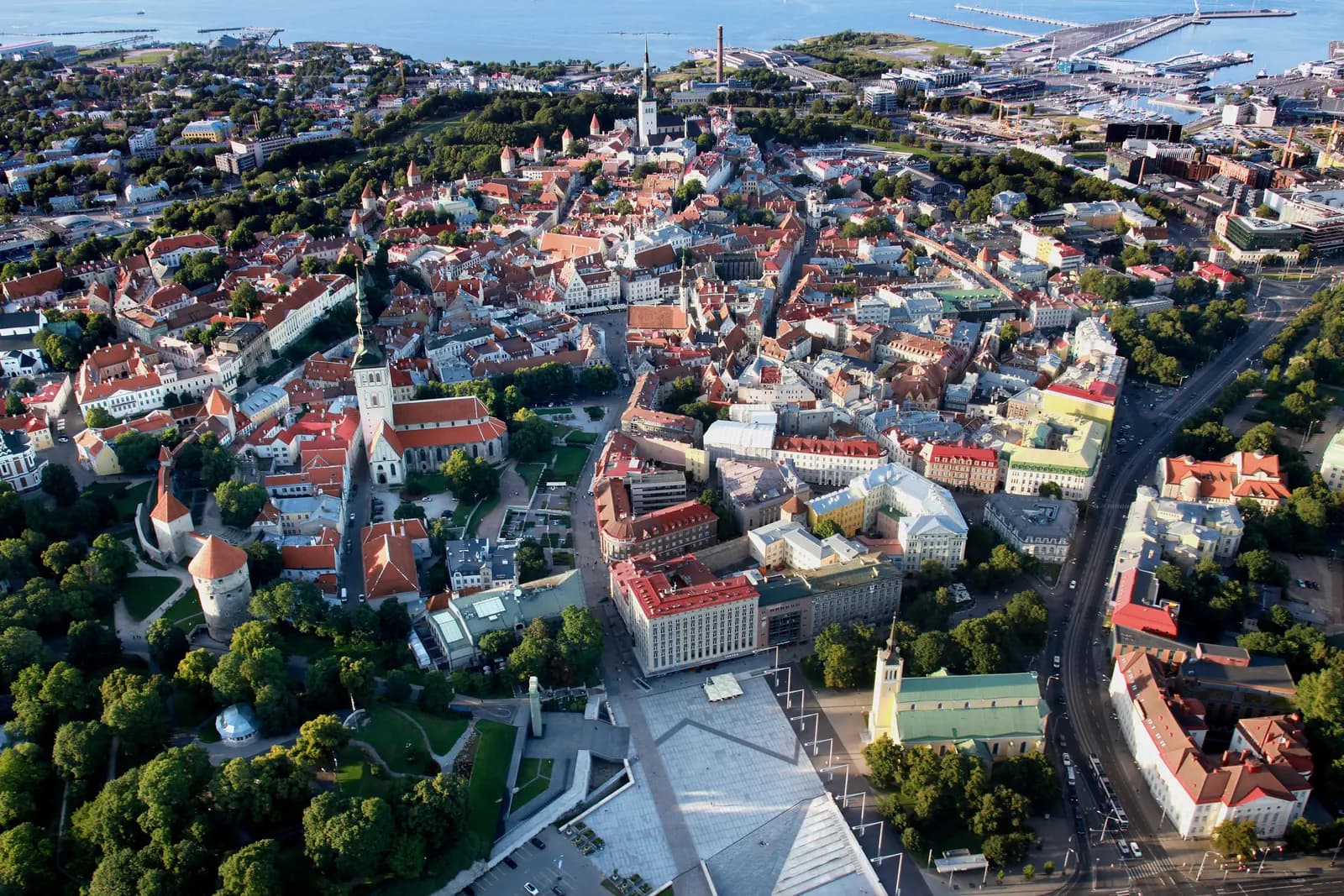
- Capital
- Tallinn
- Currency
- EUR
- Region
- Europe
- Memberships
- European Union, Schengen Area, Eurozone
Tax regimes at a glance
Each regime answers the same questions. A zero rate applies only to the income, person and period stated.
Your personal taxation
Personal income tax: single rateGeneral regime
- Who for?
- Individuals resident in Estonia.
- Which income?
- Salaries, earned income, capital gains and other income; dividends already taxed at company level bear no additional tax.
- Which source?
- Residents: worldwide income. Non-residents: Estonian-source income.
- Conditions
- A single rate and an identical annual tax-free amount for everyone since 2026, with no reduction depending on income (an increased amount applies at retirement age, not reproduced here); social tax is due by the employer in addition. The rate increase announced for 2026 was not applied.
- Duration
- General regime.
- Since when?
- Current rate since 1 January 2025; uniform allowance since 1 January 2026.
- 22% Estonia: personal income tax rate (2026)
- €8,400 Estonia: annual general income tax allowance (2026)
- 33% Estonia: rate of social tax payable by the employer
- 183 days
Digital nomad visaSpecial regime
- Who for?
- Third-country nationals working remotely for a foreign employer or foreign clients; not applicable to a French citizen.
- Which income?
- No tax advantage of its own: it is a visa.
- Which source?
- Not applicable.
- Conditions
- Minimum net monthly income; beyond the presence threshold, Estonian tax residence may be acquired.
- Duration
- Visa of limited duration.
- Since when?
- In force.
- about €4,500 Estonia: minimum net monthly income for the digital nomad visa
Your company
Deferred corporate tax: taxation on distributionGeneral regime
- Who for?
- Companies resident in Estonia and permanent establishments of foreign companies.
- Which income?
- Distributed profits (dividends, deemed distributions, non-business expenses); retained profit is not taxed.
- Which source?
- Independent of the source of the profit: the taxable event is the distribution.
- Conditions
- Tax is calculated on the net amount distributed according to the statutory fraction and paid by the company; the reduced rate for regular distributions has been abolished since 2025. A company managed from France may be taxed there on the basis of its place of effective management.
- Duration
- Permanent regime; the tax is deferred, not eliminated.
- Since when?
- In force; reduced rate abolished on 1 January 2025.
- 0% Estonia: taxation of undistributed profits
- about 22% Estonia: taxation of distributed profits, 22/78 of the net amount paid out
- about 22% Estonia: rate applicable to distributed dividends, paid by the company
Compare with other countries:Foreign incomeCompany taxationRegimes for new residents
Key figures
- Population1,400,000Verified on Nov 2, 2026
- Flight from Parisabout3 hoursVerified on Nov 2, 2026
Personal taxation
What is distinctive about Estonian taxation lies not in its rates but in the moment the tax falls due. Corporate income tax does not apply to the profit earned: it applies to the profit distributed. As long as earnings remain in the company, the applicable rate is 0%3.
It is section 50 of the Estonian Income Tax Act that sets up this deferral: the taxable event is the distribution, not the financial year. A company that fully reinvests its profits pays nothing, indefinitely.
On distribution, the Estonian tax authority indicates a rate of 22/78 of the net amount paid, which is equivalent to about 22%4 of the gross amount. The reduced rate of 14/86, which applied to regular distributions, was abolished on 1 January 2025: only the standard rate remains.
Dividends therefore bear a charge of about 22%5 at the level of the distributing company. It is important to understand that the tax is paid by the company and not withheld from the shareholder: the mechanism differs from the one a French company director is used to.
This model has a clear strategic consequence. It strongly favours a growing business that reinvests, and offers no particular advantage to a business that distributes its entire profit every year. Presenting Estonia as a zero-tax country is therefore inaccurate: the tax is deferred, not eliminated.
Individuals
Personal income tax is also proportional. The Estonian Tax and Customs Board indicates for 2026 a withholding rate of 22%6, combined with a general allowance of €8,4007 per year. Since 2026, this allowance has been the same for everyone, regardless of income level; only an increased amount applies from retirement age.
This rate was raised on 1 January 2025. The further increase announced for 2026, however, was not applied: the tax authority indicates the same rate for 2026 as for 2025. The budgetary context remains constrained by the defence effort undertaken since the invasion of Ukraine: this is a factor to take into account in a long-term project, as the trajectory may still change.
On top of this comes social tax, due by the employer, at a rate of 33%8. It finances health insurance and pensions, and it weighs on the cost of a salary far more than the income tax itself — a point that comparisons of personal tax rates systematically omit.
We publish neither the increased allowance applicable at retirement age nor the Estonian regime for capital gains and inheritance: they do not appear in the extracts available to us.
For a French citizen, the rule remains: the Estonian tax deferral has an effect only after an actual transfer of tax residence, and an Estonian company managed from France may be regarded as having its place of effective management there. This is the main pitfall of Estonian structures sold remotely.
Residence routes and visas
Estonia is a member of the European Union and the Schengen Area. A French national can settle there freely, without a visa, and must register their residence with the local authority after three months.
Electronic residency is not residence
Estonia has created an electronic resident status that allows a foreigner to set up and run an Estonian company remotely, sign electronically and access online public services. The official portal states it unambiguously: this status confers neither a right of residence, nor tax residence, nor a travel document.
This confusion is the most frequent and the most costly. An electronic resident remains tax-domiciled where they live; their Estonian company may, depending on the circumstances, be taxed in that same country. The scheme is a tool for remote administration, not an instrument of expatriation.
The digital nomad visa
For third-country nationals, Estonia issues a visa intended for remote workers, subject to a net monthly income of at least about €4,5009, for a stay of up to one year.
This scheme does not concern French citizens, who benefit from free movement. It is mentioned here because its income threshold is often used as a reference in European comparisons, and because it is one of the highest on the continent.
The step that genuinely matters for a French citizen settling there is therefore administrative: registering residence, obtaining a personal identification code, then an electronic identity card that opens up all digital public services.
Real estate
A national of the European Union may freely acquire a built property in Estonia. Restrictions remain for certain large agricultural and forestry plots, as well as in a few border and island zones.
The market is dominated by Tallinn, followed by Tartu. The housing stock includes a large share of buildings constructed during the Soviet period, whose thermal performance is poor — a point that really matters in a country with a Nordic climate.
Estonia has run energy renovation programmes for these housing complexes, and the difference in running costs between a renovated building and one that is not is considerable. This is the first technical criterion to examine, even before location.
The land register is fully digitalised and searchable, which makes verifying the chain of title quick and reliable. This is a concrete and rare advantage, and it significantly reduces the cost of due diligence.
We publish neither Estonian transfer duties, nor the land tax on plots, nor the tax regime for rental income: they do not appear in our extracts.
Cost of living
Estonia is more expensive than Bulgaria or Romania and cheaper than France, but the gap has narrowed: Tallinn is now a Baltic capital with Nordic price levels in several categories.
We do not publish a typical monthly budget: we have not found an official Estonian series measuring a basket of expenses comparable to that of an expatriate.
The currency is the euro, which removes any exchange-rate risk for a budget in euros and makes comparisons immediate.
Three items shape a budget. Heating, a major expense from October to April, which depends heavily on the thermal quality of the home. Healthcare, where the public system is decent but waiting times for specialists are long. And transport to France, with seasonal direct flights and frequent recourse to connections.
The climate is the factor that financial comparisons never take into account. Daylight in December and January is very short, and it is the main reason expatriates from Southern Europe leave. It deserves to be tested by a winter stay before any decision.
Procedures and timelines
- Settle without a visa, as free movement applies as of right, then register your residence after three months;
- obtain the personal identification code and then the electronic identity card, which conditions access to public and banking services;
- do not confuse electronic residency with actually relocating: the former moves neither your residence nor your tax residence;
- for a company, weigh reinvestment against distribution, as only the latter triggers the tax;
- deal with your departure from France according to its own criteria, and make sure the effective management of the company does not remain in France.
The last point is the one that makes Estonian structures fail. A company whose decisions are taken from France is taxable there, regardless of where it is registered. The location of management is demonstrated by facts — where decisions are made, where meetings are held, where contracts are concluded — and not by a registered office.
We do not publish processing times: we do not have an official Estonian source that is both quantified and dated.
Points to watch
- Corporate income tax is deferred, not eliminated: 0%3 on reinvested profit, about 22%4 of the gross amount on distribution.
- The reduced rate of 14/86 applicable to regular distributions was abolished on 1 January 2025.
- Electronic residency confers neither a right of residence nor tax residence: the official portal says so.
- An Estonian company managed from France may be taxed there on the basis of its place of effective management.
- The thermal performance of a home is a first-order financial criterion, not a matter of comfort.
Finally, Estonia is the destination most often mis-sold in this selection. Its digital administration is remarkable, its land register exemplary and its tax deferral genuinely advantageous for a company that builds up capital. But none of this works remotely: the country rewards those who settle there and work from its territory, and offers no protection to a director who stays in France and merely registers a company there.
Pros & cons
Pros
Frequently asked questions
What is the Estonian deferred-taxation company?
An Estonian company is not taxed on its profits as long as they are reinvested: the tax (about 22%5) is due only when dividends are distributed. It is a powerful capitalisation tool for entrepreneurs.
Does e-Residency give a right of residence?
No. E-residency allows you to set up and manage an Estonian company remotely and to sign documents electronically; it confers neither physical residence nor tax residence.
How can you live in Estonia as a nomad?
The digital nomad visa is intended for remote workers who can demonstrate an income of about €4,5009/month from activity outside Estonia. EU citizens can settle there freely.
Banks and accounts
Accounts held in this country
Accept residents of this country
See this country on the tax map
Please note
Sources and verification dates
- 1.
Population : 1,400,000
Verified on Nov 2, 2026
- 2.
Flight from Paris : 3 hours
Verified on Nov 2, 2026
- 3.
Estonia: taxation of undistributed profits : 0%
« Corporate income tax is 22/78. From 1 January 2025 […] only the standard rate of 22/78 applies. — EMTA, « Tax rates ». L'impôt sur les sociétés estonien ne frappe que les bénéfices distribués (Income Tax Act § 50) : les bénéfices réinvestis ne sont pas imposés. »
emta.eeVerified on Nov 2, 2026Verified source
- 4.
Estonia: taxation of distributed profits, 22/78 of the net amount paid out : 22%
« Corporate income tax is 22/78. From 1 January 2025, the tax calculation of regularly distributed dividends, i.e. the lower tax rate of 14/86, was abolished and only the standard rate of 22/78 applies. »
emta.eeVerified on Nov 2, 2026Verified source
- 5.
Estonia: rate applicable to distributed dividends, paid by the company : 22%
« Corporate income tax is 22/78. From 1 January 2025, the tax calculation of regularly distributed dividends, i.e. the lower tax rate of 14/86, was abolished and only the standard rate of 22/78 applies. »
emta.eeVerified on Nov 2, 2026Verified source
- 6.
Estonia: personal income tax rate (2026) : 22%
« 2026 The rate of withheld income tax is 22%. »
emta.eeVerified on Nov 2, 2026Verified source
- 7.
Estonia: annual general income tax allowance (2026) : €8,400
« The basic exemption is 700 euros per month, i.e. 8,400 euros per year, or 776 euros per month, i.e. 9,312 euros per year at pensionable age. »
emta.eeVerified on Nov 2, 2026Verified source
- 8.
Estonia: rate of social tax payable by the employer : 33%
« The rate of social tax is 33 per cent. »
emta.eeVerified on Nov 2, 2026Verified source
- 9.
Estonia: minimum net monthly income for the digital nomad visa : €4,500
« Your income meets the minimum threshold of €4,500 net/monthly »
e-resident.gov.eeVerified on Nov 2, 2026Verified source
- 10.
estonie.divers.pct.100 : 100%
Verified on Nov 2, 2026