Residency — expatriation news
All our news in the Residency section: reforms, conditions and figures, with their sources and dates, newest first.

Residency
Hungary: draft bill to abolish the investor visa from 2027
On 4 November 2026, the Hungarian government published a draft bill abolishing its visa and residence programme for investors. If adopted, it would enter into force on 1 January 2027, with transitional rules for pending applications.
· Editorial team

Residency
Luxembourg: a D visa replaces the temporary residence authorisation
Since 1 October 2026, a third-country national's first Luxembourg residence permit has required a long-stay (D) visa applied for abroad. It replaces the former temporary residence authorisation.
· Editorial team

Residency
Latvia: end of residence visas through real estate and bank deposits
Latvia has closed two of its three residence-by-investment routes and removed self-employment as a ground for temporary residence. The reforms came into force on 15 September 2026.
· Editorial team

Residency
Czech Republic: the Senate adopts the new law on the residence of foreigners
The Czech Senate has adopted the law on the entry and residence of foreigners, which moves all procedures to an online portal. The text is due to enter into force on 1 January 2029, after presidential signature.
· Editorial team

Residency
Iceland: a draft bill tightens residence rules
Iceland's Ministry of Justice has put out for consultation a draft bill that tightens the conditions of stay for nationals of countries outside the European Economic Area. Permits already issued would not be called into question.
· Editorial team

Residency
Japan: permanent residence becomes far more expensive
Japan raised the cost of applying for permanent residence on 1 October and tightened the income, pension and language requirements. Fees for extending a stay now vary according to the length of stay requested.
· Editorial team
Residency
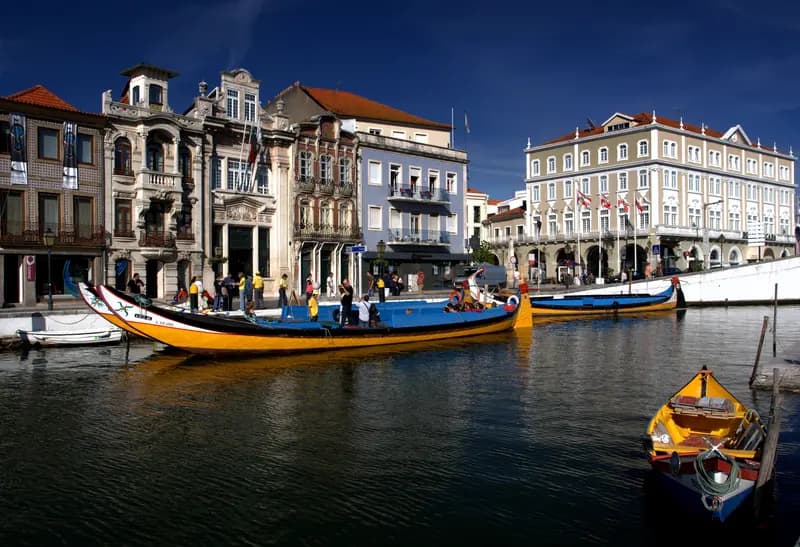
Portugal: the D7 visa still the favourite of retirees
The D7 visa is for people who live on their own income — pensions, rents, royalties, investments. Its financial requirement is not a fixed amount: it is indexed to the Portuguese minimum wage and calculated according to household composition.
· Editorial team

Residency
UAE: the Golden Visa opens up to mortgage-financed property purchases
The UAE's property-backed long-stay visa is, in principle, open to properties financed by a loan. The value taken into account remains that of the property, not that of the down payment, and that is where misunderstandings arise.
· Editorial team

Residency
Malaysia: MM2H Platinum opens a route to long-term residence
Malaysia's long-stay residence programme has been overhauled into several tiers, including one reserved for large estates. Its conditions have changed several times: this is the first thing to check before starting an application.
· Editorial team

Residency
Uruguay: the tax holiday reform comes into force
Uruguay's regime for new residents exempts their foreign investment income for a long period. Its reform has changed the routes to tax residency, not the principle of the exemption.
· Editorial team

Residency
Panama: the Friendly Nations visa remains a safe bet
Panama's regime for nationals of countries with which it has privileged relations remains one of the most accessible residency routes in the Americas. Its reputation for speed, however, no longer quite matches practice.
· Editorial team
Residency
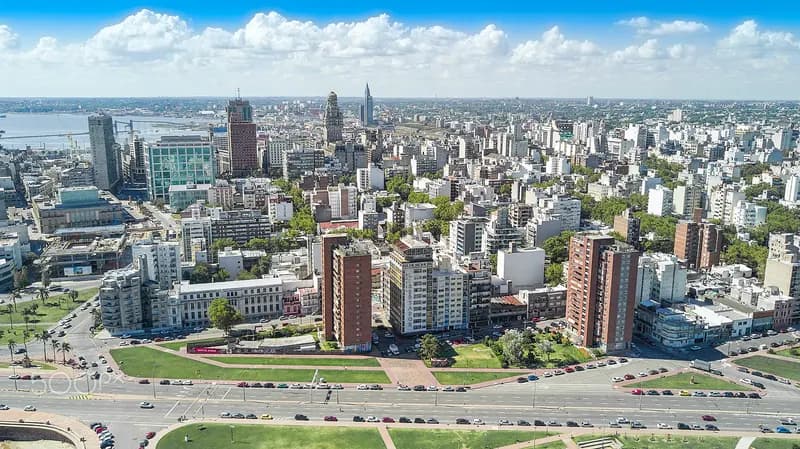
Uruguay: the “60-day” route to the tax holiday abolished
Uruguay has tightened access to its tax residency through the investment route with reduced presence. The practical consequence is simple: the exemption regime remains, but you now have to live there more or invest more.
· Editorial team
Residency
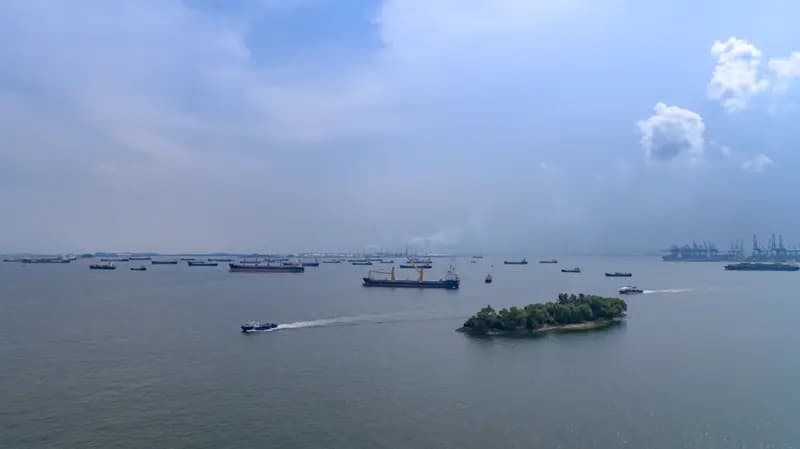
Malaysia: MM2H restructured into four tiers
Malaysia's long-stay residence programme has been restructured into tiers, from the entry-level deposit to the tier for high-net-worth individuals. Its history of suspensions remains the main factor to take into account before any commitment.
· Editorial team

Residency
Mexico: temporary residency remains popular with North Americans
Mexican temporary residency is granted on proof of economic solvency and applied for from abroad. Its apparent simplicity hides two technical points that applicants often discover too late.
· Editorial team

Residency
Paraguay: permanent residency still the simplest
Paraguayan permanent residency remains one of the simplest in the world to obtain, and the country's territorial taxation is constitutional. What the scheme does not provide, however, is what it is most often credited with.
· Editorial team

Residency
Mexico: temporary residency still popular with nomads
Mexico has not created a dedicated nomad visa: remote workers there use ordinary temporary residency. This route works, but it leaves the holder in a blind spot regarding the right to work.
· Editorial team
Residency
Paraguay: permanent residency among the simplest in the world
The simplicity of Paraguayan residency is real, and that is precisely what makes it misleading. A document obtained in a few days does not move a tax domicile, and Paraguay has no tax treaty with France.
· Editorial team

Residency
Costa Rica: the Rentista visa appeals to the self-employed
Costa Rica's rentier category is aimed at people with regular non-salary income. The trade-off is compulsory enrolment in the local social security system, whose recurring cost is rarely anticipated.
· Editorial team
Residency
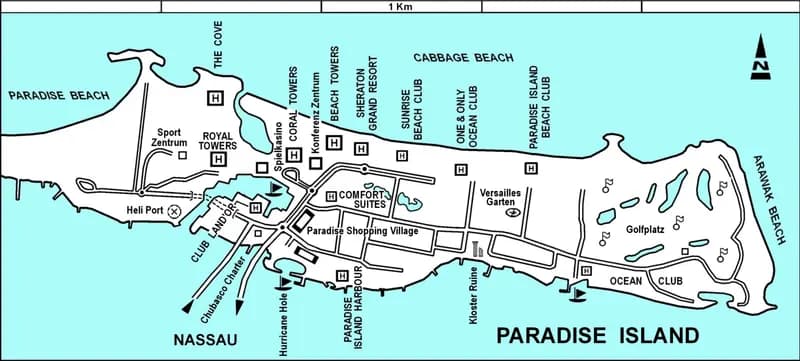
Bahamas: economic residence one hour from Miami
The Bahamas offer economic permanent residence one hour's flight from Florida, with no income tax. The threshold has been raised and the asset must be held for a decade: these two points change the analysis.
· Editorial team

Residency
Philippines: the SRRV retirement visa among the most accessible
The Philippine retirement visa is among the most accessible in Asia. What it does not solve, however, is the question of ownership: Philippine land law reserves land for nationals.
· Editorial team

Residency
Andorra: passive residence tightened by the Omnibus law
The principality has tightened the conditions for its residence without gainful activity. The scheme remains, but its entry cost and physical presence requirements now make it a relocation project, not a mere address.
· Editorial team
Residency
Malaysia: the Forest City SEZ lowers the MM2H entry ticket
A Malaysian special economic zone offers easier access to the long-stay residence scheme. The relief concerns the entry ticket, not the nature of the permit or its stability.
· Editorial team

Residency
Malta: the non-dom regime and the GRP still attractive
Malta combines an ordinary tax base rule, the remittance basis, with paid residence programmes. The two are different in nature, and only the first is truly stable.
· Editorial team

Residency
Qatar: Golden Visa extended to skilled professionals
Qatar is extending its long-term residence permit to skilled professionals, after opening it through property ownership. For an expat, the real issue lies elsewhere: in the tax residence certificate, which the permit does not replace.
· Editorial team

Residency
Mexico: permanent residency available after four years
Mexican permanent residency is obtained at the end of temporary residency, which lasts a maximum of four years. It is one of the few routes in Latin America that genuinely leads to a lasting status.
· Editorial team

Residency
Costa Rica: territorial taxation and nature, the “pura vida” option
Costa Rica combines territorial taxation enshrined in law with institutional stability that is rare in the region. What it does not combine with these is a low cost of living.
· Editorial team

Residency
UAE: the Golden Visa with no presence requirement proves popular
The Emirati long-term residence permit does not require continuous presence, unlike ordinary residence visas. This freedom is its main attraction, and it is also what separates it from tax residency.
· Editorial team

Residency
Romania: a 10% flat tax and ultra-fast internet for freelancers
Romania combines the lowest income tax rate in the European Union with first-rate digital infrastructure. For a freelancer, however, that rate is not the real issue.
· Editorial team
Residency
Uruguay: Punta del Este attracts Argentine wealth
Punta del Este has been attracting Argentine and Brazilian wealth for decades. What brings it there is not Uruguayan taxation but the country's stability — and this distinction sheds light on everything else.
· Editorial team

Residency
Portugal: citizenship still within reach after five years
Portuguese naturalisation after five years of legal residence remains one of the most accessible in Europe. It does, however, require a language condition and effective residence that the permit alone is not enough to establish.
· Editorial team
Residency
Costa Rica: the Pensionado still popular with retirees
Costa Rica’s retiree category remains widely used by French nationals. Its real cost includes a compulsory social security contribution whose amount rises with declared income.
· Editorial team
Residency
Malaysia: foreign income exempt until 2036
Malaysia's exemption for foreign-source income is presented as secured until a distant date. In reality its scope has been adjusted several times, and it has to be checked category by category.
· Editorial team

Residency
Bahamas: annual residence more accessible than permanent residence
Bahamian annual residence is much more accessible than economic permanent residence. It does not, however, offer the same security, the same rights or the same tax effect.
· Editorial team