Taxation — expatriation news
All our news in the Taxation section: reforms, conditions and figures, with their sources and dates, newest first.

Taxation
Hong Kong: crypto platforms will have to report transactions to the tax authorities
Hong Kong has passed a law requiring crypto-asset platforms to collect their clients' data for tax purposes from 2027. Automatic exchanges with foreign authorities will begin in 2028.
· Editorial team

Taxation
New Zealand: the order ratifying the tax treaty with Slovenia is published
New Zealand has published an order ratifying its first income tax treaty with Slovenia. Once in force, the text caps withholding taxes on dividends, interest and royalties.
· Editorial team

Taxation
Australia: a draft bill to exchange crypto tax data
On 15 October, Australia published a draft bill transposing the OECD framework on crypto-asset reporting. The first international exchanges of tax data are scheduled for 2028, and the consultation runs until 28 October 2026.
· Editorial team

Taxation
Italy: flat tax for new residents, the date you move sets the amount
The Italian lump-sum tax on foreign income has doubled for recent arrivals. Residents already admitted to the regime keep the amount that applied when they entered it: the date of the transfer of residence determines what you pay, and nothing else.
· Editorial team

Taxation
UAE: the 9% corporate tax clarified for free zones
The Emirati free zones keep a zero rate on their so-called qualifying income, subject to substance requirements. Everything else falls under the standard regime: the distinction between the two is the only issue that matters for a company based in Dubai.
· Editorial team

Taxation
Portugal: IFICI must be applied for within a short window after moving
The Portuguese regime that succeeded the non-habitual resident status reserves its reduced rate for qualified profiles and requires an application within a short window. Missing the deadline means losing the benefit for the entire duration of the scheme.
· Editorial team

Taxation
Italy raises its flat tax for new residents to €300,000 a year
The 2026 Budget Law raises the flat-rate tax for Italy's new residents. The Article 24-bis TUIR regime does not change its form: it changes its price, and only for those who transfer their residence from 1 January 2026.
· Editorial team

Taxation
Greece: 7% for life for foreign retirees, a 2026 guide
Greece offers foreign retirees a flat-rate tax on all their foreign-source income, for a long period and on accessible entry conditions. This report details the regime, what it covers, what it does not, and the two other Greek schemes with which it is confused.
· Editorial team

Taxation
Spain: the large fortunes tax extended into 2026
The Spanish solidarity tax on large fortunes, presented as temporary when it was created, has been extended. It targets high-value estates and cancels out the allowances that some autonomous communities applied to wealth tax.
· Editorial team

Taxation
Greece: the 2026 schedule tightens the 44% band from €60,000
The reform of the Greek rate schedule has changed the entry point of the top band. It has no effect on flat-tax regimes, but it increases the tax on any Greek-source income received alongside them — which concerns more people than one might think.
· Editorial team

Taxation
Cyprus: 60-day tax residency relaxed in 2026
Cyprus allows tax residency to be acquired with a very short presence, subject to strict cumulative conditions. It is an exceptional rule, not a shortcut, and it works alongside non-dom status rather than replacing it.
· Editorial team

Taxation
Cyprus: corporate tax raised to 15% under OECD pressure
Cyprus has raised its corporate tax as a result of the global minimum tax. The rate remains among the lowest in the European Union, and the non-dom regime for individuals is unaffected — but the combined cost changes.
· Editorial team
Taxation
Moving to Dubai in 2026: 0% tax, the Golden Visa and pitfalls to avoid
Dubai does not tax the income of individuals, but it now taxes company profits, and a residence permit there does not amount to tax residency. This report sets out what is accurate, what no longer is, and the three pitfalls that cost French nationals the most.
· Editorial team

Taxation
Spain: the Beckham Law extended to remote workers
Spain's regime for posted workers, known as the Beckham Law, has been opened up to remote employees and certain self-employed people. It remains limited in time and does not exempt holders from the solidarity tax on large fortunes.
· Editorial team

Taxation
Italy: the €300,000 flat tax attracts billionaires
The Italian lump-sum tax on foreign income attracts the very largest fortunes because it is capped in absolute terms. This mechanism is also its limit: it is only worthwhile above an income level that few taxpayers reach.
· Editorial team

Taxation
Portugal 2026: the NHR is dead, here is what replaced it (IFICI)
The non-habitual resident regime is closed to new arrivals. In its place is the IFICI: a reduced rate reserved for specific activities, over ten years, with a registration deadline not to be missed.
· Editorial team

Taxation
Bahrain: the kingdom bets on 0% to attract the wealthy
Bahrain is the Gulf state that states most clearly that it levies no direct taxation. It is also the one that introduced value added tax first, and then doubled its rate — a trajectory worth reading.
· Editorial team

Taxation
Switzerland: lump-sum taxation now requires a base of ≈ CHF 435,000
Swiss taxation based on expenditure rests on a federal floor indexed every year. The federal amount, however, is only one of three possible floors, and the cantons set their own — higher ones.
· Editorial team

Taxation
Georgia: the 1% “small business” status appeals to the self-employed
Georgia's small business status taxes turnover at a very low rate up to an annual ceiling. It is one of the simplest regimes in Europe for a self-employed person, provided you understand its tax base and its limits.
· Editorial team

Taxation
French exit tax: who is affected and how to plan ahead
The French exit tax applies to the unrealised capital gains of a taxpayer who moves their domicile out of France, above specific thresholds. It must be planned ahead: the application for deferral with guarantees is filed before departure, and the deadline is mandatory.
· Editorial team

Taxation
Andorra: the 10% cap on personal income tax (IRPF) appeals to content creators
Andorran income tax is capped at a single, very low rate, and the principality is drawing content creators and digital freelancers. The regime is real; so are its entry and presence requirements.
· Editorial team

Taxation
Andorra: the entry cost of passive residency has been raised
The entry cost of Andorran residency without gainful activity combines a non-refundable payment to the Andorran Financial Authority with an investment in the country. Raising it changes the calculation, not the nature of the scheme.
· Editorial team

Taxation
Bulgaria: the 10% flat tax boosted by the euro
Bulgaria's flat rate is the lowest in the European Union, and the lev has been pegged to the euro for nearly thirty years. For a self-employed person, the appeal lies less in the headline rate than in the full cost of a profit distribution.
· Editorial team

Taxation
Qatar: 0% income tax and 0% VAT, a unique case in the Gulf
Qatar levies neither personal income tax nor value added tax. This now makes it an exception in the Gulf, and the authorities themselves present it as temporary.
· Editorial team

Taxation
Singapore: no capital gains or inheritance tax, but demanding residency rules
Singapore taxes neither capital gains nor inheritances, and its personal rate schedule is moderate. In return, access to residency is demanding and the cost of living is among the highest in the world.
· Editorial team

Taxation
Hong Kong: strict territoriality and tax capped at 15%
Hong Kong combines strict territoriality, a capped rate schedule and no taxation of capital gains. The issue is no longer tax: it is political, and that is what now determines whether a Hong Kong project makes sense.
· Editorial team
Taxation
Greece: the 7% retiree regime attracts northern French retirees
Greece's flat tax on retirees' foreign income attracts French nationals, and it is one of the few regimes to cover all foreign income, not just pensions. Two points nonetheless determine its real value.
· Editorial team

Taxation
Qatar: 0% income tax and 0% VAT, the Gulf exception
Comparing Gulf states on tax rates alone teaches you nothing: they are zero or nearly zero everywhere. What sets them apart is indirect taxation, residency routes and the real cost of settling with a family.
· Editorial team

Taxation
Panama: pure territoriality still attracts entrepreneurs
Panamanian territoriality is long-standing, consistent and solid. It protects the source of income, not the person who receives it — and it is this distinction that decides whether a project makes sense for a French entrepreneur.
· Editorial team

Taxation
Romania: dividend tax rises again
Romania has raised the taxation of dividends, narrowing the gap between its regime and those of its neighbours. The personal rate remains the lowest in the Union, but it is not the one an entrepreneur pays.
· Editorial team

Taxation
Bulgaria: 10% flat tax and the switch to the euro in 2026
Bulgaria combines the lowest personal tax rate in the European Union with a currency pegged to the euro for many years. Switching to the euro would change less there than one might imagine.
· Editorial team

Taxation
Portugal: crypto holders benefit from the long-term 0%
Portugal treats disposals of digital assets differently depending on the holding period. The rule is real, but it applies only to a Portuguese tax resident — and it comes with exceptions that narrow its scope.
· Editorial team

Taxation
Malta: the non-dom regime withstands European pressure
Malta's remittance basis is holding firm, while the United Kingdom has abolished its own. Its resilience comes from its nature: it is an ordinary tax base rule, not an incentive scheme.
· Editorial team

Taxation
Georgia: the 1% IE status remains popular with freelancers
Georgia's small business status taxes turnover at a very low rate. It remains one of the simplest regimes in the world for a freelancer, provided you accept its three trade-offs.
· Editorial team

Taxation
Bahrain: 0% income tax, residency through real estate
Bahrain combines the absence of direct taxation with the lowest real estate entry threshold in the Gulf. It is a gateway to the region accessible to moderate wealth, with the limits of a narrow market.
· Editorial team
Taxation
Italy: the 7% southern regime extended to attract retirees
Italy's regime for foreign retirees taxes foreign-source income at a flat rate, provided they settle in a small municipality in the south. This geographical condition is the heart of the scheme, and its real difficulty.
· Editorial team
Taxation
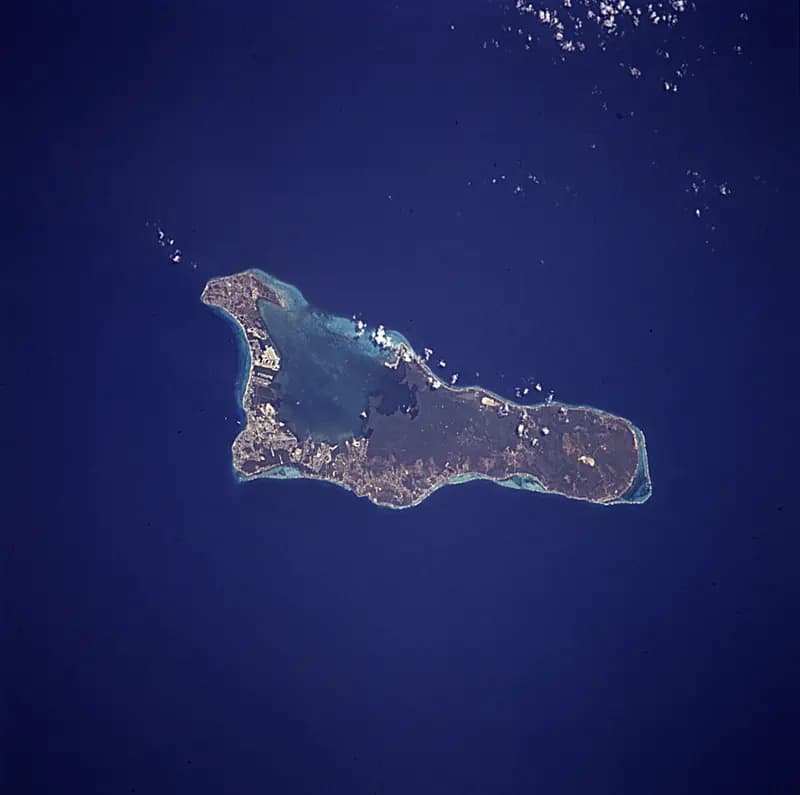
Cayman Islands: zero tax, but a high entry ticket
The Cayman Islands tax nothing, but their entry ticket is high and the cost of island living considerable. The scheme selects a specific audience, and its duration makes it a case apart.
· Editorial team

Taxation
Spain: the Beckham Law opened to company directors
Spain's regime for posted workers has been opened to company directors. For an executive, this changes access but not the mechanics: the regime remains limited to six years and leaves wealth taxation untouched.
· Editorial team

Taxation
Morocco: retirees benefit from an allowance on pensions
Morocco applies an allowance to foreign-source pensions, together with a reduction linked to the transfer of funds. It is this mechanism, not the Moroccan tax scale, that makes the country attractive to a French retiree.
· Editorial team

Taxation
Monaco: a reminder that French nationals there remain taxed in France
A French national living in Monaco remains, in principle, taxable in France. The 1963 bilateral treaty expressly provides for this, and the official Monegasque page itself points it out.
· Editorial team
Taxation
Cyprus: residency in 60 days still applies
Cyprus's sixty-day rule remains in force, but its four conditions are cumulative. It is their combination, not the length of presence, that makes the scheme hard to satisfy.
· Editorial team

Taxation
Italy: the 7% pensioner regime in the South remains in force
Italy's regime for foreign pensioners was extended in 2026: the population cap for eligible municipalities rose from twenty to thirty thousand inhabitants. The rate and duration, however, have not changed.
· Editorial team

Taxation
Bulgaria: euro adopted without giving up the flat tax
Bulgaria's adoption of the euro does not change its flat rate, which is part of the general tax law. It changes little for a resident: the currency had already been pegged to the euro for thirty years.
· Editorial team
Taxation
Italy: those who moved before 2026 keep the €200,000 flat tax
Italy's flat tax for new residents has been raised in dated steps, with no retroactive effect. Three residents under the same regime may therefore pay three different amounts depending on the year they arrived.
· Editorial team

Taxation
Monaco: a reminder that French nationals there remain taxed in France
The 1963 France–Monaco tax treaty subjects French nationals living in Monaco to French tax. It is the most decisive fact in any Monaco plan, and the one most often overlooked by those considering it.
· Editorial team

Taxation
Switzerland: lump-sum taxation abolished in another canton
One more Swiss canton has abolished taxation based on expenditure. The federal scheme remains, but its availability depends on a cantonal map that is shrinking, and that must be checked before any project.
· Editorial team
Taxation
Portugal: IFICI opened up to new technology occupations
Portugal's attractiveness regime is tied to a list of eligible activities, which is growing. This mechanism is both its originality and its weakness: eligibility depends on the role performed, not on the applicant's profile.
· Editorial team

Taxation
Bahrain: no income tax confirmed for 2026
Bahrain confirms that it does not tax personal income. What deserves attention is not this confirmation but what it leaves aside: the consumption tax, which has doubled.
· Editorial team

Taxation
Georgia: HNWI tax residency without 183 days
Georgia allows tax residency to be acquired without spending half the year there, based on a wealth and income criterion. It is an exceptional rule, and it runs into the same limits as its equivalents.
· Editorial team
Taxation
Italy: inheritance tax back in the debate
Italian inheritance tax is among the lowest in Western Europe. This parameter weighs more heavily on passing on wealth than the attractiveness regimes that get far more attention.
· Editorial team

Taxation
Bahamas: zero tax one hour's flight from Miami
The Bahamas offer no income tax one hour's flight from Florida. This proximity is their main selling point, and it creates a tax risk that few applicants anticipate.
· Editorial team
Taxation
Cyprus: extension of non-dom status to 27 years confirmed
Cypriot non-dom status is said to last seventeen years. A second, longer duration is in circulation, and the difference lies in two notions that Cypriot law distinguishes carefully.
· Editorial team

Taxation
Andorra: no wealth tax and no inheritance tax, a lasting advantage
Andorra applies neither a wealth tax nor inheritance duties. For an estate transfer, this factor weighs more over the long term than the income tax cap, which is far more widely discussed.
· Editorial team
Taxation
Qatar: corporate taxation capped at 10%
Qatari corporate tax is set at a single flat rate, with no scale or brackets. For an entrepreneur, it is the clarity of this regime that matters, more than its level.
· Editorial team

Taxation
Malta: effective corporate tax of 5% through the refund system
The often-quoted Maltese effective rate results from a refund mechanism for shareholders. The mechanism is real, but it is far from automatic and requires a structure maintained by a local professional.
· Editorial team

Taxation
Romania: taxation remains under budgetary watch
Romanian taxation is regularly adjusted under budgetary pressure. The personal rate, however, has not moved: it is the micro-enterprise regime that serves as the adjustment variable.
· Editorial team
Taxation
UAE: the France–UAE tax treaty secures departures
A tax treaty only secures a departure if it can be invoked. For the Emirates as elsewhere, this requires a tax residency certificate, which the residence permit does not replace.
· Editorial team

Taxation
Greece: the €100,000 non-dom regime targets the very wealthy
The Greek regime for high-net-worth individuals is based on an annual flat-rate tax and an investment in the country. It becomes worthwhile only at a level of foreign income that few taxpayers reach.
· Editorial team

Taxation
Switzerland: private capital gains on securities not taxed
Switzerland does not tax private capital gains on securities. The rule is real and long-standing, but it has an exception aimed precisely at those who actively manage their portfolio.
· Editorial team

Taxation
Portugal: taking stock one year after the end of the NHR
One year after the non-habitual resident status was closed, Portugal remains a highly sought-after destination. What has changed is not the country's appeal but the audience it targets.
· Editorial team